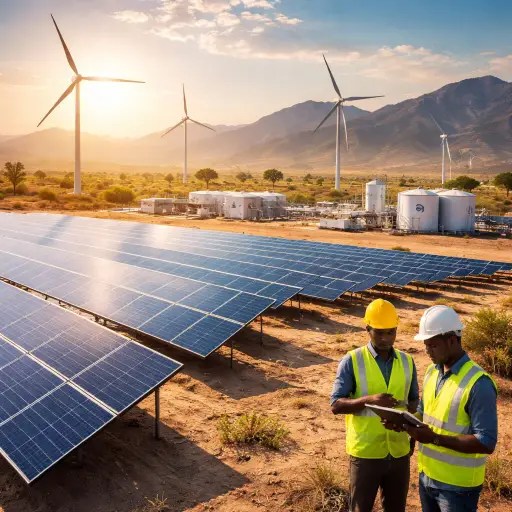
The European Union is financing solar, hydrogen, and power-grid projects across the continent, aiming to accelerate the energy transition while strengthening political and economic ties.
Across the African continent, vast stretches of desert, savannah, and coastline are becoming the stage for a new chapter in global climate diplomacy. The European Union has begun rolling out a sweeping initiative to finance renewable-energy infrastructure—from solar farms and green hydrogen hubs to modernized power grids—marking one of the most ambitious international climate partnerships ever undertaken.
European leaders describe the effort as a strategic alignment of environmental policy, economic investment, and diplomatic outreach. By supporting large-scale clean-energy projects in Africa, Brussels hopes to accelerate the global transition away from fossil fuels while building long-term partnerships with rapidly growing economies.
The initiative forms part of a broader effort to position Europe as a central actor in the world’s emerging green-energy landscape. Policymakers argue that investing in Africa’s renewable potential could help meet global climate targets while opening new markets for European technology, expertise, and financing.
“Europe’s climate strategy increasingly extends beyond its borders,” said one senior policy advisor involved in the program. “If the energy transition is to succeed globally, it must include regions where energy demand is rising fastest. Africa is central to that story.”
A Continent Rich in Renewable Potential
Africa is widely seen as one of the world’s most promising regions for renewable energy. With abundant sunlight, strong coastal winds, and significant potential for green hydrogen production, many countries possess natural resources capable of supporting large clean-energy industries.
Yet despite this potential, energy access remains uneven across the continent. Millions of people still lack reliable electricity, while rapidly growing populations are driving demand for new power generation.
European officials say the new financing strategy aims to address both challenges simultaneously: expanding energy access while ensuring new infrastructure aligns with climate goals.
Large solar developments are expected to form the backbone of many projects. Utility-scale solar parks are already under construction or in advanced planning stages in several North African and sub-Saharan nations. These installations are designed not only to supply domestic electricity but also, in some cases, to feed into regional grids or future export networks.
Wind energy is also gaining momentum, particularly along Africa’s Atlantic and Indian Ocean coastlines. Combined with expanded transmission networks, these renewable sources could help stabilize national grids that currently rely heavily on fossil fuels or hydropower.
Green Hydrogen as the Next Frontier
One of the most closely watched aspects of Europe’s climate partnership strategy is the push to develop green hydrogen industries in Africa.
Green hydrogen—produced using renewable electricity to split water molecules—has emerged as a key component of long-term decarbonization plans, particularly for heavy industry and shipping. Europe expects demand for the fuel to grow significantly as it seeks alternatives to fossil fuels in sectors that are difficult to electrify.
African countries with abundant solar and wind resources are viewed as ideal locations for large-scale hydrogen production. Several proposed projects envision renewable energy installations powering electrolyzers that produce hydrogen for domestic use and export.
Supporters say these projects could transform local economies by creating new industrial sectors and export revenues. They also align with Europe’s strategy to diversify future energy supplies while maintaining strong international partnerships.
However, analysts emphasize that building hydrogen infrastructure will require careful coordination between governments, investors, and communities. Transport networks, port facilities, and long-term supply agreements will all play critical roles in determining whether the industry develops as anticipated.
Power Grids and Regional Integration
While renewable generation often attracts the most attention, energy experts say modernizing Africa’s power grids may ultimately prove just as important.
Many countries currently face transmission bottlenecks that limit the ability to distribute electricity from renewable sites to cities and industrial centers. The EU’s financing package therefore includes significant support for grid expansion, digital monitoring systems, and cross-border energy connections.
Strengthening regional grids could allow countries to share electricity more efficiently, smoothing fluctuations in renewable output and reducing reliance on expensive backup power. Over time, interconnected networks may also enable electricity trading between nations.
For European policymakers, these grid investments represent a critical piece of the broader climate strategy. Reliable infrastructure is seen as essential to ensuring that renewable energy projects deliver long-term economic and environmental benefits.
Diplomacy Through Climate Investment
Beyond energy infrastructure, analysts say the initiative reflects a growing trend in international relations: the use of climate policy as a tool of diplomacy.
Europe faces increasing geopolitical competition for influence across Africa, where governments are seeking partners to finance infrastructure, technology, and development projects. By focusing on clean energy, EU officials aim to align investment with both climate commitments and strategic interests.
Observers describe the effort as “green diplomacy”—a blend of environmental policy and foreign policy designed to deepen partnerships while advancing global climate goals.
“Energy cooperation has always shaped geopolitics,” noted one energy-policy researcher. “What’s different now is that renewable infrastructure is becoming the centerpiece of that relationship.”
European institutions are coordinating closely with African governments, development banks, and private investors to structure the financing. Many projects rely on blended funding models that combine public investment with private-sector capital.
Opportunities and Challenges Ahead
Despite strong political backing, the strategy faces several challenges. Large infrastructure projects often involve complex permitting processes, land negotiations, and regulatory hurdles. Financing structures must also ensure that projects remain affordable for host countries while providing stable returns for investors.
Some civil-society groups have also urged policymakers to ensure that renewable developments prioritize local economic benefits, including job creation and community engagement.
European officials say those concerns are being addressed through partnership agreements that emphasize training programs, local industry participation, and technology transfer.
If successful, the initiative could reshape energy systems across parts of Africa while strengthening Europe’s role in the global climate transition.
A New Chapter in Global Climate Partnerships
As construction begins on solar fields, wind corridors, hydrogen facilities, and modern transmission lines, the scale of Europe’s ambitions is becoming increasingly visible.
Supporters argue that the investments represent more than just infrastructure. They signal a shift in how climate action is pursued internationally—through collaborative development, shared technology, and long-term economic partnerships.
For Europe, the strategy also reflects a recognition that the path to a low-carbon future will be shaped not only within its borders but across the wider world.
And in Africa, where energy demand is growing alongside economic opportunity, the continent’s vast renewable resources may soon become a central pillar of that global transition.


 The Tower Post