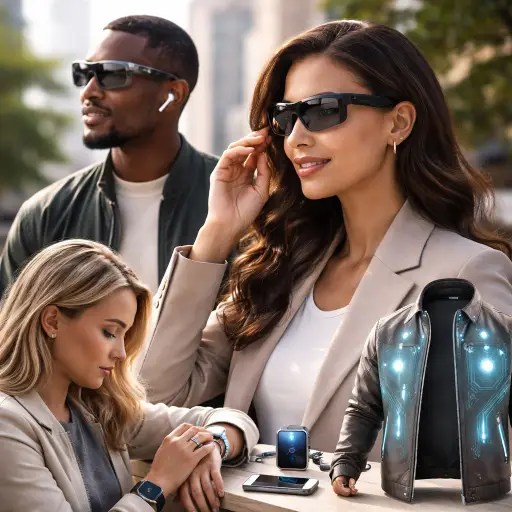
AI-powered eyewear and connected fashion devices are moving from niche gadgets to mainstream lifestyle technology, as major tech companies partner with fashion houses to reshape the future of wearables.
The next major shift in consumer technology may not sit in a pocket or on a desk. Instead, it could be worn—embedded in glasses, jackets, rings, and accessories designed to blend seamlessly into everyday fashion.
Across the global tech industry, momentum is building around a new generation of smart wearables that promise to combine artificial intelligence with stylish design. Industry analysts increasingly believe that AI-enabled eyewear and connected clothing could soon become the defining consumer technology category of the year, ushering in a new phase where computing becomes nearly invisible.
Unlike earlier wearable devices—often criticized for their bulky form or limited functionality—the latest wave focuses on subtlety. Designers and engineers are working together to create products that feel like natural extensions of personal style rather than conspicuous gadgets.
The result is a rapidly evolving market where fashion and technology are converging in ways rarely seen before.
From Smartwatches to Smart Style
Wearable technology has been around for years, largely dominated by fitness trackers and smartwatches. These devices proved that consumers are willing to wear technology daily, but they also revealed the limits of function-first design.
Many users embraced health tracking and notifications but were less enthusiastic about devices that clashed with their clothing or personal style. That lesson is now shaping the next generation of wearables.
The emerging category of “connected fashion” aims to move beyond traditional gadget aesthetics. Smart glasses that resemble everyday eyewear, rings capable of monitoring health metrics, and jackets with embedded sensors are becoming central to the new strategy.
The goal is simple: make technology disappear into clothing and accessories people already enjoy wearing.
AI plays a central role in this shift. Advances in on-device processing and cloud-based intelligence allow wearables to perform tasks that once required smartphones or computers. Voice interaction, contextual awareness, and real-time assistance are becoming standard capabilities.
For users, this could mean glasses that quietly provide navigation guidance, translate conversations, or capture moments through discreet cameras—all while looking like ordinary frames.
Tech Giants Turn to Fashion
One of the most striking developments in the wearable space is the growing collaboration between technology companies and fashion brands.
For years, engineers prioritized hardware capabilities while leaving design as an afterthought. That model is changing as companies recognize that success in wearables requires cultural appeal as much as technical innovation.
Major technology firms are increasingly teaming up with established fashion houses to develop products that feel premium and wearable. These collaborations bring together expertise in materials, ergonomics, and aesthetics with cutting-edge computing power.
The partnerships are producing devices that emphasize comfort, personalization, and craftsmanship. Instead of appearing futuristic or experimental, many of the new wearables are intentionally understated.
Industry observers say this approach mirrors the evolution of smartphones, which gradually transformed from purely technical tools into lifestyle objects.
Now the same transformation appears to be happening in wearable technology.
AI Eyewear at the Center of Attention
Among all emerging wearable devices, AI-enabled glasses are attracting the most attention.
These devices are designed to deliver digital information directly within a user’s field of view while maintaining a natural appearance. Improvements in miniature displays, lightweight batteries, and advanced sensors are making this possible.
The appeal of smart eyewear lies in its ability to provide hands-free interaction with digital services. Rather than pulling out a phone, users could access navigation, messaging, or visual search simply by speaking or making subtle gestures.
Artificial intelligence enhances this experience by interpreting the user’s surroundings. Glasses could identify landmarks, summarize information about objects in view, or provide reminders based on context.
Analysts believe that once design and battery life reach the right balance, AI eyewear could quickly move from novelty to everyday necessity.
Connected Clothing Enters the Market
Beyond eyewear, connected clothing is emerging as another promising frontier.
Sensors woven into fabrics can monitor movement, posture, temperature, and other health indicators without requiring additional devices. Athletes and wellness enthusiasts are early adopters, but broader applications are beginning to appear.
Smart jackets, shirts, and accessories could eventually integrate features such as biometric monitoring, gesture control, or even adaptive climate regulation.
Some designers are experimenting with garments that interact with mobile devices, enabling new forms of communication and personalization.
In the long term, clothing itself may become a digital interface—capable of responding to environmental changes or personal preferences.
The Next Consumer Tech Wave?
Market researchers say the wearable category is entering a new growth phase driven by improvements in artificial intelligence, sensor technology, and battery efficiency.
The industry’s focus is shifting from standalone gadgets to ecosystems of connected devices that complement smartphones rather than replace them.
If current trends continue, wearables may soon become the most natural way to interact with technology throughout the day.
Consumers are also showing growing interest in devices that support health, productivity, and convenience without requiring constant screen interaction.
That demand aligns perfectly with the promise of smart wearables: technology that works quietly in the background while users remain focused on the world around them.
Challenges Ahead
Despite the optimism surrounding wearables, the industry still faces several challenges.
Battery life remains a key hurdle, particularly for small devices such as glasses and rings. Privacy concerns also continue to shape public perception, especially for products equipped with cameras or environmental sensors.
Design will play a critical role in overcoming these concerns. Companies must balance transparency, functionality, and aesthetics to ensure that wearables feel both trustworthy and desirable.
Pricing may also determine how quickly the category expands beyond early adopters.
A Subtle Future of Technology
What makes the new generation of wearables unique is not just what they can do—but how little they demand attention.
Rather than replacing smartphones outright, these devices are designed to integrate quietly into daily routines. Technology becomes less visible but more present.
If the current momentum continues, wearable technology could soon redefine how people experience digital services, shifting the focus from screens to seamless interaction.
In that future, the most powerful computers may not be the ones in our pockets—but the ones woven into the clothes we wear and the glasses we put on each morning.




 The Tower Post