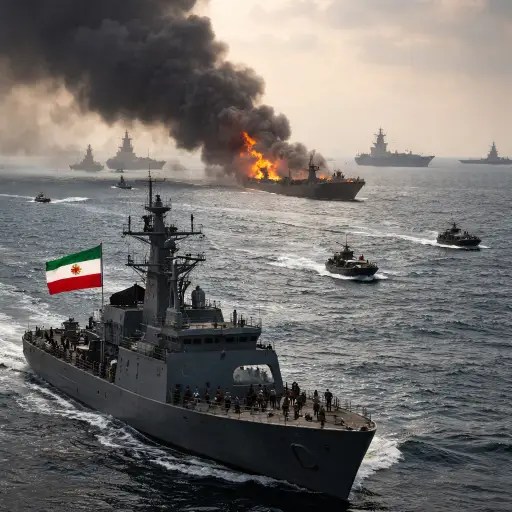
European governments push diplomacy while warning against the conflict spreading across the Persian Gulf
As tensions escalate in the Middle East, European governments are intensifying diplomatic efforts to prevent the widening conflict involving Iran from spreading across the Persian Gulf. Political leaders across the continent are urging restraint from all parties while quietly mobilizing diplomatic channels in hopes of containing a crisis that many fear could destabilize global security and energy markets.
The expanding confrontation has triggered a wave of emergency discussions among European Union members and key regional partners. Officials say the immediate goal is to prevent the conflict from engulfing vital maritime routes and neighboring states that could quickly transform a regional war into a broader international crisis.
Across Europe’s major capitals, the tone from policymakers has been one of caution rather than confrontation. Governments in London, Athens, Paris, and Berlin have emphasized the need for dialogue, warning that further escalation would carry severe geopolitical and economic consequences.
British officials have signaled that diplomatic engagement remains their preferred path forward. Senior government figures have reiterated that while security concerns are real, military escalation would only deepen instability. The United Kingdom has been consulting closely with European allies and regional actors in an effort to keep communication channels open.
Greece, whose strategic location makes developments in the eastern Mediterranean and the Gulf particularly significant, has also taken an active diplomatic role. Greek leaders have stressed that the priority must be preventing the conflict from spilling into surrounding waters and disrupting global shipping routes that are critical to international trade.
The Persian Gulf remains one of the most strategically sensitive waterways in the world. A significant portion of the global energy supply moves through the region, and any disruption could have immediate consequences for markets and economies worldwide. European officials are acutely aware that instability in the Gulf would not only threaten regional security but also amplify economic pressures already facing many countries.
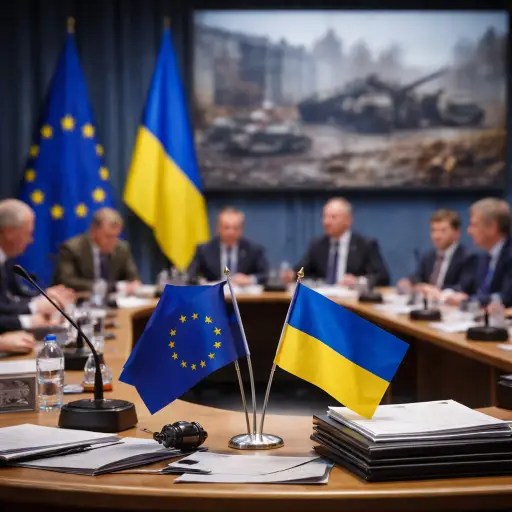
Within the European Union, the crisis has prompted urgent coordination. Diplomatic meetings and security consultations have intensified as leaders assess possible scenarios and contingency plans. European diplomats say the goal is to maintain unity while pursuing de-escalation through international institutions and regional partners.
Officials involved in the discussions describe a growing concern that miscalculation could push the conflict beyond its current boundaries. Even limited incidents at sea or along key strategic corridors could quickly draw additional actors into the confrontation.
For this reason, European governments are focusing heavily on diplomatic signaling. By publicly urging restraint, they hope to create space for negotiations and reduce the likelihood of rapid escalation.
Behind the scenes, diplomatic outreach is taking place across several fronts. European envoys have been communicating with regional governments, international organizations, and major global powers in an attempt to build support for de-escalation initiatives.
Some policymakers are also exploring the possibility of renewed diplomatic frameworks that could address the broader tensions underlying the crisis. While details remain uncertain, officials believe that sustained dialogue may still offer a path to reducing hostilities.
At the same time, European leaders are aware that their influence over events on the ground is limited. Much will depend on the calculations of the parties directly involved in the conflict and their willingness to step back from further escalation.
Nevertheless, European governments argue that diplomacy remains essential. History has shown that regional conflicts in the Middle East can quickly evolve into larger confrontations with global implications.
Security analysts note that Europe’s response reflects a broader strategic concern: preventing instability in the Gulf from cascading into disruptions that affect energy security, international shipping, and political stability across neighboring regions.
The stakes are therefore both regional and global. For Europe, which relies heavily on stable trade routes and energy flows, the risk of conflict spreading through the Persian Gulf is particularly alarming.
As diplomatic discussions continue, European leaders are attempting to balance caution with engagement. Their message has been consistent: escalation would benefit no one, while dialogue remains the only viable path toward stability.
Whether those calls for restraint will be enough to contain the crisis remains uncertain. But for now, European governments are doubling down on diplomacy, hoping that sustained international pressure and negotiation can prevent the widening conflict from igniting a far larger regional war.


 The Tower Post