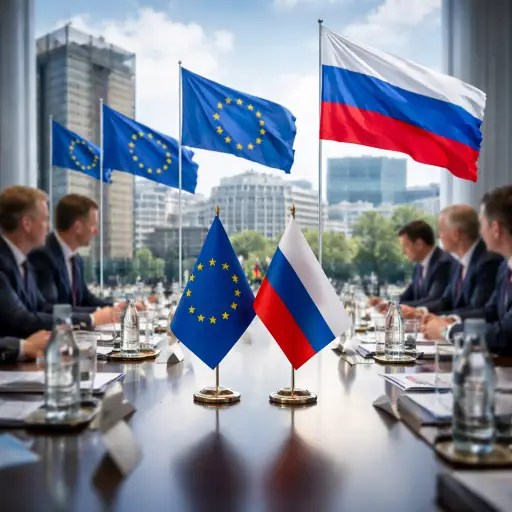
Belgian Prime Minister’s Call to Reopen Dialogue With Russia Triggers Sharp Reaction Across the EU
A fresh political storm has erupted across Europe after Belgium’s prime minister suggested that the European Union should eventually consider restoring diplomatic relations with Russia, arguing that long-term stability and economic realities may require renewed engagement.
The remarks, delivered during a policy discussion in Brussels, quickly ignited controversy among European officials and diplomats who insist that sanctions and political isolation remain essential tools in response to Russia’s actions in Ukraine. Within hours, political leaders from several EU countries criticized the suggestion, warning that normalizing relations too soon could undermine European unity and weaken pressure on Moscow.
The debate reflects a growing tension within the European Union: how to maintain a firm stance against Russia while managing the economic and strategic consequences of prolonged confrontation.
A Call for “Strategic Realism”
According to the Belgian leader, Europe must begin thinking about what the continent’s relationship with Russia might look like in the longer term. While he acknowledged that the current geopolitical situation remains deeply strained, he suggested that a future framework for diplomacy should not be ruled out indefinitely.
In particular, the prime minister pointed to energy security and economic competitiveness as issues that Europe will eventually need to confront.
“For the long-term stability of our continent, dialogue will eventually become necessary again,” he argued. “Europe cannot permanently ignore one of its largest neighbors.”
The comments were framed as a call for “strategic realism,” suggesting that geopolitical stability often requires diplomatic channels even between adversaries. Supporters of the idea say the statement does not imply immediate normalization but rather a recognition that Europe will need a plan for post-conflict relations.
Still, the nuance did little to soften the immediate reaction.
Swift Pushback From EU Officials
Several European officials responded quickly, reiterating that sanctions against Russia remain a cornerstone of the EU’s policy.
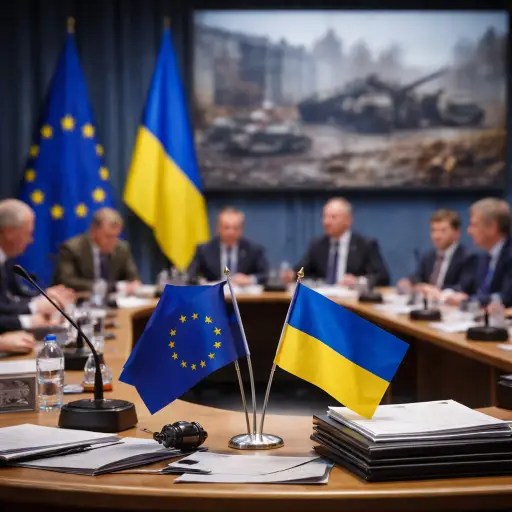
Diplomats from multiple member states emphasized that any move toward normalization would depend entirely on significant changes in Russia’s behavior, particularly regarding Ukraine. Some warned that even discussing a return to normal relations could send the wrong signal at a delicate moment.
One senior European official said the union must remain consistent in its position. “The sanctions regime exists for a reason,” the official noted. “European unity has been critical in maintaining pressure.”
Others argued that reopening discussions about normalization could create divisions within the bloc, where governments already differ in their approaches to energy policy, defense spending, and relations with Moscow.
Energy Pressures in the Background
Behind the diplomatic clash lies a persistent economic challenge: Europe’s energy transition since the break in relations with Russia.
For decades, many European countries relied heavily on Russian gas supplies. The disruption forced governments to rapidly diversify energy sources, invest in new infrastructure, and accelerate renewable energy plans. While those efforts have reduced dependence on Russian energy, they have also contributed to higher energy costs in some sectors.
Some analysts believe the Belgian prime minister’s comments reflect a broader conversation taking place quietly among European policymakers about the long-term economic consequences of the current standoff.
Lower-cost energy imports once played a major role in Europe’s industrial competitiveness. Industries such as chemicals, steel, and manufacturing continue to face pressure from higher energy prices compared with competitors in other regions.
However, critics argue that returning to Russian energy dependence would expose Europe to strategic vulnerabilities once again.
A Divided Political Landscape
The controversy also highlights political divisions within Europe over how the continent should approach its future relationship with Russia.
Eastern European countries, particularly those geographically closer to Russia, have generally taken the hardest line, emphasizing security concerns and historical experience. Governments in these countries have been among the strongest advocates of maintaining sanctions and reinforcing NATO’s eastern defenses.
Meanwhile, some Western European leaders have occasionally signaled that diplomatic engagement could eventually become necessary to stabilize the broader European security environment.
Political analysts say the Belgian prime minister’s remarks brought these underlying debates into the open.
“This is not the first time European leaders have quietly asked what the endgame looks like,” said one Brussels-based policy researcher. “But saying it publicly makes it politically explosive.”
The Strategic Question Facing Europe
At the heart of the dispute lies a difficult question: how should Europe define a resolution to the current geopolitical confrontation?
European leaders broadly agree that sanctions and diplomatic pressure must remain in place while the conflict continues. Yet policymakers also recognize that Europe and Russia share a continent, extensive borders, and overlapping security concerns that cannot simply disappear.
History offers examples of adversaries maintaining diplomatic relations even during periods of intense rivalry. However, rebuilding trust after war or prolonged hostility can take decades.
For now, most European governments appear determined to maintain the current policy framework. The immediate backlash to the Belgian leader’s comments suggests that the political climate in Europe remains far from ready for any discussion of normalization.
A Debate Likely to Continue
Despite the criticism, the remarks have sparked a broader conversation about Europe’s long-term geopolitical strategy.
Some experts believe the controversy could ultimately push European institutions to clarify their vision for the future relationship with Russia—whether that means continued containment, conditional engagement, or a gradual reopening of diplomatic channels under strict conditions.
For the moment, however, the European Union appears united on one point: the current sanctions policy remains firmly in place.
Yet the debate triggered by Belgium’s prime minister underscores a deeper reality shaping European politics today. Even amid confrontation, policymakers are already beginning to ask what the continent’s next diplomatic chapter might eventually look like.
And that question—however controversial—may only grow louder as Europe continues to navigate one of the most complex geopolitical challenges of the modern era.
 The Tower Post