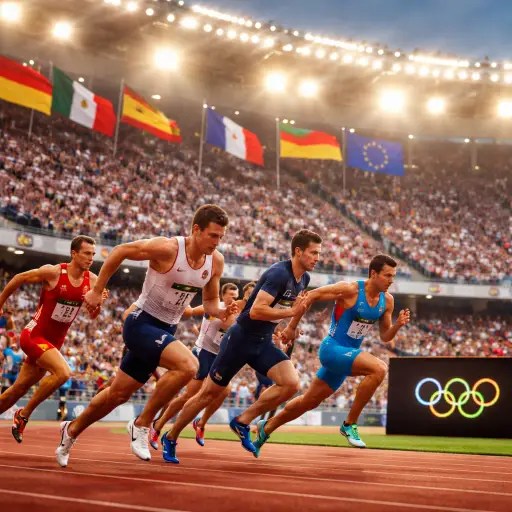
Updated standards aim to strengthen fairness, raise competition levels, and reshape the pathway for track and field athletes in the upcoming Olympic cycle.
The European Athletics Federation has unveiled a new set of Olympic qualification rules for track and field athletes, introducing updated standards that officials say will improve fairness and raise the level of competition across Europe.
The revised framework, presented ahead of the next Olympic cycle, reflects growing efforts by sports administrators to modernize qualification systems and ensure that the athletes reaching the global stage represent the highest competitive level. Federation leaders say the changes respond to feedback from athletes, coaches, and national federations who have called for clearer pathways and more balanced opportunities to qualify.
According to federation officials, the updated rules place greater emphasis on performance consistency throughout the season rather than relying solely on a small number of qualifying events. Under the revised system, athletes will still be able to secure Olympic places by meeting established performance standards, but the federation will expand the role of international rankings and competitive results across major meets.
The shift is designed to reward athletes who demonstrate sustained excellence across multiple competitions rather than those who achieve a single standout performance.
“Modern athletics requires consistent performance at the highest level,” a federation spokesperson said while presenting the changes. “The updated qualification pathways recognize athletes who compete regularly and perform strongly across the entire season.”
A Shift Toward Performance Depth
One of the most significant elements of the new system is the broader integration of ranking-based qualification. While direct performance standards remain a central route to Olympic participation, ranking points accumulated through major European and international competitions will play a more important role in determining the final list of qualifiers.
Officials believe this approach will provide a more complete picture of an athlete’s competitive strength.
In previous Olympic cycles, critics argued that qualification standards sometimes favored athletes who achieved a single exceptional result under favorable conditions. By emphasizing performance across multiple events, the federation hopes to encourage deeper participation in the competition calendar and reward athletes who consistently compete at a high level.
For emerging competitors, the revised system could open new opportunities. Athletes who regularly perform well in continental competitions may accumulate ranking points even if they narrowly miss the automatic qualification marks.
Impact Across Track and Field Disciplines
The changes apply across a wide range of disciplines, including track races, field events, and combined competitions. Sprinting, middle-distance events, jumps, throws, and multi-event formats will all operate under the updated qualification framework.
National federations will continue to select the athletes who represent their countries, but the revised international standards will determine which athletes are eligible for Olympic consideration.
For competitors in highly contested disciplines such as sprinting and distance running, the ranking component may become particularly important. European track events often feature deep and competitive fields, making direct qualification standards increasingly difficult to achieve.
By combining performance standards with ranking positions, officials hope to ensure that top athletes are not excluded simply because they narrowly missed a specific mark.
Reaction From the Athletics Community
Initial reactions from the athletics community across Europe have been largely positive, though some questions remain about how the system will affect competition schedules.
Many coaches view the changes as a natural evolution of the qualification structure. They argue that athletics should reward athletes who compete frequently and demonstrate strong performances against high-quality opponents.
However, some athletes have expressed concerns about potential increases in travel and competition demands. Because ranking points are tied to participation in major meets, athletes may feel greater pressure to compete more often during the season.
Federation officials say they are aware of these concerns and have attempted to balance competitive opportunities with athlete welfare. The updated structure aims to distribute ranking events across a wide range of competitions throughout Europe in order to limit excessive travel requirements.
Preparing for the Next Olympic Cycle
The federation is now working closely with national athletics organizations to ensure a smooth transition to the new rules. Detailed guidance will be shared with athletes and coaching teams so that competitors can plan their training and competition schedules accordingly.
Officials emphasize that the goal of the reform is not simply to adjust qualification criteria but to strengthen the competitive environment of athletics across Europe.
By encouraging consistent performance, improving transparency in qualification, and expanding ranking opportunities, the federation believes the new system will help elevate the standard of European athletes competing on the Olympic stage.
As preparations for the upcoming Olympic cycle continue, the revised framework will shape how athletes structure their seasons, select competitions, and pursue the goal of reaching the world’s most prestigious sporting event.
For many athletes, the federation’s message is clear: Olympic qualification will depend not only on moments of exceptional performance but on sustained excellence throughout the entire season.




 The Tower Post