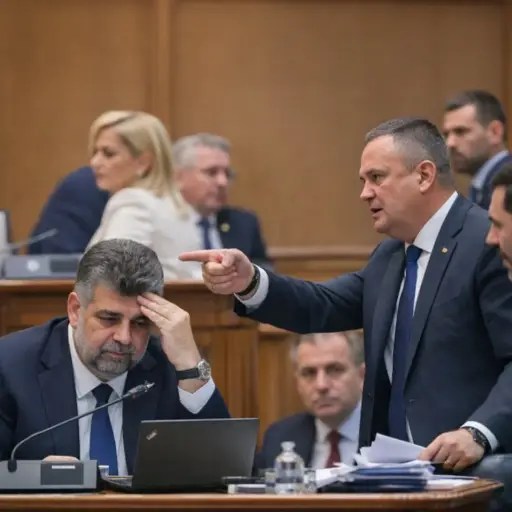
Coalition tensions escalate as deficit dispute threatens to derail fiscal plan and destabilize political landscape
Romania’s fragile governing coalition is facing one of its most serious tests in recent years, as deep divisions over the national budget push the administration toward the edge of collapse. At the heart of the crisis lies a widening deficit, now the largest in the European Union, and a growing inability among coalition partners to agree on how to rein in spending without triggering political fallout.
What was initially framed as a technical disagreement over fiscal adjustments has rapidly evolved into a broader political standoff. Senior figures within the ruling alliance are locked in tense negotiations, with each faction defending competing priorities: fiscal discipline on one side, and the preservation of social spending and public sector wages on the other. The result has been a series of last-minute confrontations that have repeatedly delayed progress on the budget.
Government insiders describe negotiations as increasingly strained, with trust between coalition partners eroding. Several emergency meetings have been convened behind closed doors, yet few tangible compromises have emerged. Officials warn that without a breakthrough, the budget process could stall entirely, raising the prospect of a government paralysis at a time when economic stability is already under pressure.
The stakes are particularly high given Romania’s position within the European Union. With the bloc closely monitoring member states’ fiscal performance, the country’s ballooning deficit has drawn scrutiny from Brussels. Failure to present a credible plan for deficit reduction could expose Romania to financial penalties and weaken investor confidence, further complicating its economic outlook.
At the center of the dispute is how to balance austerity measures with political realities. Proposals to cut spending have met resistance from coalition members wary of public backlash, especially amid rising living costs. At the same time, calls for increased taxation or structural reforms have proven equally contentious, with business groups warning of negative impacts on growth.
The political consequences of the deadlock are becoming increasingly visible. Opposition parties have seized on the divisions, accusing the government of mismanagement and urging early elections. Meanwhile, public frustration is mounting, as uncertainty over the budget fuels concerns about future economic policies, public services, and potential austerity measures.
Analysts suggest that the coalition’s survival may depend on its ability to reach a compromise in the coming days. “This is not just a budget dispute — it is a test of political cohesion,” said one Bucharest-based economist. “If the parties cannot align on such a fundamental issue, it raises serious questions about the government’s ability to function.”
Behind the scenes, discussions have reportedly turned to contingency scenarios, including the possibility of reshuffling the cabinet or forming a new parliamentary majority. While no official moves have been confirmed, the mere consideration of such options underscores the gravity of the situation.
Despite the escalating tensions, some officials remain cautiously optimistic that a deal can still be reached. They point to the shared interest among coalition partners in avoiding a full-blown political crisis, particularly at a time when external economic pressures demand stability. However, with positions hardening and time running short, the window for compromise appears to be narrowing.
For now, Romania finds itself in a precarious position — caught between fiscal necessity and political survival. As negotiations continue, the outcome will not only determine the fate of the current government but also shape the country’s economic trajectory in the months ahead.
Whether the coalition can hold together long enough to deliver a workable budget remains uncertain. What is clear, however, is that the crisis has exposed deep fault lines within Romania’s political system, leaving its leadership facing a defining moment with far-reaching consequences.



 The Tower Post