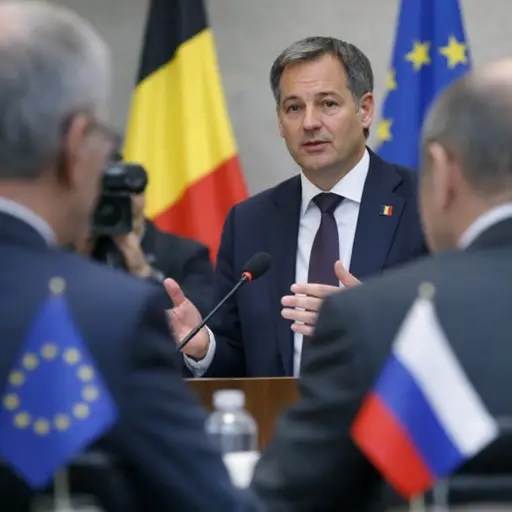
Ambiguous signals on Moscow ties ignite concern over EU unity as geopolitical pressure tests political cohesion
Belgium has found itself at the center of a growing diplomatic storm after recent remarks from senior officials suggested a potential softening of its stance toward Russia. The comments, interpreted by several European partners as signaling openness to re-engagement with Moscow, have triggered swift criticism across the European Union and reignited concerns about the bloc’s internal cohesion at a critical geopolitical moment.
The controversy emerged after Belgian leadership hinted that maintaining rigid isolation from Russia may not serve Europe’s long-term strategic interests. While officials later attempted to clarify that their position does not deviate from the EU’s collective policy, the initial statements have already reverberated across European capitals, where unity on sanctions and support for Ukraine remains a cornerstone of the bloc’s foreign policy.
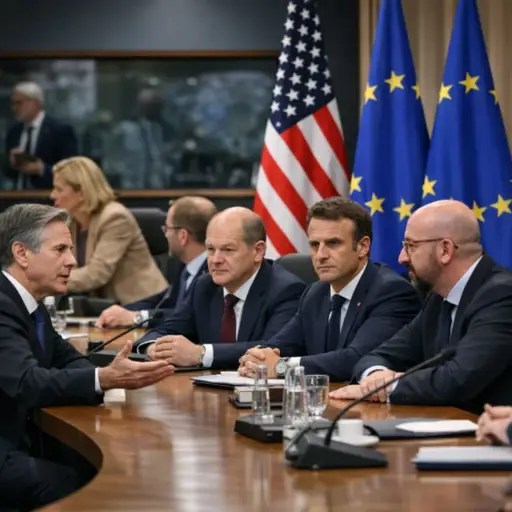
Diplomats from multiple EU member states expressed unease, warning that even subtle shifts in tone risk undermining the fragile consensus that has held since the escalation of the conflict in Ukraine. For countries on the EU’s eastern flank, the perception of wavering commitment is particularly alarming, as they continue to advocate for sustained pressure on Moscow.
“This is not simply about rhetoric,” said one senior European diplomat. “Every signal matters. Any ambiguity can be interpreted as an opening, and that weakens the collective stance.”
Belgium, a founding member of the EU and host to key European institutions, has traditionally played a stabilizing role in European diplomacy. Its positioning is therefore closely scrutinized, and any deviation—real or perceived—carries outsized political weight. Analysts note that Belgium’s domestic political landscape, marked by coalition complexities and competing priorities, may have contributed to the mixed messaging.
At the heart of the backlash lies a broader concern: that cracks are beginning to show in Europe’s unified front. After years of coordinated sanctions, military assistance, and diplomatic isolation of Russia, maintaining alignment among diverse member states has become increasingly challenging. Economic pressures, energy concerns, and shifting political dynamics within individual countries are testing the resilience of that unity.
Some European leaders fear that Belgium’s remarks could embolden voices within other member states that have already begun questioning the long-term sustainability of current policies. While no government has openly called for a reversal of sanctions, there is growing debate behind closed doors about the costs of prolonged confrontation and the need for strategic recalibration.
However, supporters of the current approach argue that any sign of division plays directly into Moscow’s hands. They stress that consistency and clarity remain essential, particularly as Ukraine continues to rely on European support both militarily and economically.
Belgian officials have since moved to contain the fallout, reaffirming their commitment to EU decisions and emphasizing that any future engagement with Russia would be contingent on significant changes in behavior from Moscow. Nonetheless, the episode has highlighted how sensitive and politically charged the issue remains.
“The European position is built on unity,” said a policy analyst based in Brussels. “Once that unity is questioned, even symbolically, it creates uncertainty—not just within Europe, but globally.”
The situation underscores the delicate balancing act facing European governments. On one hand, there is a need to maintain pressure on Russia and demonstrate unwavering support for Ukraine. On the other, leaders must contend with domestic political realities and long-term strategic considerations that may not always align neatly with collective positions.
As geopolitical tensions persist, the EU’s ability to present a cohesive front will likely remain under scrutiny. Belgium’s recent remarks, whether misinterpreted or miscalculated, have served as a reminder that in the current climate, even nuanced shifts in language can carry significant diplomatic consequences.
Ultimately, the episode reflects a broader truth about the European project in times of crisis: unity is both its greatest strength and its most fragile asset. Maintaining it requires not only shared policies, but also disciplined messaging and mutual trust among member states—qualities that are increasingly difficult to sustain under mounting pressure.

 The Tower Post