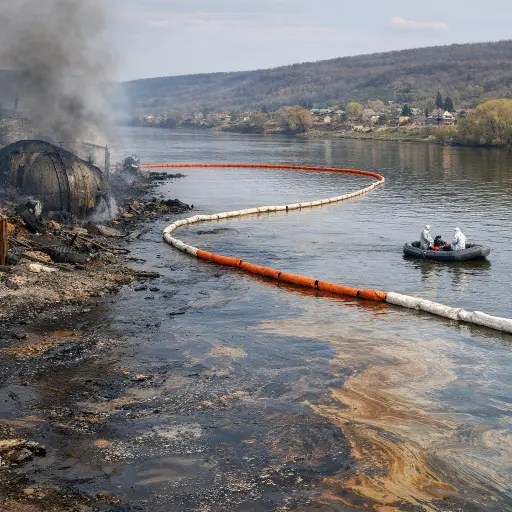
Oil contamination in the Dniester River disrupts water access for tens of thousands, highlighting the widening humanitarian and ecological toll of regional conflict
Moldova is grappling with a growing environmental and humanitarian emergency after a Russian strike triggered significant oil pollution in the Dniester River, the country’s primary freshwater artery. The incident has left tens of thousands of residents temporarily without access to safe drinking water, underscoring how the consequences of war are increasingly spilling across borders.
The contamination, caused by damage to oil infrastructure upstream, quickly spread into the river system that supplies water to large portions of Moldova. Authorities moved swiftly to halt water intake from affected areas, but the scale of the disruption has strained local resources and exposed vulnerabilities in the country’s critical infrastructure.
Emergency response teams deployed containment booms and began cleanup operations along affected stretches of the river. Despite these efforts, environmental experts warn that the full impact may take weeks or longer to assess. Oil residues have already been observed along riverbanks, raising concerns about long-term damage to ecosystems and agricultural land.
Residents in impacted regions reported sudden shortages of clean water, forcing communities to rely on emergency deliveries and limited reserves. Schools and public institutions adjusted operations, while hospitals activated contingency plans to ensure patient safety. For many households, the crisis has meant rationing water and navigating uncertain conditions.
“This is not just an environmental incident—it is a humanitarian one,” said a local official involved in the response. “Access to clean water is fundamental, and when it is disrupted at this scale, the consequences are immediate and far-reaching.”
The Dniester River, which flows through multiple countries, has long been a shared resource critical to both drinking water and agriculture. The current contamination highlights the transboundary risks posed by the ongoing conflict in the region. What begins as a targeted strike can quickly evolve into a broader crisis affecting civilians far beyond the intended zone of impact.
Environmental organizations have raised alarms about the potential for lasting ecological damage. Oil spills can suffocate aquatic life, disrupt food chains, and degrade water quality for extended periods. Early reports suggest that fish populations in some areas may already be affected, though comprehensive assessments are still underway.
The Moldovan government has appealed for international assistance, seeking both technical expertise and material support to manage the cleanup and mitigate further harm. Neighboring countries are also monitoring the situation closely, as the river’s flow means contamination could have downstream implications.
This incident adds to a growing list of environmental consequences linked to the war, from damaged industrial sites to disrupted energy infrastructure. Analysts warn that such events are becoming more frequent, turning environmental degradation into a secondary front of the conflict.
For Moldova, a country already navigating economic and political pressures, the crisis presents an additional challenge. Ensuring access to clean water, restoring affected ecosystems, and reinforcing infrastructure resilience will require sustained effort and coordination.
As cleanup operations continue, the situation serves as a stark reminder that modern warfare extends beyond immediate destruction. Its ripple effects—environmental, humanitarian, and economic—can reach far beyond the battlefield, affecting communities that are not directly involved in the conflict.
In the coming days, authorities will focus on restoring water services and preventing further contamination. But the broader lesson is already clear: the impacts of war do not stop at borders, and the environment is increasingly becoming one of its most vulnerable casualties.



 The Tower Post