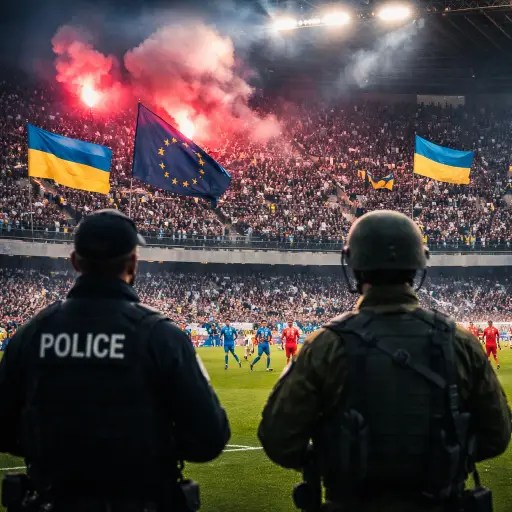
Sanctions, Ownership Scrutiny, and Funding Issues Reshape the Game Across the Continent
European football, long a symbol of unity and competition across borders, is increasingly feeling the strain of geopolitical conflict. As war continues to reverberate through Eastern Europe, its consequences are no longer confined to the political or economic spheres. Instead, they are now deeply embedded in the fabric of the sport itself, affecting clubs, leagues, investors, and supporters alike.
At the heart of the disruption lies a tightening web of sanctions and financial restrictions. Clubs with historical or indirect ties to Russian capital are facing unprecedented pressure. Financial flows once considered routine are now subject to intense scrutiny, with governing bodies and national authorities examining ownership structures and sponsorship agreements in granular detail. For some clubs, this has meant frozen assets, collapsed partnerships, and urgent searches for alternative funding.
Executives across several leagues describe a climate of uncertainty. Deals that once took weeks to finalize now drag on for months under regulatory review. Potential investors are increasingly cautious, wary of reputational risks and compliance hurdles. In this environment, liquidity has become a growing concern, particularly for mid-tier clubs that rely heavily on external backing to remain competitive.
Ownership, once a relatively opaque aspect of the sport, is now under a powerful spotlight. Authorities are not only examining direct ownership links but also tracing networks of influence that extend across borders. This heightened vigilance has led to delayed takeovers and, in some cases, the outright blocking of proposed acquisitions. The message from regulators is clear: transparency is no longer optional.
The ripple effects are being felt across entire leagues. Broadcast agreements are under renegotiation as partners reassess the commercial stability of competitions. Sponsorship revenues, a critical pillar of modern football, are becoming less predictable as brands distance themselves from politically sensitive associations. Even matchday attendance has shown signs of fluctuation, as fans grapple with the growing politicization of the sport.
Indeed, football is no longer insulated from the broader currents of global conflict. Stadiums have become stages not just for athletic performance, but for political expression. Banners, gestures, and moments of silence are now commonplace, reflecting a sport that is increasingly intertwined with the realities of the world beyond the pitch.
Players and coaches, too, find themselves navigating a more complex landscape. While many seek to focus on the game, the pressure to acknowledge or respond to geopolitical events is ever-present. Statements of solidarity, calls for peace, and, at times, silence itself are all subject to public interpretation and scrutiny.
Analysts warn that this convergence of sport and politics may have lasting implications. The traditional boundaries that once separated football from global affairs are becoming increasingly blurred. What was once seen as a universal language of competition and entertainment is now also a reflection of division and tension.
Yet, amid the uncertainty, there are signs of adaptation. Clubs are diversifying their revenue streams, investing in local talent, and rethinking their long-term strategies. Governing bodies are exploring new regulatory frameworks aimed at safeguarding financial integrity while maintaining competitive balance.
European football has faced crises before and has often emerged more resilient. However, the current challenges are uniquely complex, rooted not just in economics but in geopolitics. As the conflict continues to cast its shadow, the sport finds itself at a crossroads—forced to evolve in ways that may redefine its identity for years to come.

 The Tower Post