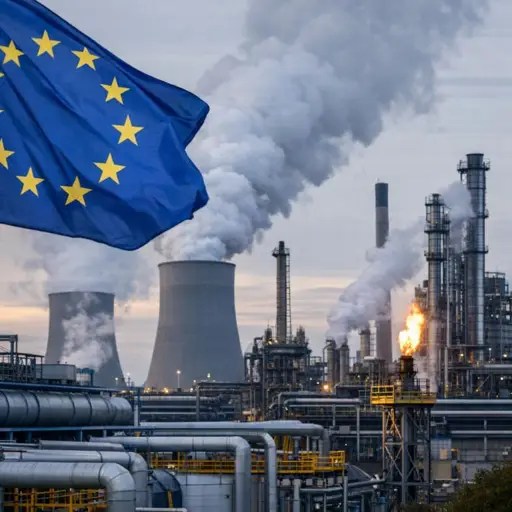
Brussels signals flexibility in emissions trading rules amid mounting concerns over industrial competitiveness and energy affordability
As Europe grapples with persistent energy volatility, policymakers are recalibrating one of the bloc’s most ambitious climate tools. The European Union is preparing adjustments to its flagship emissions-trading system, aiming to soften the burden on industries strained by high energy costs while maintaining its long-term decarbonization trajectory.
The move reflects a growing tension at the heart of Europe’s climate strategy: how to balance environmental commitments with economic resilience during a period of sustained pressure on oil and gas markets. With energy prices remaining elevated and industrial output showing signs of stress, officials are increasingly open to introducing greater flexibility into the carbon-pricing framework.
At the center of the debate is the EU Emissions Trading System (ETS), a cornerstone of the bloc’s climate policy that sets a price on carbon emissions for power plants, factories, and airlines. Designed to incentivize cleaner production, the system has contributed to measurable emissions reductions over the years. However, recent price surges in carbon allowances—combined with expensive fossil fuels—have intensified cost pressures for energy-intensive industries such as steel, chemicals, and cement.
Industry groups have warned that without adjustments, European manufacturers risk losing competitiveness to counterparts in regions with less stringent climate policies. Concerns over “carbon leakage”—where companies relocate production to countries with lower environmental standards—have resurfaced with renewed urgency.
In response, EU officials are exploring mechanisms to stabilize the carbon market and provide temporary relief. Options under discussion include releasing additional allowances into the market to curb price spikes, revisiting the pace of reductions in emissions caps, and expanding support measures for vulnerable sectors.
While these potential changes stop short of dismantling the ETS, they signal a pragmatic shift in tone. Policymakers appear increasingly focused on ensuring that the transition to a low-carbon economy does not come at the expense of industrial stability or social cohesion.
“This is not about abandoning climate ambition,” one EU official noted in recent discussions. “It’s about managing the transition in a way that is economically and politically sustainable.”
The recalibration comes at a delicate moment. Europe remains committed to its broader climate goals, including achieving climate neutrality in the coming decades. At the same time, geopolitical tensions and supply disruptions have underscored the continent’s vulnerability to external energy shocks.
Energy-intensive industries have been particularly exposed. Many companies have faced rising input costs and shrinking margins, leading some to scale back production or delay investments in green technologies. Business leaders argue that predictable and manageable carbon pricing is essential to unlocking the capital needed for decarbonization.
Environmental advocates, however, caution against weakening the ETS too far. They argue that strong carbon pricing is one of the most effective tools for driving emissions reductions and accelerating the shift to renewable energy. Any dilution of the system, they warn, could undermine the EU’s credibility as a global climate leader.
“The ETS has been a success story,” said one climate policy analyst. “Adjustments may be necessary, but they must not erode the integrity of the system.”
The European Commission is expected to navigate these competing pressures carefully, seeking a middle path that preserves the core principles of the ETS while addressing immediate economic concerns. This could involve targeted, time-limited interventions rather than structural changes to the system.
Meanwhile, broader efforts to diversify energy sources and expand renewable capacity continue to play a critical role in the EU’s strategy. By reducing dependence on fossil fuels, officials hope to ease price volatility and reinforce the long-term viability of carbon pricing.
For businesses across the continent, the coming weeks are likely to bring greater clarity on how the ETS will evolve. Many are watching closely, weighing how potential adjustments might affect investment decisions, operational strategies, and competitiveness in global markets.
Ultimately, the EU’s challenge lies in navigating a narrow path: maintaining momentum on climate action while responding to the immediate realities of an energy-constrained economy. The outcome will not only shape Europe’s industrial landscape but also influence global perceptions of how advanced economies can balance sustainability with economic strength.
As discussions intensify, one thing is clear: the evolution of Europe’s carbon market will remain central to the broader story of its energy transition—one defined as much by pragmatism as by ambition.

 The Tower Post