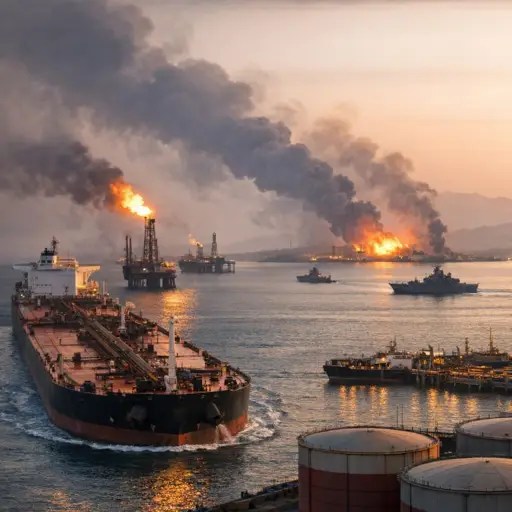
Escalating conflict disrupts critical shipping lanes, rattles global markets, and ignites fears of prolonged energy shock
Global energy markets are reeling as oil prices and fuel cargo rates surge to unprecedented levels, driven by intensifying conflict involving Iran that is choking vital supply routes across the Middle East. The disruption, centered around one of the world’s most strategically significant energy corridors, has sent shockwaves through crude benchmarks, refined fuel markets, and global shipping networks.
Traders and analysts describe the current moment as one of the most severe supply shocks in recent memory. Tanker operators are rerouting vessels, insurance premiums for transit have spiked dramatically, and several major buyers are scrambling to secure alternative sources of crude and refined products. The result has been a sharp escalation in both spot prices and long-term contract expectations.
At the heart of the turmoil lies a growing threat to maritime flows through key regional chokepoints. With military tensions escalating, commercial shipping has become increasingly hazardous. Several shipping companies have either suspended operations in high-risk zones or imposed strict risk surcharges, effectively tightening available capacity. This has amplified the impact of already constrained supply, pushing freight rates for fuel cargoes to record highs.
Market participants report that even cargoes far from the immediate conflict zone are being affected. “The ripple effect is global,” said one senior commodities trader. “When a critical artery is disrupted, everything from Europe to Asia feels the pressure almost immediately.” Refiners in major importing regions are facing delays and rising input costs, while inventories are being drawn down faster than anticipated.
The surge in prices is not limited to crude oil. Refined products, including diesel and jet fuel, have experienced even sharper spikes as logistical bottlenecks worsen. The shortage of available tankers, combined with longer voyage times due to rerouting, has further strained supply chains. In some markets, buyers are bidding aggressively for prompt deliveries, fueling volatility.
Governments are beginning to respond to the unfolding crisis. Strategic reserves are being considered as a buffer against sustained disruption, while diplomatic efforts are intensifying in an attempt to stabilize the region. However, uncertainty remains high, and few expect a quick resolution.
The current situation has also reignited debates about energy security and diversification. Countries heavily reliant on Middle Eastern supply are reassessing their exposure, while producers outside the region are under pressure to increase output. Yet, capacity constraints and logistical challenges limit how quickly additional supply can come online.
Financial markets have reacted sharply to the evolving crisis. Energy stocks have rallied, while sectors sensitive to fuel costs—such as aviation and shipping—have come under pressure. Inflation concerns are also resurfacing, as higher energy costs threaten to feed into broader price levels across global economies.
Despite the immediate focus on supply disruption, analysts warn that the longer-term implications could be even more significant. Prolonged instability in the region risks reshaping trade flows, investment patterns, and geopolitical alliances. “We are not just witnessing a price spike,” said an energy economist. “This could mark a structural shift in how global energy markets operate.”
As the conflict continues to unfold, market participants are bracing for further volatility. With limited visibility on how the situation will evolve, traders are factoring in a wide range of scenarios, from partial recovery of flows to deeper and more sustained disruptions.
For now, the message from the market is clear: the era of relatively stable and predictable energy supply has been abruptly interrupted. Whether this proves to be a temporary shock or the beginning of a more profound transformation will depend largely on developments in the region in the days and weeks ahead.


 The Tower Post