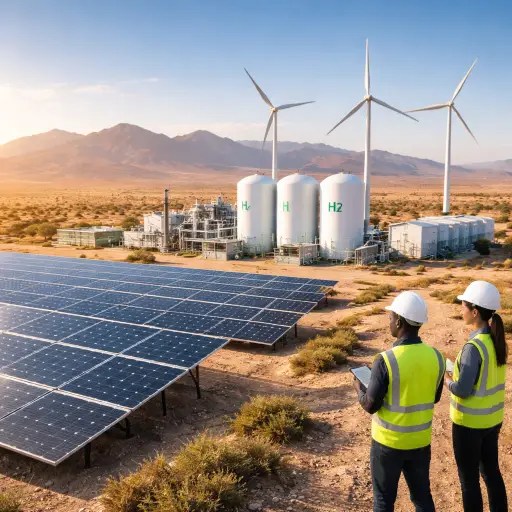
New solar and hydrogen agreements deepen cooperation, boost clean energy flows, and reshape geopolitical ties
As the global race toward decarbonization accelerates, a powerful new axis of cooperation is taking shape between Europe and Africa. In recent developments, several European nations have signed a series of ambitious agreements with African partners, significantly expanding joint investments in solar power and green hydrogen. The rapidly evolving partnership reflects a strategic convergence of interests: Europe’s urgent need for clean energy imports and Africa’s vast renewable potential.
The latest wave of agreements marks a turning point in cross-continental energy relations. European countries including Germany, France, and the Netherlands are intensifying collaboration with nations such as Morocco, Egypt, Namibia, and South Africa. These partnerships center on large-scale renewable energy projects designed not only to meet domestic demand in Africa but also to export clean energy to Europe.
At the heart of the initiative lies solar energy. Africa’s abundant sunlight offers ideal conditions for large photovoltaic installations, particularly in North and Southern regions. Several projects now underway aim to transform desert and semi-arid landscapes into major energy hubs. In parallel, green hydrogen—produced using renewable electricity—has emerged as a cornerstone of the strategy. European governments see hydrogen imports as critical to decarbonizing heavy industry, transport, and power generation.
Officials on both continents describe the collaboration as mutually beneficial. For Europe, diversifying energy sources has become a top priority amid ongoing efforts to reduce reliance on fossil fuels and external suppliers. For African nations, the influx of investment is expected to stimulate economic growth, create jobs, and accelerate infrastructure development.
“This is not just about energy—it’s about long-term partnership,” noted a senior European policymaker involved in the negotiations. “We are building a sustainable framework that supports both climate goals and economic development.”
African leaders have echoed this sentiment, emphasizing the transformative potential of renewable energy projects. Beyond export revenues, these initiatives are expected to expand local access to electricity and foster new industries linked to clean technology. In regions where energy access remains uneven, the development of modern infrastructure could have far-reaching social and economic effects.
However, the rapid expansion of the partnership also raises important questions. Analysts point to the need for balanced agreements that ensure local communities benefit from projects and that environmental standards are upheld. Concerns about land use, water resources, and equitable revenue sharing remain central to ongoing discussions.
From a geopolitical perspective, the initiative represents a significant shift. By investing heavily in sustainable energy infrastructure across Africa, European nations are strengthening their presence and influence in a region that has increasingly attracted global attention. The strategy is widely seen as a response to growing competition from other international actors seeking to deepen ties with African economies.
Energy experts argue that the partnership could redefine traditional dynamics between the two continents. Rather than a one-sided flow of resources, the emerging model emphasizes collaboration, technology transfer, and shared climate objectives. If successfully implemented, it may serve as a blueprint for future international cooperation in the green energy sector.
The environmental implications are equally significant. By scaling up renewable energy production and facilitating cross-border clean energy trade, the initiative contributes directly to global efforts to reduce carbon emissions. The development of green hydrogen, in particular, is expected to play a crucial role in decarbonizing sectors that are difficult to electrify.
As momentum continues to build, the Europe–Africa green energy partnership is quickly evolving from a series of bilateral deals into a broader strategic alliance. Governments, investors, and industry leaders are increasingly aligning around a shared vision of a low-carbon future, driven by innovation and cooperation.
While challenges remain, the direction is clear. The expanding network of solar and hydrogen projects signals not only a shift in how energy is produced and consumed, but also in how nations collaborate to address one of the defining issues of our time. In this emerging landscape, Europe and Africa are positioning themselves at the forefront of a global transformation—one powered by clean energy and shaped by partnership.


 The Tower Post