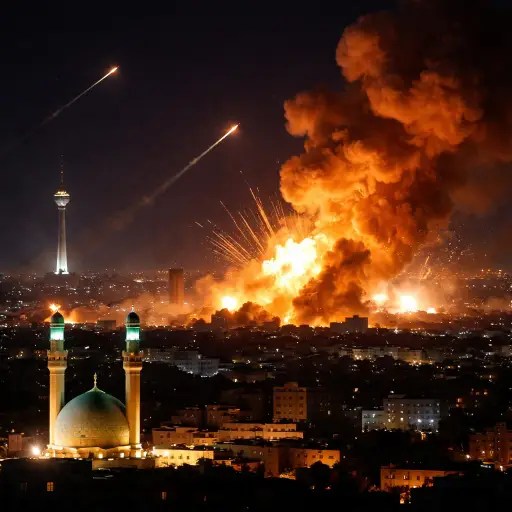
Israeli air raids on Tehran and Beirut trigger sweeping retaliation from Iran, raising fears of a wider regional conflict and deepening global instability.
In a dramatic escalation of hostilities across the Middle East, Israeli forces have launched a new wave of airstrikes targeting key locations in Tehran and Beirut, marking one of the most significant expansions of the conflict in recent memory. The strikes, described by Israeli officials as strategic and preemptive, were followed by a swift and forceful retaliation from Iran, which deployed a barrage of missiles and drones across multiple fronts.
Explosions were reported across several districts of the Iranian capital, with plumes of smoke rising above government and military facilities. Israeli sources indicated that the strikes were aimed at infrastructure linked to Iran’s military command and weapons development programs. In Beirut, air raids targeted positions associated with armed groups aligned with Tehran, further widening the geographic scope of the confrontation.
Eyewitness accounts from both cities describe scenes of chaos and urgency, as emergency responders rushed to affected areas. Hospitals have begun to report a surge in casualties, with medical personnel struggling to cope with the influx of wounded civilians. Communication networks in some areas have been disrupted, complicating rescue and coordination efforts.
Iran’s response came swiftly and with considerable intensity. Missile launches and drone strikes were reported across Israeli territory and in other strategic locations in the region. Air defense systems were activated as sirens sounded in major cities, and authorities urged residents to seek shelter. Several impacts were confirmed, resulting in damage to infrastructure and further civilian casualties.
Iranian officials framed the retaliation as a direct response to what they described as an act of aggression, warning that further escalation would be met with even stronger measures. The exchange marks a sharp intensification in a conflict that had already been simmering, now threatening to draw in additional actors and expand beyond its current boundaries.
The humanitarian toll is mounting rapidly. Civilians in multiple countries are now caught in the crossfire, with reports of fatalities and injuries continuing to rise. Displacement is also increasing, as families flee areas considered at risk of further strikes. Aid organizations are raising alarms about the growing need for emergency assistance and the potential for a broader humanitarian crisis.
At the same time, global economic concerns are beginning to surface. Disruptions to key energy routes have sparked fears of supply instability, with markets reacting to the uncertainty. Analysts warn that continued escalation could have far-reaching consequences, particularly if critical transit points become compromised.
International reaction has been swift but cautious. Governments around the world have called for restraint and urgent de-escalation, emphasizing the risk of a wider regional war. Diplomatic channels are being activated, though prospects for immediate resolution remain uncertain as both sides signal readiness to continue operations.
Security experts note that the current trajectory represents a turning point, with the conflict moving from indirect confrontation toward more direct engagement. The involvement of additional regional actors remains a significant concern, as alliances and rivalries risk compounding the crisis.
As tensions remain high and further developments unfold, the situation continues to evolve rapidly. For millions across the region, the immediate priority is safety, while the broader international community watches closely, aware that the consequences of this escalation could extend far beyond the battlefield.


 The Tower Post