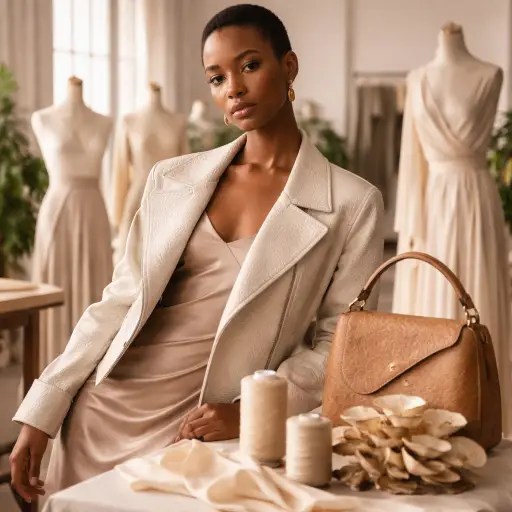
As lab-grown materials move from concept to couture, biotechnology is reshaping the future of high fashion.
In the hushed ateliers of New York and Los Angeles, a subtle but profound transformation is underway. Luxury fashion—long defined by heritage craftsmanship and rare materials—is beginning to embrace an unlikely collaborator: biotechnology. What was once confined to research labs and sustainability panels is now appearing on runways, in showrooms, and, increasingly, in the closets of discerning clients.
Bio-fabricated materials, including mycelium-based leather and lab-grown silk, are no longer speculative experiments. They are being cut, stitched, and styled into real garments by a new generation of American designers eager to reconcile luxury with environmental responsibility. The shift is quiet, almost discreet—but its implications are vast.
At the center of this movement are biotech innovators working behind the scenes with fashion brands. Companies developing materials like mushroom-derived leather alternatives and engineered fibers have spent years refining their processes, focusing on durability, scalability, and aesthetic fidelity. Now, their efforts are beginning to bear visible fruit.
Designers are incorporating these materials not as novelties, but as integral elements of their collections. Jackets crafted from mycelium leather carry the same supple texture and rich finish as traditional hides. Dresses woven from bio-silk drape with a familiar elegance, yet are produced without the environmental toll of conventional silk farming. The result is a new category of luxury—one that is defined as much by innovation as by appearance.
This moment represents a convergence that industry insiders have anticipated for years. Biotechnology and fashion, once operating in entirely separate spheres, are finding common ground in a shared urgency: the need to rethink how materials are sourced and produced. Climate concerns, supply chain disruptions, and shifting consumer values have all accelerated this alignment.
Yet the transition is not without its challenges. Scaling production remains a significant hurdle. While bio-fabricated materials can now meet the quality standards of luxury fashion, they are not yet produced at volumes that would allow for widespread adoption. Costs, too, remain high, reinforcing their current position within the upper tiers of the market.
Still, there is a growing sense that the industry has reached an inflection point. Designers, investors, and consumers are showing a willingness to engage with these materials not just as sustainable alternatives, but as desirable innovations in their own right. The narrative is shifting—from compromise to aspiration.
Brands connected to leading biotech firms are playing a crucial role in this transition. By integrating advanced materials into visible, high-profile collections, they are helping to normalize the presence of bio-fabrication in luxury contexts. The strategy is deliberate: introduce the materials at the top of the market, where experimentation is more readily absorbed, before expanding outward.
For consumers, the appeal is layered. There is the environmental argument, certainly, but also the allure of novelty and forward-thinking design. Wearing a garment grown rather than harvested carries a distinct cultural resonance—one that aligns with broader shifts toward technology-driven lifestyles.
Importantly, this movement does not signal the end of traditional craftsmanship. Instead, it suggests an evolution. Artisans are learning to work with new materials, adapting techniques while preserving the attention to detail that defines luxury. The hand of the maker remains essential, even as the origin of the material changes.
As the current fashion cycle unfolds, the presence of bio-fabricated pieces is becoming harder to ignore. They appear not as statements, but as seamless components of collections—integrated, refined, and increasingly indistinguishable from their conventional counterparts.
This is how revolutions often begin in fashion: not with abrupt disruption, but with gradual integration. A material here, a collection there—until suddenly, the new becomes familiar.
Bio-fabricated fashion has not yet reached the mass market, and it may not do so immediately. But within the rarefied world of luxury, the shift is unmistakable. Biotechnology is no longer an outsider looking in; it is becoming part of the fabric itself.
If there is a defining characteristic of this moment, it is not spectacle, but inevitability. The question is no longer whether bio-fabricated materials will shape the future of fashion—but how quickly that future will arrive.




 The Tower Post