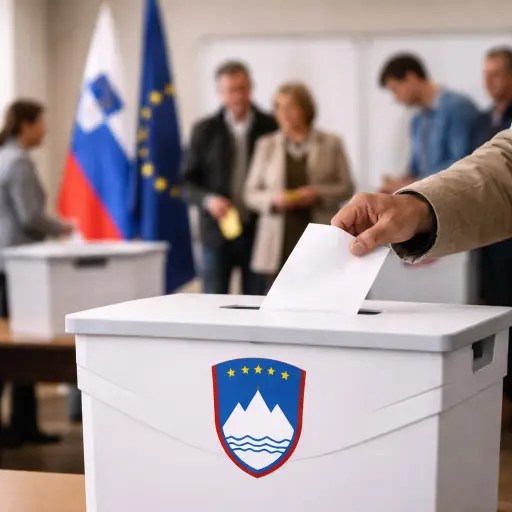
A tightly contested parliamentary race pits veteran conservative leadership against a fragmented center, with implications reaching far beyond national borders
Slovenia is heading into one of the most consequential parliamentary elections in its recent history, with voters set to decide a razor-close contest that could redefine the country’s political trajectory and ripple across Central Europe.
The race has tightened dramatically in recent weeks, reflecting a deeply divided electorate and growing uncertainty about the direction of governance in the small but strategically significant EU member state. Polling trends suggest no clear frontrunner, raising the likelihood of complex coalition negotiations and prolonged political maneuvering once ballots are counted.
At the center of the contest stands a resurgent conservative bloc, led by a seasoned political figure seeking a return to power. Campaigning on promises of stability, economic discipline, and a firmer stance on migration, conservatives have capitalized on voter fatigue with fragmented centrist leadership and policy gridlock. Their message has resonated particularly among older voters and in rural regions, where concerns about inflation, energy costs, and national identity have taken center stage.
Yet the path to victory is far from assured. A diverse field of centrist and progressive parties remains competitive, drawing support from urban voters, younger demographics, and those wary of a shift toward more hardline policies. These groups have framed the election as a choice between continuity within a liberal European framework and a pivot toward more nationalist-leaning governance.
The campaign has been marked by sharp rhetoric but relatively few defining policy breakthroughs, underscoring the broader challenge facing Slovenian politics: fragmentation. No single party appears capable of securing a governing majority, making post-election alliances not only inevitable but decisive.
Observers note that coalition-building could prove particularly challenging given ideological divides and personal rivalries among party leaders. Previous governments have struggled with cohesion, and there is little indication that the next administration—whatever its composition—will find governing any easier.
Beyond Slovenia’s borders, the election is being closely watched across the European Union. The outcome could subtly shift the political balance in Central Europe, where debates over rule of law, migration, and the pace of integration continue to shape regional dynamics. A conservative-led government in Ljubljana might align more closely with other right-leaning administrations in the region, potentially complicating consensus within EU institutions.
At the same time, Slovenia’s economic stability and strategic location make it an important player despite its size. Investors and policymakers alike are monitoring the vote for signals about fiscal policy, regulatory direction, and the country’s commitment to European norms.
For voters, however, the stakes are more immediate. Many are weighing everyday concerns—rising living costs, healthcare access, and economic opportunity—against broader questions about identity, governance, and Slovenia’s place in Europe.
Turnout is expected to be a critical factor in determining the outcome. Analysts suggest that even small shifts in participation could tip the balance in what is shaping up to be one of the closest elections in the country’s democratic era.
As the campaign enters its final stretch, uncertainty remains the defining feature. What is clear, however, is that the result will not only determine who governs Slovenia next, but also signal the direction of political momentum in a region increasingly defined by tight contests and shifting alliances.


 The Tower Post