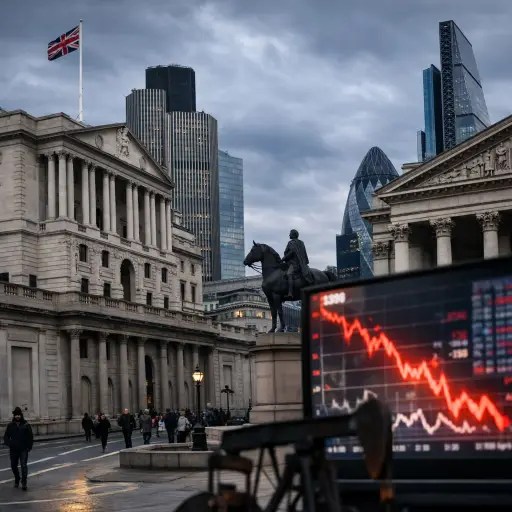
Surging gas and oil prices push policymakers toward tighter monetary policy, while markets reel from renewed uncertainty
The United Kingdom is once again confronting the uneasy return of inflationary pressure, as a fresh surge in global energy prices ripples through the economy and sharpens expectations of further monetary tightening. Policymakers at the Bank of England now face mounting pressure to act decisively, with investors increasingly pricing in multiple interest rate hikes over the course of the year.
The renewed inflation threat, largely driven by volatile gas and oil markets, has disrupted the fragile equilibrium that had begun to take hold after a period of relative stability. Energy costs, a critical input across industries and households alike, are once again exerting upward pressure on prices, raising concerns that inflation may remain stubbornly elevated for longer than previously anticipated.
Analysts point to a confluence of factors behind the latest spike in energy prices. Supply constraints, geopolitical tensions, and unpredictable weather patterns have all contributed to tightening global energy markets. In the UK, where energy imports play a significant role in determining domestic costs, the impact has been particularly acute.
For households, the consequences are immediate and tangible. Rising utility bills are eroding disposable incomes, dampening consumer confidence at a time when economic growth remains uneven. Businesses, especially those in energy-intensive sectors, are also feeling the strain, with higher operating costs threatening margins and investment plans.
Against this backdrop, the Bank of England is widely expected to respond with a more hawkish stance. While policymakers had previously signaled a cautious approach, the persistence of inflationary pressures is shifting the balance. Market participants now anticipate that the central bank could implement at least two rate increases in the near term, as it seeks to anchor inflation expectations and maintain credibility.
However, the prospect of tighter monetary policy comes with its own risks. Higher interest rates could further constrain economic activity, particularly in interest-sensitive sectors such as housing and consumer credit. The challenge for policymakers lies in striking a delicate balance between curbing inflation and avoiding an undue slowdown in growth.
Financial markets have reacted swiftly—and sharply—to the changing outlook. Equity indices have come under pressure, with investors reassessing valuations in light of higher borrowing costs and reduced earnings expectations. The sell-off has been particularly pronounced in sectors that are sensitive to interest rates, including technology and real estate.
At the same time, bond markets have experienced increased volatility, reflecting shifting expectations around the trajectory of monetary policy. Yields have edged higher as investors demand greater compensation for inflation risk, while currency markets have seen fluctuations as traders weigh the implications for the pound.
The broader economic narrative remains one of uncertainty. While the UK economy has demonstrated resilience in the face of previous shocks, the renewed surge in energy prices introduces a fresh layer of complexity. Policymakers must now navigate an environment where external factors—largely beyond their control—are exerting significant influence over domestic conditions.
Economists caution that the path forward is unlikely to be straightforward. Much will depend on the evolution of global energy markets and the extent to which price pressures spill over into other areas of the economy. Wage growth, in particular, will be a key variable to watch, as sustained increases could entrench inflation and necessitate more aggressive policy action.
For now, the message from markets is clear: the era of cautious optimism has given way to renewed vigilance. As the UK braces for potential rate hikes, the interplay between energy prices, inflation, and monetary policy will remain at the forefront of the economic agenda.
In the coming months, all eyes will be on the Bank of England as it charts its course through this increasingly complex landscape. Its decisions will not only shape the trajectory of inflation but also determine the broader contours of the UK’s economic recovery.



 The Tower Post