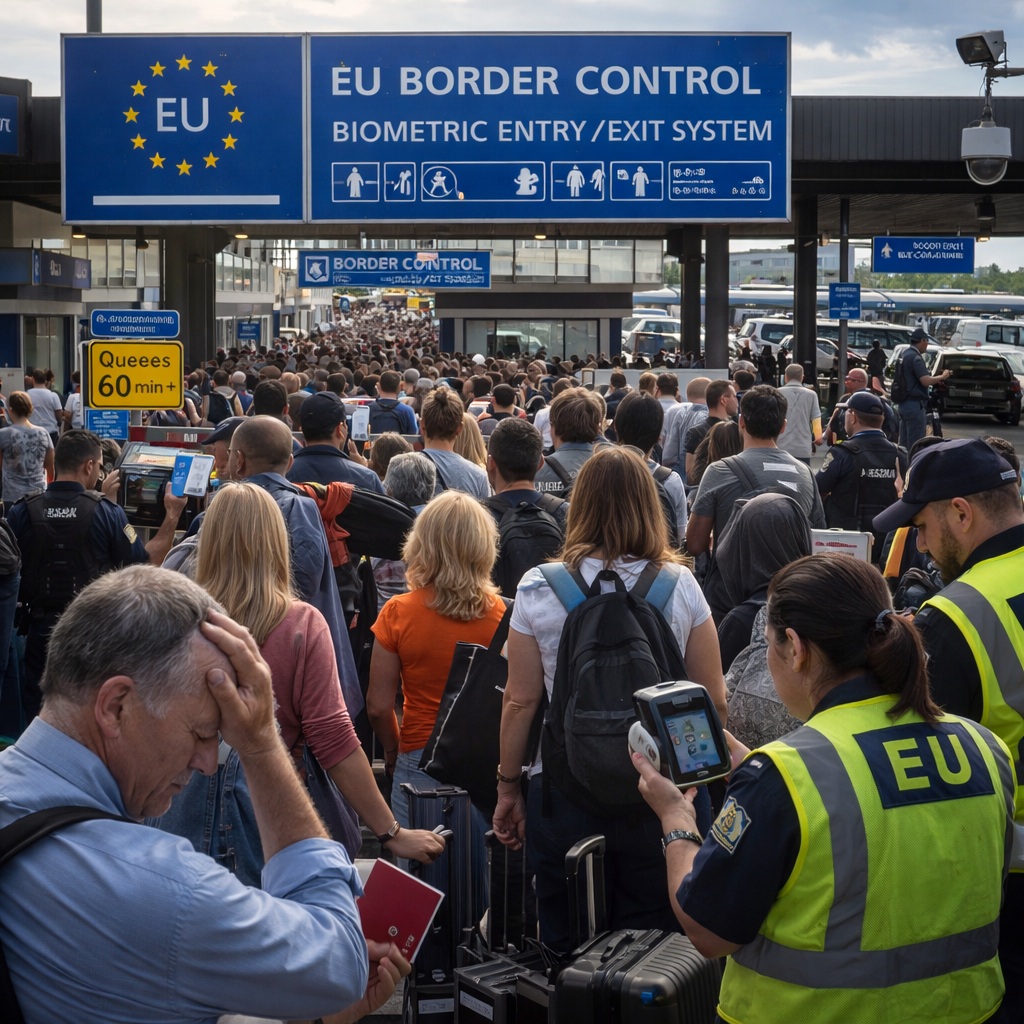
The EU’s biometric Entry/Exit System rollout is triggering long queues, confusion, and mounting pressure at airports and land borders across the bloc.
Europe’s ambitious push to modernize its border controls has run into immediate turbulence, as the rollout of the new biometric Entry/Exit System (EES) disrupts travel across the region. Designed to enhance security and streamline the monitoring of non-EU visitors, the system is instead causing widespread delays, operational strain, and growing frustration among travelers and border officials alike.
At major airports and land crossings, queues have stretched far beyond expectations. Passengers report waiting for hours to complete procedures that were once routine. The system, which requires biometric data collection including fingerprints and facial scans, is struggling to handle real-time processing demands, particularly during peak travel periods.
Airports that serve as key international gateways have become flashpoints of disruption. Long lines snake through terminals, with travelers anxiously checking departure boards as processing times creep upward. In some cases, passengers have missed flights, while others have been forced to reschedule connections at significant personal cost.
The problems extend beyond airports. Land borders, particularly those with high volumes of cross-border traffic, are experiencing similar bottlenecks. Drivers and bus passengers face extended waits as border officers adapt to the new procedures, often under intense pressure and limited resources.
A central issue lies in the system’s complexity. Unlike previous passport-stamping methods, the EES relies on detailed biometric registration for each eligible traveler. While the technology promises improved tracking and reduced fraud in the long term, its initial implementation has revealed vulnerabilities. Processing each individual takes longer than anticipated, creating a ripple effect that quickly overwhelms capacity.
Compounding the situation is a shortage of trained personnel. Border agencies across several member states are struggling to deploy enough staff capable of managing the new technology. Officers must not only conduct traditional checks but also operate biometric equipment and troubleshoot technical issues in real time. The result is slower throughput and mounting fatigue among frontline workers.
Technical glitches have further exacerbated the strain. Reports of system slowdowns, temporary outages, and synchronization issues between databases have surfaced across multiple locations. Even brief interruptions can bring processing lines to a standstill, amplifying delays and increasing tension among waiting travelers.
For passengers, the experience has been marked by confusion as much as delay. Many are unclear about the new requirements, unsure of what to expect during the biometric registration process. Inconsistent communication and varying procedures between different border points have added to the uncertainty, leaving travelers unprepared and anxious.
Airlines and travel operators are also feeling the impact. Tight turnaround schedules are being disrupted as passengers arrive late at gates, while ground staff are forced to manage increasingly frustrated crowds. Industry representatives warn that if the situation persists, it could have broader implications for travel reliability and passenger confidence across Europe.
Despite the challenges, officials maintain that the system is a necessary step toward modernizing border security. The EES is intended to replace manual passport stamping with a digital record of entries and exits, improving the ability to detect overstays and enhance overall border management. In principle, it represents a significant technological leap.
However, the current difficulties highlight the gap between policy ambition and operational readiness. Experts note that large-scale digital transformations often encounter early setbacks, particularly when they involve coordination across multiple countries and agencies. The EES rollout, spanning numerous entry points with varying levels of infrastructure, presents a particularly complex case.
In response to the growing disruption, calls for immediate adjustments are intensifying. Travel industry groups are urging authorities to increase staffing levels, accelerate training programs, and implement contingency measures to ease congestion. Some have suggested phased or flexible deployment strategies to reduce pressure during peak periods.
Authorities have acknowledged the issues and signaled that improvements are underway. Efforts to stabilize the system, address technical shortcomings, and provide clearer guidance to travelers are being prioritized. In the meantime, passengers are being advised to allow significantly more time for border procedures and to prepare for potential delays.
The coming weeks will be critical in determining whether the system can be stabilized quickly enough to meet travel demand. With busy travel periods approaching, the stakes are high. A smoother operation could restore confidence and demonstrate the system’s long-term value. Continued disruption, however, risks undermining both public trust and the broader goals of the initiative.
For now, Europe’s new border technology stands as a vivid example of innovation colliding with reality. While the vision behind the system remains intact, its troubled debut underscores the importance of execution in turning digital ambition into practical success.



 The Tower Post