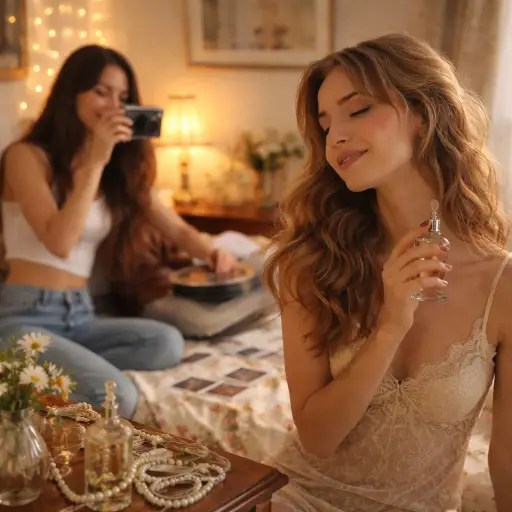
Vintage aesthetics, fragrance culture, and emotional branding reshape how Gen Z experiences style in the digital age
Fashion has always cycled through eras, but the current wave of nostalgia sweeping through Gen Z culture feels fundamentally different. It is not merely a revival of past trends—it is a recontextualization of memory itself, driven by TikTok’s powerful storytelling ecosystem. In this new landscape, vintage-inspired fashion and fragrance are not just aesthetic choices; they are emotional artifacts, curated and shared through highly personal narratives that resonate across millions of screens.
Scroll through TikTok today, and a pattern quickly emerges. Grainy filters, early-2000s silhouettes, thrifted denim, and softly lit “get ready with me” videos dominate the feed. But what distinguishes this moment is not the clothes alone—it is the storytelling attached to them. Users are not simply showcasing outfits; they are reconstructing eras, moods, and identities. A slip dress becomes “something my mom would have worn on a summer night.” A leather jacket is framed as “main character energy in a 90s film.” Fashion is no longer presented as trend-forward—it is memory-forward.
This shift is closely tied to Gen Z’s broader relationship with time and identity. Having grown up in a hyper-digital environment, this generation often experiences the past not as lived history but as an aesthetic archive. TikTok acts as both curator and amplifier, allowing users to remix decades into cohesive, emotionally charged narratives. The result is a form of “digital nostalgia”—a longing for times not necessarily lived, but deeply felt through mediated storytelling.
The fragrance industry has mirrored this transformation with remarkable speed. Once marketed through polished campaigns and celebrity endorsements, perfumes are now being rediscovered as intimate, narrative-driven products. TikTok creators frequently describe scents in cinematic terms: “this smells like old books and rainy afternoons,” or “this is what a vintage romance feels like.” The language is less about notes and more about atmosphere.
Vintage and vintage-inspired fragrances have surged in popularity as a result. Classic compositions—powdery florals, musky ambers, and aldehydic blends—are being reframed as emotional experiences rather than dated relics. Younger consumers are drawn not only to the scents themselves but to the stories they can attach to them. Wearing a fragrance becomes an act of storytelling, a way to embody a specific mood or imagined past.
Brands have taken notice, and their strategies are evolving accordingly. Traditional marketing, with its emphasis on aspiration and exclusivity, is giving way to something more participatory and emotionally nuanced. Instead of dictating trends, brands are increasingly collaborating with creators who already understand the language of TikTok storytelling.
These collaborations often feel less like advertisements and more like narrative extensions. A campaign might unfold through a series of short videos depicting a fictional day in the life of a character, with clothing and fragrance seamlessly integrated into the storyline. The goal is not to sell a product outright, but to embed it within a relatable, emotionally engaging context.
Importantly, this approach shifts the power dynamic between brands and consumers. Gen Z audiences are highly attuned to authenticity and can quickly detect overly polished or insincere content. As a result, brands are learning to relinquish a degree of control, allowing creators to interpret products in their own voices. The most successful campaigns are those that feel organic—stories first, products second.
This evolution also reflects a broader cultural move toward emotional consumption. In an era marked by uncertainty and rapid change, nostalgia offers a form of comfort and continuity. Vintage aesthetics provide a sense of stability, while storytelling allows individuals to place themselves within a narrative that feels meaningful and coherent.
TikTok’s algorithm plays a crucial role in amplifying this phenomenon. By prioritizing content that generates emotional engagement, the platform naturally elevates videos that tell compelling stories. A simple outfit post may go unnoticed, but a narrative about “dressing like the version of myself I needed growing up” can resonate widely. This dynamic encourages creators to think not just about what they wear, but about what their choices signify.
The visual language of nostalgia is also evolving. While earlier revivals often focused on specific decades, today’s trends are more fluid, blending elements from multiple eras into hybrid aesthetics. A single outfit might combine 70s textures, 90s silhouettes, and early-2000s accessories, all filtered through a contemporary lens. This collage-like approach reflects the way digital culture collapses time, making all eras simultaneously accessible.
For brands, this presents both an opportunity and a challenge. On one hand, the appetite for vintage-inspired products is strong, opening new avenues for design and marketing. On the other hand, the pace of TikTok-driven trends is relentless, requiring constant adaptation. What feels fresh today can become oversaturated within weeks.
Yet the deeper shift is unlikely to fade quickly. The integration of storytelling into fashion consumption represents a structural change in how people engage with style. Clothing and fragrance are no longer just objects; they are narrative tools, used to construct and communicate identity in a highly visible digital space.
Looking ahead, the lines between past and present, product and story, consumer and creator will continue to blur. As TikTok and similar platforms evolve, so too will the ways in which nostalgia is expressed and experienced. What remains constant is the human desire to connect—to find meaning in what we wear, what we smell, and the stories we tell about ourselves.
In this sense, fashion’s nostalgic turn is not simply a trend. It is a reflection of a generation seeking to anchor itself in emotion, memory, and imagination—one story, one outfit, and one scent at a time.




 The Tower Post