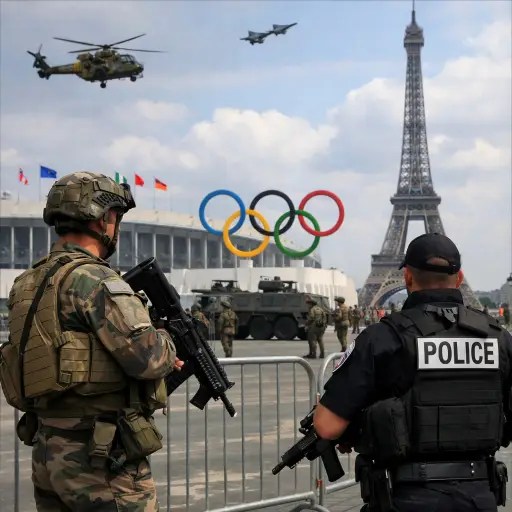
Rising global tensions reshape security strategies, strain international cooperation, and cast doubt on athlete participation
As the world’s most anticipated sporting event approaches, Olympic preparations are unfolding against an increasingly complex geopolitical backdrop. What has traditionally been a celebration of unity and international cooperation is now being shaped by rising global tensions, shifting alliances, and growing security concerns. Organizers and governments alike are navigating a delicate balance between safeguarding the event and preserving its spirit.
Across Europe, host nations are intensifying coordination efforts in response to a changing security environment. Defense agencies, intelligence services, and local authorities are working in closer alignment than in previous Olympic cycles. Joint exercises, cross-border intelligence sharing, and expanded surveillance capabilities have become central to preparation strategies. Officials describe the approach as necessary, citing a more unpredictable global climate marked by regional conflicts, cyber threats, and heightened political polarization.
Security planning has expanded well beyond traditional concerns such as crowd management and counterterrorism. Authorities are now addressing hybrid threats that include cyberattacks targeting infrastructure, misinformation campaigns aimed at destabilizing public confidence, and potential disruptions linked to geopolitical rivalries. The integration of military assets into security frameworks—once considered exceptional—is increasingly normalized, reflecting a broader shift in how large-scale international events are protected.
The presence of armed forces in public spaces, enhanced airspace monitoring, and visible security checkpoints are becoming defining features of Olympic host cities. While these measures aim to reassure visitors and participants, they also underscore the evolving nature of global risk. For many observers, the contrast between the festive atmosphere of the Games and the underlying security posture highlights the tension between celebration and caution.
At the diplomatic level, geopolitical divisions are influencing participation dynamics. Ongoing conflicts and strained international relations raise questions about which nations will be represented and under what conditions. Discussions around neutrality, eligibility, and symbolic gestures have become more prominent, reflecting the intersection of sport and politics. In some cases, athletes face uncertainty not because of their performance, but because of the broader context in which they compete.
Athletes from conflict-affected regions are particularly impacted. Training disruptions, limited access to facilities, and logistical barriers complicate their preparation. For some, the journey to the Olympic stage is shaped as much by resilience in the face of instability as by athletic excellence. There is also growing concern that certain competitors may be unable to participate at all, either due to safety risks or restrictions imposed by governing bodies.
International sports organizations are under pressure to maintain neutrality while responding to these realities. Balancing inclusivity with ethical considerations has become an increasingly complex task. Decisions regarding participation, representation, and symbolic recognition carry significant political weight, often drawing scrutiny from multiple sides.
Economic implications further complicate the picture. Heightened security requirements have driven up costs for host nations, placing additional strain on already significant budgets. Investments in defense coordination, cybersecurity infrastructure, and emergency response capabilities are reshaping financial priorities. While these expenditures are framed as necessary, they raise broader questions about the long-term sustainability of hosting mega-events in a volatile global environment.
Public perception also plays a critical role. Citizens in host countries are navigating mixed feelings—pride in welcoming the world, coupled with concerns about safety and resource allocation. The visibility of security measures can be both reassuring and unsettling, serving as a constant reminder of the broader tensions influencing the event.
Despite these challenges, organizers emphasize that the Olympic spirit remains intact. Efforts to promote cultural exchange, international dialogue, and peaceful competition continue to be central to the Games’ mission. Initiatives aimed at fostering inclusivity and resilience are being highlighted as a counterbalance to geopolitical strain.
Yet, the reality is clear: the Olympics are no longer insulated from global dynamics. The interplay between sport and geopolitics has become more pronounced, shaping decisions at every level—from security planning to athlete participation. As preparations continue, the Games stand as both a reflection of the current world order and a test of its ability to come together, even in times of uncertainty.
In this evolving landscape, the success of the Olympics will not be measured solely by records broken or medals won, but by the extent to which they can uphold their foundational ideals amid a shifting and often turbulent global context.
 The Tower Post