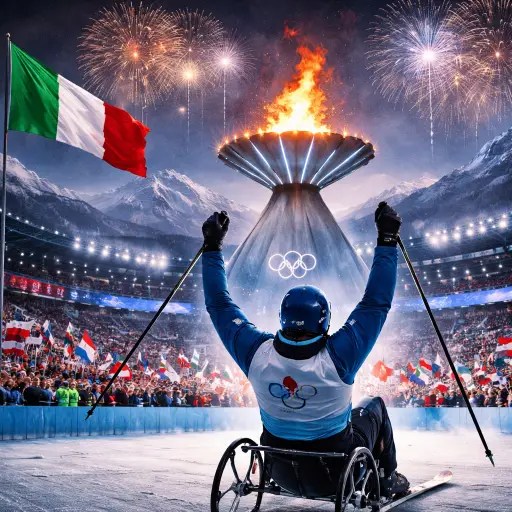
Athletic excellence defines the Games, even as geopolitical tensions cast a long shadow over global unity.
As the curtain falls on the Milan-Cortina Winter Paralympics, the final moments deliver what the Games have consistently promised: resilience, excellence, and deeply human stories of perseverance. Across snow-covered slopes and ice arenas, athletes from around the world have redefined limits, producing performances that will be remembered long after the closing ceremony fades into memory.
Yet, while the sporting achievements stand tall, this edition of the Paralympics will also be recalled for the political tensions that ran parallel to the competition—sometimes quietly, sometimes unmistakably—reminding the world that sport and geopolitics remain intricately intertwined.
From the outset, the Games were framed as a celebration of unity and inclusion. Organizers in Italy emphasized accessibility, sustainability, and innovation, with venues spanning Milan and the Dolomites offering a striking backdrop to elite competition. The logistical execution was widely praised, and attendance exceeded expectations, with spectators returning in strong numbers and embracing the Paralympic spirit.
On the field of play, the performances were nothing short of remarkable. Alpine skiing delivered some of the most thrilling moments, with athletes navigating demanding courses at breathtaking speeds. Nordic events showcased endurance and tactical brilliance, while para ice hockey matches drew packed crowds and intense rivalries. Several athletes emerged as standout figures, breaking records and, in some cases, redefining their disciplines.
For many competitors, the Games represented not just a quest for medals but a personal milestone shaped by years of training, recovery, and adaptation. Stories of athletes overcoming injury, conflict, and social barriers resonated strongly with global audiences. These narratives reinforced the core identity of the Paralympics: a platform where determination transcends circumstance.
However, the atmosphere surrounding the Games was not without complexity. In the months leading up to the event, geopolitical disputes led to diplomatic tensions and partial boycotts by some nations. Decisions regarding athlete participation, national representation, and symbolic gestures became focal points of debate within international sporting bodies.
While the International Paralympic Committee maintained its stance of political neutrality, the reality proved more nuanced. Some delegations competed under neutral flags, while others faced restrictions or scrutiny tied to broader international conflicts. These dynamics inevitably influenced public perception, shifting part of the spotlight away from the athletes themselves.
The presence—or absence—of certain nations became a topic of discussion both inside and outside the venues. For some athletes, competing under altered circumstances added an additional layer of emotional complexity. For others, it served as motivation, reinforcing their desire to represent not just their country but the ideals of inclusion and resilience that define the Paralympic movement.
Despite these challenges, the Games largely succeeded in preserving their competitive integrity. Events proceeded smoothly, and the level of performance remained exceptionally high. Broadcasters reported strong global viewership, suggesting that audiences remained deeply engaged with the sporting narrative, even amid political noise.
Athletes themselves often addressed the tension with measured clarity. Many emphasized the importance of keeping the focus on sport, while acknowledging that the global stage inevitably carries broader significance. Their perspectives highlighted a recurring truth: that athletes are both competitors and, whether they choose it or not, representatives of larger social and political contexts.
The closing ceremony encapsulated this duality. Celebratory and visually striking, it honored the achievements of the athletes while subtly acknowledging the complexities of the moment. Speeches centered on unity, inclusion, and the transformative power of sport, themes that felt both aspirational and necessary.
Looking ahead, the Milan-Cortina Paralympics may serve as a defining chapter in the evolving relationship between sport and geopolitics. The Games demonstrated that, even under pressure, international competition can still provide a platform for connection and inspiration. At the same time, they underscored the challenges of maintaining neutrality in an increasingly polarized world.
For the athletes, however, the legacy is more immediate and personal. Medals have been won, records have been broken, and lifelong dreams have been realized. Beyond the podium, the visibility and recognition generated by the Games will continue to influence perceptions of disability sport, contributing to a broader cultural shift toward inclusion.
In the end, the Milan-Cortina Paralympics leave behind a complex but powerful legacy. They remind us that sport is never entirely separate from the world in which it exists. Yet they also reaffirm something equally important: that, even amid division, moments of shared admiration and respect remain possible.
As the lights dim on the arenas and the athletes return home, the stories forged in these Games will endure—stories not only of competition, but of resilience, identity, and the enduring pursuit of excellence in a complicated world.


 The Tower Post