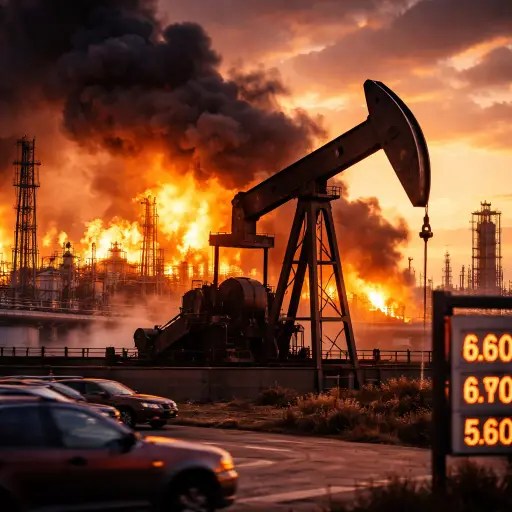
Oil surge above $100 fuels inflation concerns, tightening pressure on European households and markets
Europe is bracing for a renewed energy shock as escalating conflict involving Iran sends oil prices sharply higher, reigniting fears of persistent inflation and economic strain across the continent.
Global crude benchmarks have surged past the psychologically critical $100 threshold, driven by mounting concerns over supply disruptions in one of the world’s most strategically vital energy regions. The spike comes at a delicate moment for European economies, which had only recently begun to stabilize after previous energy crises.
Analysts warn that the current rally may not be short-lived. With tensions showing little sign of easing, markets are increasingly pricing in a prolonged period of volatility that could ripple far beyond the energy sector.
A fragile balance shattered
The Middle East remains central to global oil flows, and any disruption—real or anticipated—can trigger swift market reactions. Traders point to fears over shipping routes and production capacity as key drivers behind the latest price surge.
“The market is reacting not just to current disruptions, but to the risk of escalation,” said one energy strategist based in London. “When uncertainty rises in that region, prices tend to overshoot.”
For Europe, heavily reliant on imported energy, the consequences are immediate. Higher crude prices translate quickly into rising fuel costs, pushing up transportation expenses and, ultimately, consumer prices.
Inflation fears return
The renewed climb in oil prices is complicating the outlook for inflation, which had been gradually easing after years of elevated levels. Economists are now revising forecasts upward, warning that energy-driven price increases could stall or even reverse recent progress.
Energy costs remain a key component of overall inflation, but their impact extends further. As businesses face higher operating expenses, many are likely to pass those costs onto consumers, creating a broader inflationary effect.
Central banks across Europe are now facing a difficult balancing act. Efforts to control inflation through higher interest rates risk further slowing economic growth, yet failing to act could allow price pressures to become entrenched once again.
Mortgage pressure intensifies
For households, the impact is being felt not only at the fuel pump but also in the housing market. Rising inflation expectations are feeding into higher bond yields, which in turn are pushing mortgage rates upward.
Across several European countries, borrowing costs have begun to climb again, reversing a brief period of stabilization. For homeowners with variable-rate mortgages, monthly payments are already increasing, squeezing disposable income.
Prospective buyers are also feeling the strain, as higher financing costs reduce affordability and dampen demand in housing markets that were already under pressure.
Cost of living climbs again
The combination of higher energy prices and rising borrowing costs is amplifying the cost-of-living challenge for millions of Europeans.
Households are facing a renewed squeeze as fuel, heating, and electricity bills edge higher. At the same time, elevated food prices—partly linked to energy-intensive production and transport—are adding to the burden.
Consumer confidence, which had shown tentative signs of recovery, is at risk of weakening again. Retailers and service providers are already reporting more cautious spending patterns, particularly in lower- and middle-income segments.
Markets on edge
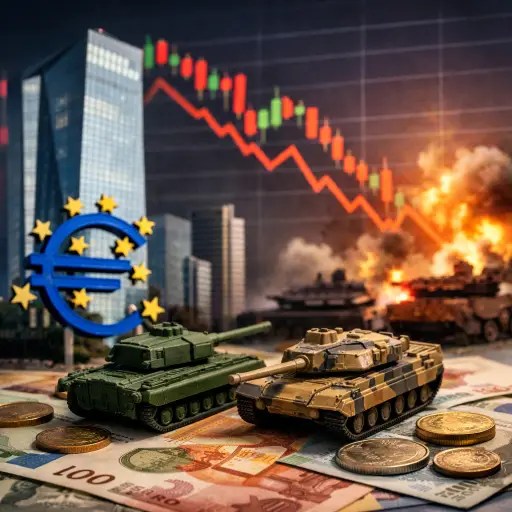
Financial markets are reacting nervously to the unfolding situation. Equity indices across Europe have shown increased volatility, while energy stocks have outperformed amid expectations of sustained high prices.
Investors are also seeking safe-haven assets, reflecting growing uncertainty about the global economic outlook. The prospect of prolonged geopolitical tension is raising concerns about supply chains, trade flows, and overall growth prospects.
Currency markets are feeling the impact as well, with fluctuations reflecting shifting expectations around interest rates and economic resilience.
A prolonged period of uncertainty
The key question facing policymakers and investors alike is how long the current situation will last. While some hope for diplomatic efforts to ease tensions, others warn that structural risks in the region could keep markets unsettled for an extended period.
Energy experts caution that even if direct disruptions remain limited, the mere threat of escalation is enough to sustain elevated price levels.
“This is not just about immediate supply,” said a senior analyst at a major European bank. “It’s about risk premiums being rebuilt into the market.”
Policy responses under scrutiny
Governments across Europe are once again under pressure to shield consumers and businesses from rising energy costs. Options include targeted subsidies, tax relief measures, and renewed efforts to accelerate the transition to alternative energy sources.
However, fiscal space remains constrained after years of crisis spending, limiting the scope for large-scale interventions.
At the same time, the situation is likely to intensify debates over energy security and diversification. The push toward renewable energy, already a strategic priority, may gain further urgency as policymakers seek to reduce dependence on volatile external suppliers.
Looking ahead
As the crisis unfolds, the global economy faces a familiar yet unwelcome challenge: balancing geopolitical instability with economic stability.
For Europe, the stakes are particularly high. The combination of rising energy prices, renewed inflationary pressure, and tightening financial conditions presents a complex and evolving risk landscape.
Markets, policymakers, and households alike are now watching closely, aware that the path ahead may be marked by continued turbulence—and that the effects of this latest energy shock could be felt for some time to come.

 The Tower Post