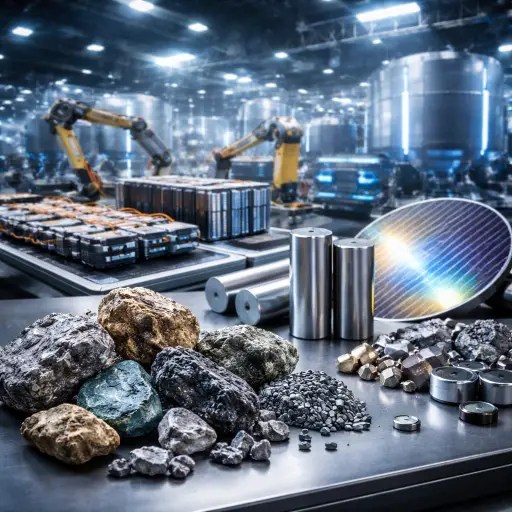
A transatlantic alliance over resources signals a new industrial era shaped by batteries, chips, and strategic autonomy
A new transatlantic alignment is taking shape—one built not on tariffs or traditional trade disputes, but on the raw materials powering the 21st century economy. The European Union and the United States have moved decisively to deepen cooperation on critical minerals, signaling a shift that could redefine global manufacturing, technological leadership, and geopolitical influence.
The agreement, emerging from months of negotiations and reinforced by recent legislative and diplomatic momentum, focuses on securing supply chains for minerals essential to electric vehicles, semiconductors, renewable energy systems, and artificial intelligence infrastructure. Lithium, cobalt, rare earth elements, and graphite—once obscure commodities—have now become the backbone of economic security.
This is not merely another trade arrangement. It is the foundation of a new industrial strategy.
For decades, transatlantic economic ties revolved around reducing tariffs and harmonizing regulations. Today, the focus has shifted to ensuring access to finite and geographically concentrated resources.
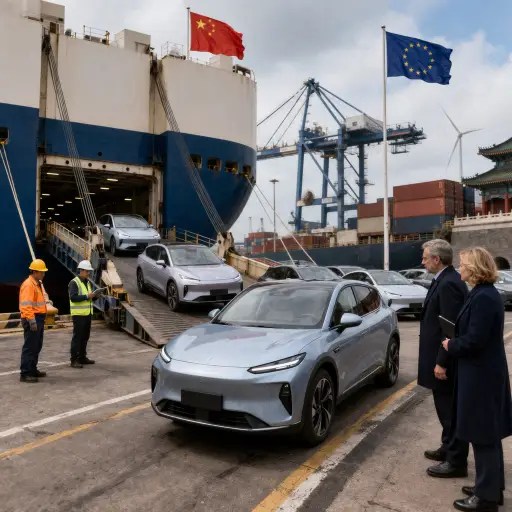
The urgency is clear. China currently dominates the global processing of critical minerals, controlling a vast majority of refining capacity for rare earth elements and other key inputs.
European policymakers have grown increasingly concerned about this dependency. Internal assessments warn that the bloc remains heavily reliant on external suppliers for essential materials, leaving its green and digital ambitions vulnerable to disruption.
The new EU–US cooperation aims to change that equation.
By coordinating investment, aligning industrial policies, and supporting joint mining and processing projects, both sides are attempting to build a resilient supply chain ecosystem—one less exposed to geopolitical shocks.
At the heart of the deal lies a recognition that critical minerals are no longer just inputs—they are strategic assets.
Electric vehicles depend on lithium-ion batteries. Wind turbines require rare earth magnets. Advanced semiconductors rely on ultra-pure materials. Artificial intelligence systems, from data centers to edge devices, are built on hardware dependent on these same supply chains.
The scale of demand is accelerating rapidly. Europe’s own industrial policy targets significant increases in domestic mining, processing, and recycling, but acknowledges it cannot achieve self-sufficiency alone.
This is where the United States enters as both partner and competitor.
Washington has adopted a more assertive approach, mobilizing public and private capital to secure upstream resources and downstream manufacturing. Large-scale investment initiatives and strategic stockpiling underscore the growing perception that minerals are as critical as energy once was.
The transatlantic deal attempts to bridge these approaches—combining European regulatory frameworks with American financial scale.
One of the most profound implications of the agreement is the potential reshaping of global manufacturing geography.
For decades, supply chains were optimized for cost efficiency, often concentrating production in regions with lower labor costs and established industrial ecosystems. But recent global disruptions and geopolitical tensions have exposed the fragility of that model.
Now, resilience is the priority.
The EU and US are actively working to diversify supply sources, including partnerships with countries rich in mineral reserves such as Australia and Canada.
At the same time, they are investing in domestic capabilities—from mining projects to battery factories and semiconductor plants—seeking to re-establish critical segments of production closer to home.
The result could be a more regionalized industrial landscape, where supply chains are shorter, more secure, and politically aligned.
This shift represents a broader transformation in how economic power is defined.
In the late 20th and early 21st centuries, globalization was driven by trade liberalization. Today, it is increasingly shaped by control over strategic resources and technologies.
The EU–US minerals partnership reflects this new paradigm.
Rather than simply lowering barriers, governments are actively coordinating industrial strategies, setting standards, and directing investment flows. Mechanisms under discussion include joint financing of mining projects, shared reserves, and coordinated trade policies designed to stabilize markets and incentivize production.
In effect, the global economy is moving toward a model where alliances are built around supply chain security as much as market access.
Despite the optimism surrounding the agreement, significant challenges remain.
Mining projects face long development timelines, environmental concerns, and local opposition. Processing capacity requires substantial capital investment and technological expertise. Recycling systems, while promising, are still insufficient to meet rising demand.
There are also underlying tensions between the EU and US. Differences in industrial policy, particularly around subsidies and regulatory standards, could complicate coordination.
Recent trade frictions highlight the delicate balance between cooperation and competition within the transatlantic relationship.
Any discussion of critical minerals inevitably returns to China.
Beijing’s dominance in processing and refining gives it significant leverage over global supply chains. Export controls and strategic investments have further strengthened its position.
The EU–US agreement is widely seen as a response to this reality—not an attempt to exclude China entirely, but to reduce strategic vulnerability.
By building alternative supply networks and strengthening partnerships with aligned countries, Western economies aim to create a more balanced global system.
The emerging transatlantic minerals alliance marks a turning point.
It signals that the future of economic power will be determined not only by innovation and trade, but by access to the physical resources that underpin them.
As electric vehicles replace combustion engines, as artificial intelligence reshapes industries, and as clean energy systems expand, the importance of critical minerals will only grow.
The European Union and the United States are betting that by acting together, they can secure their place in this new order.
Whether that bet pays off will depend on execution, but the direction is clear.
The age of resource geopolitics has arrived.


 The Tower Post