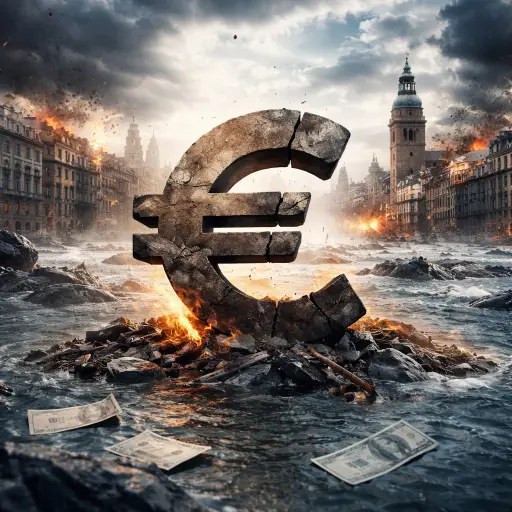
New analysis exposes the growing financial toll of global emissions, forcing a rethink of insurance systems, public spending, and long-term economic resilience across the continent
Europe is confronting a staggering financial reality: the cost of climate change is no longer a distant projection but a present and rapidly expanding burden. A new economic analysis estimates that the continent has already suffered losses amounting to €1.2 trillion as a direct result of global emissions and their cascading environmental impacts.
The figure, compiled from a combination of damage assessments, productivity losses, infrastructure costs, and insurance payouts, signals a profound shift in how climate change is understood—not only as an environmental crisis, but as a defining economic challenge of the century.
From prolonged droughts in southern regions to catastrophic floods in central and western Europe, the scale and frequency of climate-related disasters have intensified sharply. Heatwaves have disrupted agriculture and labor productivity, while storms and rising sea levels have inflicted repeated damage on infrastructure and coastal economies. Economists warn that these impacts are no longer isolated incidents but part of a systemic pattern that is accelerating.
The €1.2 trillion estimate reflects cumulative losses over recent decades, but experts caution that this may represent only the beginning. As global temperatures continue to rise, the economic consequences are expected to compound, driven by feedback loops in both natural systems and financial markets.
One of the most immediate concerns lies in the insurance sector. Insurers across Europe are increasingly grappling with rising claims and growing uncertainty. In some high-risk regions, coverage is becoming prohibitively expensive or unavailable altogether. This has prompted discussions among policymakers about the future role of public insurance schemes and whether governments may need to act as insurers of last resort.
At the same time, public finances are under mounting pressure. Governments are being forced to allocate larger portions of their budgets toward disaster response, infrastructure repair, and climate adaptation measures. This shift is raising difficult questions about taxation, debt, and long-term fiscal sustainability.
The economic strain is not evenly distributed. Southern and eastern parts of Europe are particularly vulnerable, facing higher exposure to extreme heat, water scarcity, and agricultural disruption. Wealthier northern countries, while better equipped to adapt, are not immune to the cascading effects of climate instability, including supply chain disruptions and financial market volatility.
Businesses, too, are beginning to adjust. Companies are reassessing risk models, relocating operations, and investing in climate resilience. Yet the pace of adaptation varies widely, and smaller enterprises often lack the resources to respond effectively.
Beyond immediate damages, there is growing concern about so-called “hidden costs.” These include long-term health impacts from heat and pollution, reduced labor productivity, biodiversity loss, and the gradual erosion of natural capital. Such effects are harder to quantify but may ultimately rival or exceed direct economic losses.
The findings are already influencing policy debates across the European Union. There is increasing momentum behind reforms aimed at strengthening economic resilience, including investments in green infrastructure, stricter emissions regulations, and new financial instruments designed to manage climate risk.
However, the scale of the challenge is immense. Economists emphasize that mitigation and adaptation must proceed simultaneously. Reducing emissions remains critical to limiting future damage, but with many impacts already locked in, adaptation strategies are becoming equally urgent.
The €1.2 trillion figure serves as both a warning and a turning point. It underscores the reality that climate change is no longer a future threat but a present economic force reshaping Europe’s financial landscape. As governments, businesses, and citizens confront this new reality, the decisions made now will determine not only the continent’s environmental trajectory but also its economic stability in the decades to come.



 The Tower Post