Examining the March 2025 Killing of 15 Gaza Aid Workers and the Global Outcry for Accountability

Introduction
On March 23, 2025, a devastating incident unfolded in Rafah, Gaza, where 15 humanitarian aid workers were killed during an Israeli military operation. The victims included eight members of the Palestine Red Crescent Society, five civil defense personnel, and a United Nations staff member. This event has sparked international condemnation and raised serious questions about the protection of humanitarian workers in conflict zones.
The Incident
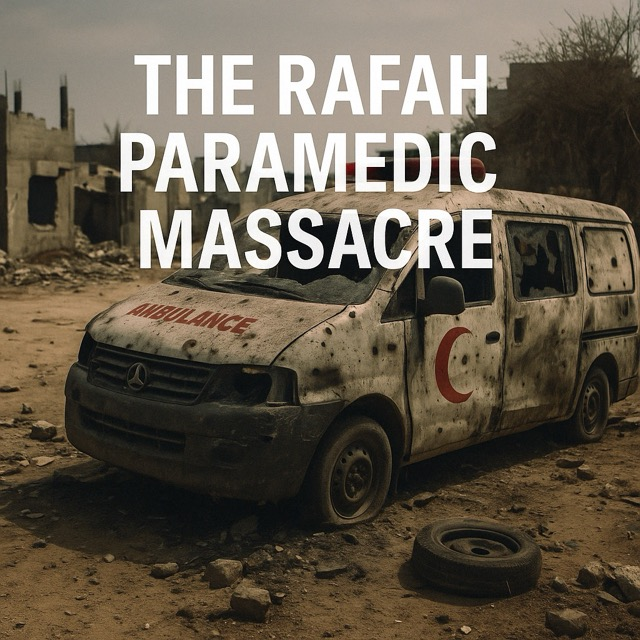
According to reports, Israeli Defense Forces (IDF) targeted several ambulances, a fire truck, and a UN vehicle in the Al-Hashashin area of Rafah. The vehicles were clearly marked and had their emergency lights activated. Despite this, they were fired upon, and the aid workers were killed. Subsequent investigations revealed that the victims were buried in a mass grave, and some showed signs of execution-style killings, including gunshot wounds to the head and chest.
Israeli Military Response
The IDF conducted an internal investigation and acknowledged ‘professional failures’ and breaches of protocol. A deputy commander was dismissed, and another officer was censured. However, the military stopped short of recommending criminal charges, stating there were no breaches of the Israeli military code of ethics. This response has been criticized by various human rights organizations and international bodies.
International Reaction
The United Nations and the International Federation of Red Cross and Red Crescent Societies (IFRC) have condemned the killings. The IFRC described the incident as the ‘single most deadly’ for its workers in nearly a decade. Calls for an independent international investigation have been made, emphasizing the need for accountability and justice for the victims.
Broader Context
This tragedy is part of a larger pattern of violence against humanitarian workers in Gaza. Since October 2023, over 400 aid workers have been killed in the region, marking the highest number ever recorded in a single conflict. The ongoing hostilities have severely impacted the delivery of essential services, including medical aid and food distribution, exacerbating the humanitarian crisis.
Conclusion
The Rafah paramedic massacre underscores the urgent need for stronger protections for humanitarian workers and stricter adherence to international humanitarian law. As the global community grapples with the implications of this tragedy, it is imperative to ensure that those who risk their lives to save others are safeguarded and that violations are met with appropriate accountability.
This article is based on reports from The Guardian, The Times, and the Associated Press.