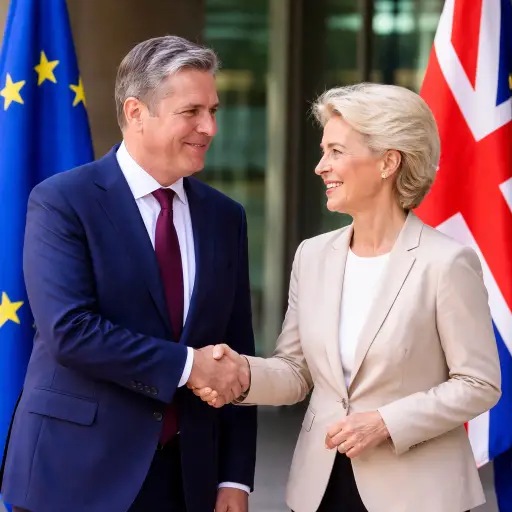
Keir Starmer pushes for renewed cooperation with the EU on defense, trade, and strategic stability in a shifting geopolitical landscape

As geopolitical tensions intensify and long-standing alliances face new strains, the United Kingdom is cautiously redefining its relationship with the European Union. Prime Minister Keir Starmer has signaled a pragmatic shift in foreign and economic policy, calling for deeper cooperation with European partners in response to a rapidly evolving global order.
In recent statements and diplomatic engagements, Starmer has emphasized the need for closer alignment with EU member states, particularly in the areas of defense coordination, economic resilience, and regulatory cooperation. While maintaining that the UK will not rejoin the European Union, the government is actively pursuing what it describes as a “reset” of post-Brexit relations.
The move comes amid growing uncertainty over the future direction of NATO and the reliability of the United States as a consistent security partner. With Washington’s foreign policy increasingly shaped by domestic political shifts and strategic recalibration toward other regions, European nations are reassessing their collective defense capabilities. In this context, the UK is seeking to position itself as a central player in a more integrated European security framework.
Defense cooperation has emerged as a key pillar of this renewed engagement. British officials are exploring expanded joint military exercises, intelligence-sharing mechanisms, and participation in EU-led defense initiatives. While the UK remains outside formal EU defense structures, there is growing recognition on both sides that closer collaboration is necessary to address shared threats, including cyberattacks, regional conflicts, and hybrid warfare tactics.
Trade is another critical area under review. Since leaving the EU, the UK has faced persistent challenges related to cross-border commerce, regulatory divergence, and supply chain disruptions. Businesses have repeatedly called for simplified procedures and greater alignment with EU standards to reduce friction. In response, the government is considering targeted agreements that would ease trade barriers in key sectors such as manufacturing, agriculture, and financial services.
At the same time, political sensitivities remain. Any move perceived as compromising the sovereignty regained through Brexit is likely to face resistance from segments of the electorate and within Parliament. Starmer’s approach, therefore, has been carefully framed as one of practical cooperation rather than political reintegration. The emphasis is on outcomes rather than ideology, with a focus on delivering tangible benefits to citizens and businesses.
European leaders have responded cautiously but positively to the UK’s overtures. There is a shared understanding that the challenges facing the continent—ranging from economic volatility to security threats—require coordinated responses. However, trust-building remains an ongoing process, shaped by the complexities of the Brexit legacy and the need for clear, consistent commitments from both sides.
The broader international context is a significant driver of this policy shift. With global power dynamics in flux and multilateral institutions under pressure, middle powers like the UK are seeking to reinforce regional partnerships as a means of safeguarding their interests. Closer ties with the EU are seen not only as a practical necessity but also as a strategic hedge against external uncertainties.
Domestically, the government is balancing this external agenda with internal economic priorities. Strengthening trade links with Europe is viewed as essential to boosting growth, attracting investment, and stabilizing key industries. At the same time, enhanced security cooperation is presented as a means of ensuring national safety in an increasingly unpredictable world.
As the UK navigates this recalibration, the outcome will likely shape its role on the global stage for years to come. The pursuit of a more constructive and cooperative relationship with the European Union reflects a broader recognition that, despite past divisions, shared challenges demand shared solutions.
In this emerging phase of post-Brexit policy, the question is no longer whether the UK and the EU will work together, but how far and how effectively that cooperation can go. The answer will depend on political will, mutual trust, and the ability to adapt to a world where alliances are no longer taken for granted.