How the Vatican’s Leadership Shifts Influence Continental Agendas

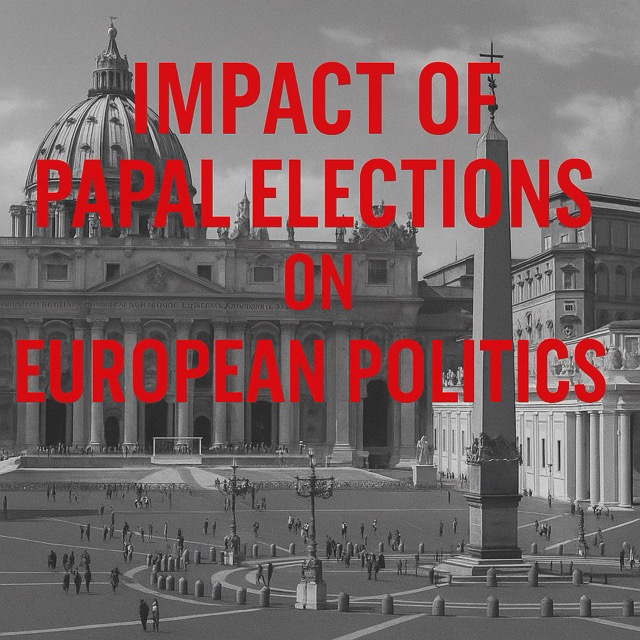
While often perceived as a spiritual and religious milestone, the election of a new pope holds deep political significance, particularly within Europe. The Vatican, though the world’s smallest independent state, exerts considerable influence not just on the global Catholic population but also on diplomatic and political affairs across the continent. The ripple effects of papal elections extend well beyond St. Peter’s Basilica, shaping debates on migration, social values, human rights, and European identity.
Historically, the pope has played a pivotal role in European affairs, from mediating conflicts to influencing policies aligned with Catholic doctrine. The election of Pope John Paul II in 1978, for example, was a turning point in Eastern Europe’s Cold War dynamics. As a Polish pope, he provided moral support to anti-communist movements, notably the Solidarity movement in Poland, eventually contributing to the fall of the Iron Curtain.
Modern papal elections continue to affect European politics in subtler but equally important ways. The ideological orientation of a new pope—whether conservative or reformist—can impact the Church’s stance on hot-button issues such as same-sex marriage, abortion, climate policy, and immigration. These stances can influence national debates, especially in countries where Catholicism remains a cultural or political force, such as Italy, Spain, Poland, and Ireland.
Moreover, the pope’s diplomatic posture can influence EU foreign policy indirectly. For example, a pope who emphasizes dialogue and peacebuilding may reinforce Europe’s commitment to multilateralism, while one who is outspoken on global inequality might prompt EU leaders to revisit development aid policies and migration frameworks.
The Vatican’s relations with individual European states also play a crucial role. Concordats and church-state agreements affect issues ranging from education policy to taxation. A new pope might reassess or reframe these agreements, leading to potential legal and political shifts within member states.
The Catholic Church also maintains observer status in many international institutions, including the United Nations and the Council of Europe. A newly elected pope brings with him a shift in moral authority, potentially altering how Catholic social teaching is applied to legislative and ethical debates across Europe.
Public perception and media coverage of a new papacy further shape the sociopolitical landscape. A charismatic and progressive pope may inspire social movements and youth engagement in politics. Conversely, a more traditionalist figure might bolster conservative parties and nationalist rhetoric that appeals to religious identity.
In conclusion, the election of a pope is far more than a religious affair—it is a geopolitical event with lasting consequences. European politicians, diplomats, and civil society groups keenly observe each conclave, aware that the white smoke over the Vatican may signal changes not only for the Church but also for the broader political order of Europe. Whether reinforcing existing power structures or challenging them, the pope’s influence on European politics remains a unique and potent force.