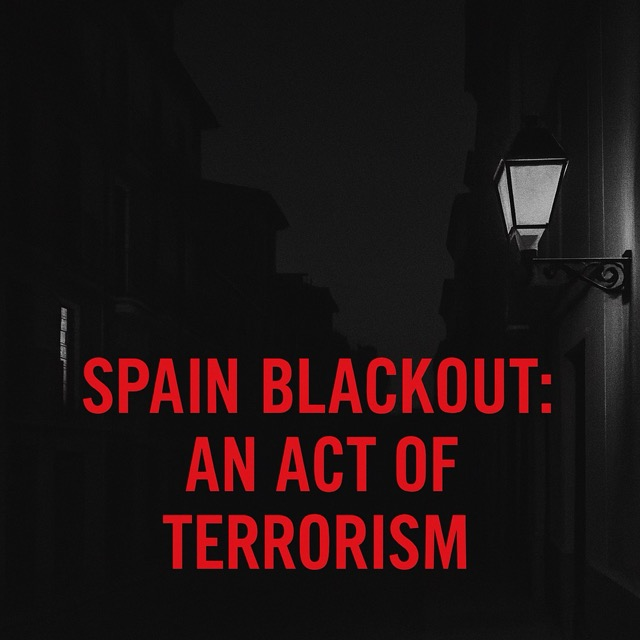
Investigating the Sudden Nationwide Power Failure and Its Alarming Implications for National Security

On a seemingly ordinary evening, the entire nation of Spain was plunged into darkness as a sudden and total power outage affected millions of citizens. At first perceived as a massive technical failure, new evidence has led authorities to consider the possibility that the blackout was in fact a deliberate act of terrorism. The incident, which paralyzed transportation systems, cut off communication networks, and triggered widespread public fear, has become the focus of an urgent national investigation.
The blackout began shortly after 9:00 p.m. local time and persisted for hours. In major cities like Madrid, Barcelona, and Valencia, residents described the eerie silence of darkened streets and the chaos caused by non-functioning traffic lights and emergency services operating at limited capacity. Hospitals were forced to rely on backup generators, while airports and train stations experienced severe disruptions.
Initial reports suggested a cascading failure in the national power grid, possibly triggered by a cyberattack on a key control system. Sources within Spain’s intelligence services have indicated that the sophisticated nature of the breach, which targeted multiple grid points simultaneously, bears hallmarks of a coordinated terrorist operation. No group has yet claimed responsibility, but investigators are examining potential links to extremist cells with known cyber capabilities.
Government officials have remained cautious in their public statements, but Interior Minister María González stated during a press conference that “preliminary indicators point to malicious intent.” Spain’s national security agency has elevated the terrorism threat level and deployed cyber defense teams in collaboration with NATO partners to trace the origin of the attack.
The blackout has reignited debate about the vulnerability of critical infrastructure in the digital age. Experts have long warned that energy systems, reliant on interconnected networks and remote controls, are attractive targets for cyber warfare and terrorism. The event marks one of the most serious national security breaches in modern Spanish history.
In response, Prime Minister Alejandro Torres has called for an emergency parliamentary session and promised increased funding for cybersecurity and infrastructure resilience. He also appealed to the public for calm and solidarity, urging citizens not to spread panic as investigations continue.
Internationally, allied governments have expressed solidarity with Spain and offered technical assistance. The European Union has proposed a joint security task force to assess and reinforce grid security across member states, acknowledging the risk of similar attacks elsewhere.
As Spain begins the process of recovery and reflection, the key question remains unanswered: who orchestrated the blackout, and why? Until those responsible are identified and brought to justice, the specter of terrorism will continue to cast a long shadow over the nation’s sense of security.