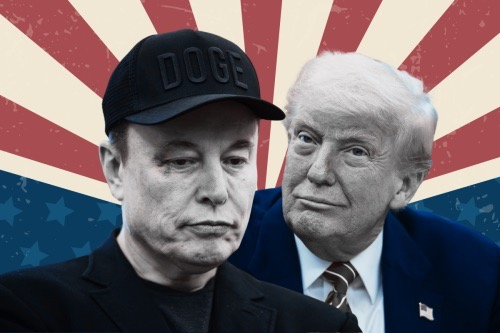
Tesla CEO’s Fierce Criticism Rekindles Debate Over 2017 GOP Tax Cuts

Elon Musk, the outspoken billionaire CEO of Tesla and SpaceX, has ignited political controversy by publicly denouncing former President Donald Trump’s 2017 signature tax reform law. In a fiery post on social media, Musk labeled the Tax Cuts and Jobs Act “a disgusting abomination,” calling into question its long-term economic impact and fairness.
Musk’s remarks, delivered via X (formerly Twitter), took both Wall Street and Washington by surprise. While the 2017 tax legislation has been lauded by Republicans as a cornerstone of Trump’s economic legacy, Musk sharply criticized it as disproportionately favoring the ultra-wealthy and failing to deliver sustainable benefits to the broader economy. “It’s absurd that billionaires and massive corporations pay less in effective tax rates than working Americans,” Musk wrote.
The Tax Cuts and Jobs Act, passed in December 2017, slashed the corporate tax rate from 35% to 21% and made sweeping changes to individual tax brackets and deductions. While proponents claimed the move spurred investment and job growth, critics argue it added trillions to the national deficit while doing little to reduce income inequality.
Musk’s critique appears rooted in a broader frustration with systemic inefficiencies and what he calls “a rigged economic architecture.” Although the tech mogul has historically leaned libertarian and expressed mixed views on both major U.S. political parties, his most recent comments place him squarely in opposition to one of Trump’s most celebrated policies.
Political analysts speculate that Musk’s comments may signal a shift in the political alliances of Silicon Valley’s elite. “This is more than a passing remark—it’s a calculated signal,” said Amanda Rios, a political economist at Stanford University. “Musk is rebranding himself as a pragmatist in an election cycle that will increasingly focus on economic justice and corporate accountability.”
Musk’s criticism has drawn both praise and backlash. Progressive lawmakers like Senator Elizabeth Warren applauded the remarks, citing them as evidence of bipartisan concern over tax equity. “When even Elon Musk says the Trump tax bill is broken, maybe it’s time Congress listens,” Warren tweeted.
Meanwhile, conservative figures have lambasted Musk’s statement as hypocritical, pointing out that Tesla and SpaceX have benefited from significant tax credits and government contracts over the years. “Elon Musk made billions under the very system he now calls corrupt,” said a statement from a Trump-aligned political action committee.
Despite the storm of political debate, Musk has stood by his comments, stating in a follow-up post that his goal is to “fix what’s broken, not preserve what’s profitable.” He also advocated for a simpler tax code, increased transparency in federal spending, and reforms to corporate loopholes.
The exchange has rekindled a national debate over the true effects of the 2017 tax cuts—whether they genuinely stimulated economic growth or served as a windfall for the already wealthy. With the 2024 presidential election cycle heating up, the issue of taxation and fairness is poised to become a central theme.
As Musk continues to influence discourse not only in business and technology but also in politics, his latest salvo against Trump’s tax legacy adds fuel to a debate that shows no signs of cooling down.