High-level shake-up in Brussels sparks speculation ahead of EU leadership transition
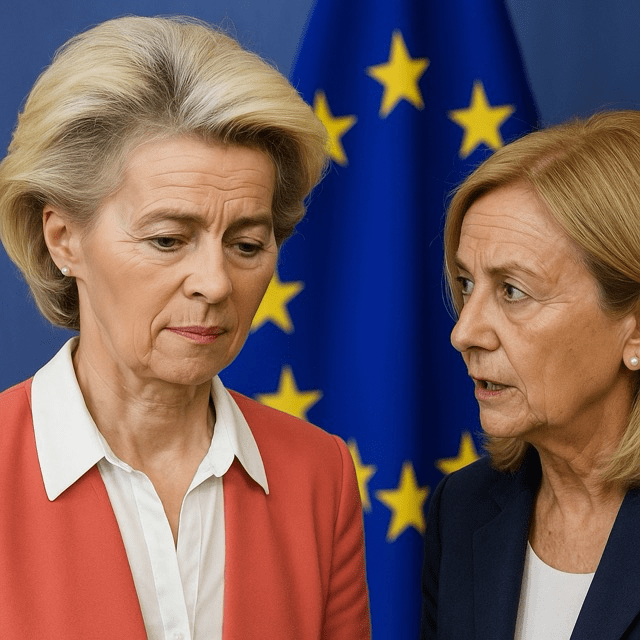
In a move that has sent shockwaves through Brussels’ diplomatic circles, European Commission President Ursula von der Leyen has dismissed her top diplomatic advisor, Elisabetta Belloni. The unexpected decision comes amid increasing tensions within the EU’s foreign policy apparatus and just months before a possible reshuffling of leadership positions across the bloc.
A Sudden Departure
Elisabetta Belloni, a seasoned Italian diplomat and head of Italy’s intelligence agency before joining von der Leyen’s inner circle, was widely seen as one of the Commission President’s most influential aides on matters of international affairs. Her sudden dismissal was communicated internally without a detailed public explanation, prompting a flurry of speculation among European officials and media.
Commission sources describe the move as “a matter of strategic divergence,” though neither Belloni nor von der Leyen have issued official statements clarifying the nature of the disagreement. One EU official, speaking on condition of anonymity, suggested the decision followed a series of policy disagreements on how to handle emerging geopolitical challenges, including the EU’s stance on China, Russia, and NATO coordination.
Diplomatic Repercussions
Belloni’s removal could have broad implications for the EU’s external relations, particularly at a time when the Union is recalibrating its foreign policy strategy ahead of the 2025–2026 institutional cycle. Her extensive background and diplomatic experience were considered assets in managing crises, from the war in Ukraine to EU-African partnerships.
“Italy loses a key voice at the heart of the EU’s executive,” said a senior diplomat from Rome. “This may also reflect deeper tensions within the Commission about how assertive Europe should be on the global stage.”
Belloni, who was previously considered a potential candidate for Italy’s presidency, brought a pragmatic and discreet style to her advisory role. Her departure raises questions about whether von der Leyen is consolidating her inner circle in anticipation of a second mandate—or facing internal dissent.
Power Dynamics and Political Timing
The dismissal comes at a delicate moment. With European negotiation with Washington and the support to Ukrania to be granted, von der Leyen’s move may be interpreted as an effort to streamline her advisory structure and assert firmer control over foreign policy messaging.
Observers note that the role of diplomatic advisors is increasingly pivotal in shaping the EU’s posture amid global instability. The departure of such a high-profile figure could embolden critics who argue that the Commission lacks unity and strategic clarity in its external engagement.
What Comes Next?
Speculation is rife about who will replace Belloni and how this may shift the balance within von der Leyen’s leadership team. Some insiders suggest that a more hawkish or pro-Atlantic advisor could be appointed, potentially signaling a pivot toward closer alignment with NATO and Washington.
Meanwhile, Italy’s government is said to be closely watching the developments, given the symbolic and strategic significance of having an Italian in such a high-level EU role.
Conclusion
While the exact reasons behind Belloni’s dismissal remain shrouded in Brussels protocol, the political ripples are unmistakable. At a time of mounting geopolitical pressure and institutional transition, von der Leyen’s decision could reshape not just her cabinet—but the trajectory of European foreign policy.



 The Tower Post