A New Era of Unrealistic Expectations?
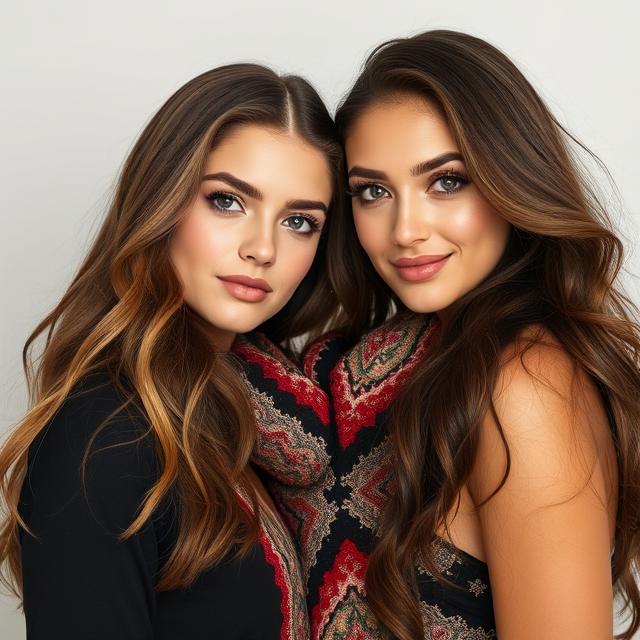
The fashion world has been left reeling after a recent advert featuring an AI-generated model was published in the August print edition of Vogue. The ad, created by Guess in collaboration with the company Seraphinne Vallora, has sparked a heated debate about the impact of artificial intelligence on the industry and the damaging effects it could have on consumers, particularly young people.
The advert, which showcases a flawless blonde model, was created using AI technology that can take up to a month to produce. While the model’s creators claim that their technology is not meant to replace human models, but rather to provide an alternative, critics argue that it reinforces narrow beauty standards and perpetuates unrealistic expectations.
Felicity Hayward, a plus-size model who has been in the industry for over a decade, says that using AI models in fashion campaigns is “lazy and cheap.” Hayward, who has fought for greater diversity in the industry, believes that Vogue’s decision to include the advert is “very disheartening and quite scary.” She warns that the use of AI models could undermine years of progress towards greater inclusivity in the industry.
The technology used to create the AI model is not new, but its widespread use in the fashion industry is a relatively recent development. Seraphinne Vallora’s founders, Valentina Gonzalez and Andreea Petrescu, claim that their technology is complex and requires a team of five employees to create a single model. They charge clients up to low six figures for their services.
However, critics argue that the lack of transparency surrounding AI-generated content is a major concern. In the UK, it is not a legal requirement to label AI-generated content, and the disclaimer on the Guess advert is small and subtle. This lack of transparency raises questions about the impact of AI models on consumers, particularly young people who are already struggling with unrealistic beauty standards.
Vanessa Longley, CEO of eating disorder charity Beat, says that exposure to images of unrealistic bodies can affect a person’s thoughts about their own body and increase the risk of developing an eating disorder. Longley notes that the advert is “worrying” and that “if people are exposed to images of unrealistic bodies, it can affect their thoughts about their own body, and poor body image increases the risk of developing an eating disorder.”
Sinead Bovell, a former model and tech entrepreneur, warns that the use of AI models is “exceptionally problematic” because it could have a detrimental impact on people’s mental health. Bovell, who wrote an article about the risks of AI replacing modeling five years ago, notes that “beauty standards are already being influenced by AI. There are young girls getting plastic surgery to look like a face in a filter – and now we see people who are entirely artificial.”
While some argue that AI-generated models can positively impact the industry by providing a more affordable and efficient way to create advertising campaigns, others believe that it is a step in the wrong direction. Sara Ziff, a former model and founder of Model Alliance, an organisation that aims to advance workers’ rights in the fashion industry, says that Guess’s AI campaign is “less about innovation and more about desperation and need to cut costs.” Ziff notes that the use of AI models could lead to job losses for human models, particularly those who are already struggling to make a living in the industry.
The use of AI-generated models also raises questions about the ethics of the technology. While the creators of the AI model claim that they are not meant to replace human models, but rather to provide an alternative, critics argue that it is a form of digital airbrushing that perpetuates unrealistic beauty standards.
In an attempt to address these concerns, the fashion industry is beginning to take steps to regulate the use of AI-generated models. In the UK, the Advertising Standards Authority (ASA) is considering introducing new guidelines to ensure that AI-generated content is clearly labelled as such.
Meanwhile, the creators of the AI model are pushing forward with their technology, claiming that it is the future of the fashion industry. Seraphinne Vallora’s founders, Gonzalez and Petrescu, believe that their technology will become increasingly popular as it improves and becomes more advanced. They note that the technology has already been used in a number of high-profile campaigns, including a recent campaign for Dove that highlighted the biases in AI.
As the debate continues, one thing is clear: the use of AI-generated models in the fashion industry is a complex issue that requires careful consideration. While some see it as a future-forward innovation, others view it as a threat to the industry’s progress towards greater inclusivity and diversity.
The Impact on Consumers
The use of AI-generated models has significant implications for consumers, particularly young people who are already struggling with unrealistic beauty standards.
Exposure to images of unrealistic bodies can affect a person’s thoughts about their own body and increase the risk of developing an eating disorder.
The lack of transparency surrounding AI-generated content raises questions about the impact on consumers who may not be aware that the images they are seeing are not real.
The use of AI-generated models could perpetuate a culture of digital airbrushing that reinforces narrow beauty standards.
The Impact on the Industry
The use of AI-generated models also has significant implications for the fashion industry.
The technology could lead to job losses for human models, particularly those who are already struggling to make a living in the industry.
The use of AI-generated models could undermine years of progress towards greater inclusivity and diversity in the industry.
The technology could lead to a shift in the way that advertising campaigns are created, with AI-generated models becoming increasingly popular.
The Future of the Industry
As the debate continues, one thing is clear: the use of AI-generated models in the fashion industry is a complex issue that requires careful consideration. While some see it as a future-forward innovation, others view it as a threat to the industry’s progress towards greater inclusivity and diversity.
The technology is likely to become increasingly popular as it improves and becomes more advanced.
The industry is likely to see a shift in the way that advertising campaigns are created, with AI-generated models becoming increasingly popular.
The use of AI-generated models could lead to a more inclusive and diverse industry, but it also raises significant concerns about the impact on consumers and the industry as a whole.



 The Tower Post