As Witkoff downplays famine claims, Italy collaborates with UAE, Jordan, and EU partners to deliver humanitarian relief.

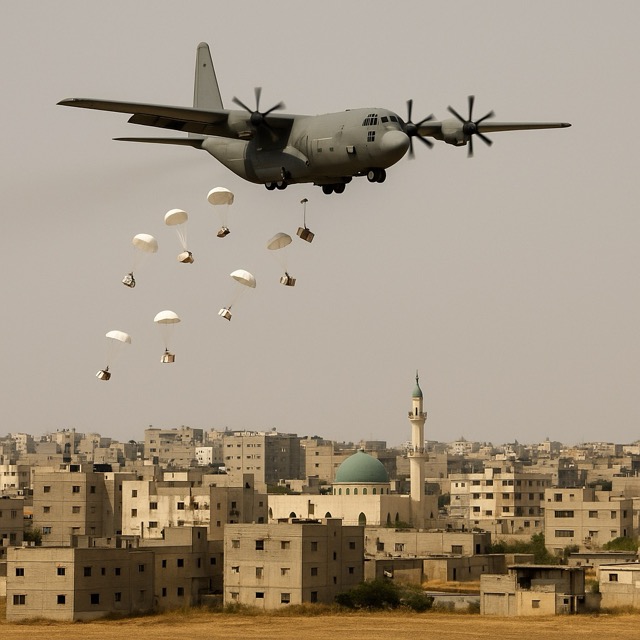
Humanitarian efforts to reach the besieged population of Gaza are intensifying, with Italy now actively participating in a coordinated international airdrop mission. The operation, led by the United Arab Emirates and Jordan, includes several European partners and aims to deliver critical food, water, and medical supplies to a region teetering on the brink.
The announcement came from sources within Palazzo Chigi, the seat of the Italian government, marking a notable shift in Rome’s involvement. Italian aircraft will join allied forces in parachuting aid into isolated areas of Gaza, where traditional delivery routes remain blocked or too dangerous due to ongoing conflict.
The move follows a controversial statement from U.S. special envoy David Witkoff, who, during a press briefing in Tel Aviv, asserted that ‘there is scarcity in Gaza, but not famine.’ His comment sparked criticism from humanitarian organizations and drew a swift response from aid agencies operating in the region.
UNICEF issued a stark warning shortly after Witkoff’s remarks, revealing that over 18,000 children have died in Gaza over the past 22 months. The organization cited disease, malnutrition, and lack of access to clean water and medicine as primary causes. ‘This is a child mortality crisis, not a statistical debate,’ said UNICEF spokesperson Lara Achmed. ‘Labeling it anything less than a humanitarian catastrophe is an insult to the victims.’
Witkoff, who met in Tel Aviv with families of Israeli hostages taken by Hamas during the October 7 attacks, reiterated the U.S. commitment to resolving the hostage situation but remained firm on the American position regarding conditions in Gaza. ‘We are working with partners to alleviate suffering, but we must also remain realistic and grounded in verified data,’ he said.
Meanwhile, reports from humanitarian NGOs on the ground paint a dire picture. According to Doctors Without Borders, some areas of northern Gaza have not received food deliveries for weeks. Aid convoys remain blocked at border crossings, and makeshift clinics are overwhelmed with cases of dehydration, infection, and trauma.
Italy’s involvement is being framed as a moral imperative. ‘This is not just about food — it’s about dignity, life, and international responsibility,’ said Foreign Minister Antonio Tajani. ‘We are proud to join our partners in this vital effort.’
Aircraft from Italy’s Air Force have begun reconnaissance flights to identify safe drop zones, with the first airdrop expected within days. The coordinated mission will attempt to bypass contested zones and deliver pallets of supplies marked with neutral humanitarian insignia.
The growing death toll and deteriorating conditions in Gaza have renewed calls for a sustained humanitarian corridor and an immediate ceasefire. But with political negotiations stalled and cross-border attacks continuing, aid drops remain the only lifeline for many residents trapped in war-torn neighborhoods.
As the international community scrambles to respond, the questions of accountability, access, and long-term recovery hang in the air — along with the parachutes now carrying hope across the skies of Gaza.