Three and a half years into the war, British officials judge Vladimir Putin to be at his weakest since 2022. Behind the Kremlin’s bravado lies a set of fears—from an uncontrollable nuclear spiral to a newly fortified NATO—that could reshape the endgame in Ukraine.
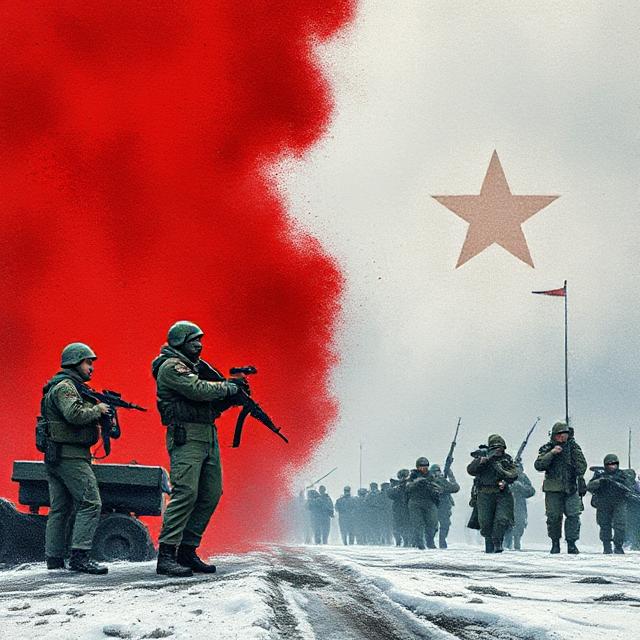
London – What keeps Vladimir Putin awake three and a half years into his war in Ukraine is not simply the grind of the front. It is the prospect that the tools he has relied on—nuclear rhetoric, energy leverage, the image of domestic control—are losing their power. In London, officials speak with unusual confidence that the Russian leader is the most vulnerable he has been since the first months of the invasion, a reading shaped by battlefield trends, alliance politics and the mood inside Russia.
The first fear is the most radioactive: that nuclear brinkmanship stops working. From 2022 onward the Kremlin turned to threats—explicit and veiled—whenever Western support for Kyiv stiffened. The gambit slowed decisions but did not stop them. Long‑range missiles, integrated air defences and deeper intelligence sharing have since flowed to Ukraine in increments. Each step hardened Western red lines against any use of a nuclear device. Moscow understands that breaking the post‑1945 taboo would trigger consequences far beyond Ukraine: accelerated NATO deployments, sweeping secondary sanctions and diplomatic isolation from swing states that have so far kept a careful distance. The nightmare in the Kremlin is not only retaliation; it is losing the aura of control that nuclear threats were meant to project.
The second fear is the weight of a larger, more focused NATO. The alliance that Putin sought to split now stretches farther north and is spending more. European defence budgets have moved upward, new members have shifted the map of deterrence, and logistics reforms are stitching together a faster reinforcement network across the continent. For Russian planners, the cumulative effect is a harder perimeter to probe and a shorter fuse on allied responses. Even if fighting in Ukraine remains localized, the cost of threatening NATO territory has risen markedly.
London’s view of Kremlin weakness rests partly on the war’s feedback loop inside Russia. Mobilisation remains politically toxic, conscription has had to be applied unevenly, and casualty lists circulate despite censorship. The economy, while adapted to wartime production, pays a price in inflation, labour shortages and dependence on a narrow set of external suppliers. Sanctions have forced technological workarounds that degrade quality and raise costs. Governors and business barons have gained wartime clout as fixers; their loyalty is transactional and costly to maintain. A system that prizes personal control now relies on ever‑broader delegation.
Another source of unease is physical vulnerability far from the front. Drones and sabotage have repeatedly struck deep inside Russia, forcing the relocation of assets and tightening air‑defence belts around cities and strategic sites. Oil facilities, airbases and logistics depots have proved harder to shield than the Kremlin once assumed. Such attacks do not change the battlefield overnight, but they break a promise implicit in Putin’s social contract: that war is something Russia wages elsewhere.
Energy leverage has also ebbed. After the shock of 2022–23, Europe diversified gas supplies and rebuilt storage, while Ukraine kept exporting electricity when it could and rallied international help to patch its grid. Russian crude and product exports still find buyers, but price caps, shipping restrictions and insurance scrutiny have raised friction and cut margins. The Kremlin’s fear is that energy—once a strategic cudgel—has become a managed commodity for much of Europe, dulling Moscow’s capacity to squeeze.
The information war is no longer asymmetrical. Russian narratives still find audiences abroad, but the pace of open‑source intelligence has made deniability harder. Satellite imagery, social‑media geolocation and leaked procurement trails have exposed missteps in near real time. Domestically, younger Russians access news through channels that are difficult to fully police. Repression can buy quiet, but it cannot restore credibility in a wired generation.
Set against those vulnerabilities is a regime that has proved adaptable. Russia’s defence industry has surged output by expanding shifts, retooling civilian plants and sourcing components through intermediaries. Command structures have stabilised after purges, and units learn in contact. The Kremlin has tightened legal tools to suppress dissent. Few in London predict imminent collapse. What they do see is a narrowing of options that pushes Putin toward riskier bets for diminishing returns.
Why would nuclear fear grow now? Because escalation has become less predictable to manage. Each time Russia fires barrages at Ukraine’s cities or grid, Washington and European capitals answer with another turn of the screw: more air defences, broader target sets for Ukrainian strikes, tighter technology controls. The ladder has more rungs than Moscow expected. The more Ukraine can hit military targets inside Russia with Western‑backed systems, the higher the odds of incidents that force Kremlin choices it would rather avoid—especially if an attack lands near strategic assets. Deterrence, once a lever, has become a cage.
NATO’s renewal compounds that anxiety. Defence production in Europe is rising after a decade of neglect; ammunition output is set to climb further through 2026. Forward‑based air defences are knitting into a resilient umbrella from the Baltics to the Black Sea. All this constrains Russia’s ability to intimidate neighbours and complicates any attempt to widen the war. For Putin, who cast NATO as a paper tiger in 2021, the transformation undercuts a core storyline at home: that the West lacks stamina.
Inside Russia’s elite, the fear is of drift: a war that neither ends nor decisively advances, punctured by shocks—mutinies, assassinations, spectacular strikes—that reveal fragility. The regime’s answer has been to fuse patriotism and procurement: more money for defence firms, more medals, more televised tours of factories. Yet each new measure announces itself as a stopgap. The question whispered in Moscow is not whether the state can repress dissent—history suggests it can—but whether it can prevent the seepage of cynicism from the periphery to the core.
Could fear drive a strategic pivot? Western officials watch three signals. The first is whether the Kremlin reopens any serious channel for talks that go beyond tactical pauses. The second is how Russia treats nuclear signalling—does it cool the rhetoric or raise it in crises? The third is resource allocation: if mobilisation, budget choices and industry outputs point toward a long war with no plan for political off‑ramps, London assumes the fear is of losing face more than losing ground.
For Ukraine and its supporters, the task is to keep pressure calibrated: strengthen air and missile defence; help Ukraine degrade Russia’s combat system; expand Europe’s production base; and box in nuclear risk by making the costs of any breach unmistakable. The aim is not humiliation but exhaustion—enough cumulative friction that the Kremlin’s fear of continuing outweighs its fear of compromise.
The paradox is that Putin’s greatest fear may be the one he rarely voices: loss of control at home. Nuclear talk is meant to deter the West; NATO talk is meant to rally audiences in Russia and abroad. But the daily management of a grinding war—keeping factories supplied, borders quiet, elites compliant and the public resigned—is the work that decides political futures. London believes he has less room for error than at any point since 2022. Whether that translates into restraint or a lunge remains the most dangerous question of 2025.
 The Tower Post