Rooftop panels, large-scale farms, and sunny skies drive a boom in renewable energy, highlighting solar power’s growing role in Britain’s electricity grid.
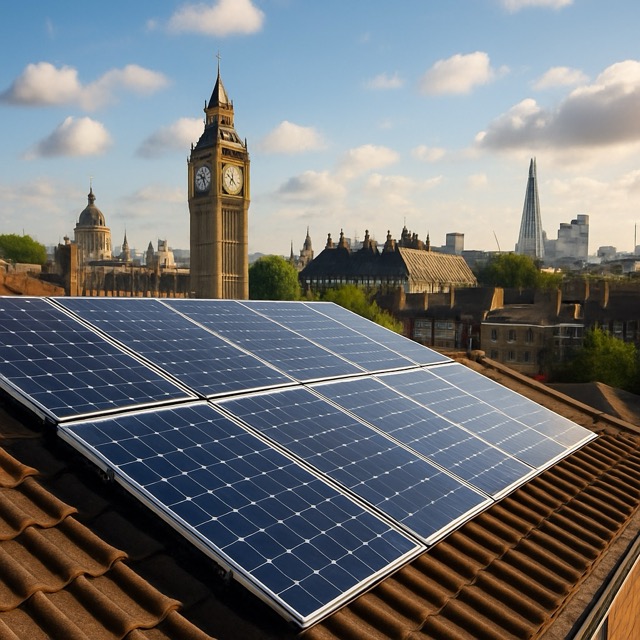
London, August 2025 – Solar power in Britain has already generated more electricity this year than in the whole of 2024, underlining the speed at which renewable energy is transforming the nation’s grid. Thanks to a combination of rapid panel installation and unusually favourable weather, the UK’s solar output has reached unprecedented levels well before the end of summer.
According to grid operators, terawatt hours produced from solar so far in 2025 are enough to power the London Underground for more than a decade. The milestone has been hailed as a clear signal that Britain’s energy transition is gathering pace, with solar cementing its place alongside wind and nuclear as a cornerstone of the country’s low-carbon mix.
A Summer of Sunshine – and Panels
Meteorologists report that this year’s summer has delivered longer stretches of sunshine than the seasonal average, boosting panel efficiency and output. Meanwhile, industry data shows that thousands of new rooftop systems and dozens of commercial solar farms have come online since January, thanks to falling installation costs and strong government incentives.
“The pace of deployment is unlike anything we’ve seen before,” said Claire Hughes, head of the UK Solar Association. “The industry is expanding across homes, businesses, and large-scale projects. This is no longer a niche energy source – it’s mainstream.”
The UK has long relied on wind power to meet renewable targets, but solar is now proving equally indispensable. Analysts predict that by the end of 2025, solar could supply more than 10 percent of Britain’s total electricity consumption for the first time.
Powering the Grid
The achievement is not merely symbolic. National Grid ESO, the body responsible for balancing the system, said solar output has helped reduce reliance on natural gas generation during peak hours, lowering carbon emissions and easing pressure on wholesale energy prices.
“Every extra megawatt of solar means fewer imports and lower bills,” noted ESO spokesperson James McCarthy. “It also makes the grid more resilient, particularly during high-demand summer events such as the Paris 2024 Olympics, when British households consumed record amounts of power.”
Solar’s contribution is particularly valuable during daylight hours, when demand peaks due to cooling systems, transport, and business activity. This year, solar has set multiple daily generation records, at times accounting for nearly 40 percent of the grid’s supply.
Challenges Ahead
Despite the upbeat figures, challenges remain. Grid operators face the technical complexity of balancing intermittent solar with consistent demand, especially during cloudy days or in winter months when output dips sharply. Storage solutions – including large battery installations – are seen as essential for smoothing out fluctuations.
Critics also caution that rapid expansion must be managed carefully to avoid planning disputes and land-use tensions. Several rural communities have raised concerns about the visual and environmental impact of sprawling solar farms.
Nevertheless, public support remains strong, with polling showing that more than 80 percent of Britons favour expanding solar power as part of the nation’s energy strategy.
A Symbol of Transition
The symbolic weight of surpassing 2024’s total output in just eight months has not gone unnoticed in Westminster. Energy Secretary Amanda Lewis called the achievement “a turning point for Britain’s energy independence.”
“Our commitment to renewables is delivering real results,” Lewis said in a statement. “Solar is now helping power homes, transport systems, and industries, while creating thousands of green jobs. This is how we secure cleaner, cheaper, and more reliable energy for the future.”
Looking Forward
Industry analysts expect momentum to continue through the remainder of 2025, with even more capacity scheduled to be connected to the grid in the autumn. Coupled with government plans to simplify planning approval and expand incentives for households, the outlook for solar remains bright.
“This is just the beginning,” said Hughes. “The combination of technology, investment, and public demand means solar has become a pillar of Britain’s energy future. If 2025 is any indication, the next decade will be transformative.”
As the UK seeks to meet its net-zero targets by 2050, milestones such as this summer’s solar surge offer both practical benefits and powerful symbolism. Britain’s rooftops and fields are no longer just landscapes – they are fast becoming engines of the energy revolution.




 The Tower Post