A decisive election win reshapes governance in Pristina and raises fresh questions for regional stability and Europe

As the year turns and the Balkans look ahead with a mix of caution and expectation, Kosovo has delivered what many observers are calling a political earthquake. Prime Minister Albin Kurti has emerged from the latest national vote with a clear and renewed mandate, confounding rivals and reasserting his dominance over a fragmented opposition. The result redraws the country’s political map and sets the tone for governance in the months to come.
Kurti’s victory is notable not only for its scale but for its symbolism. After years of turbulent coalition politics, protests, and institutional deadlock, voters have handed the prime minister a level of authority rarely seen in Kosovo’s short democratic history. His movement, built on promises of sovereignty, social justice, and a clean break from the old political elites, has transformed popular frustration into electoral power.
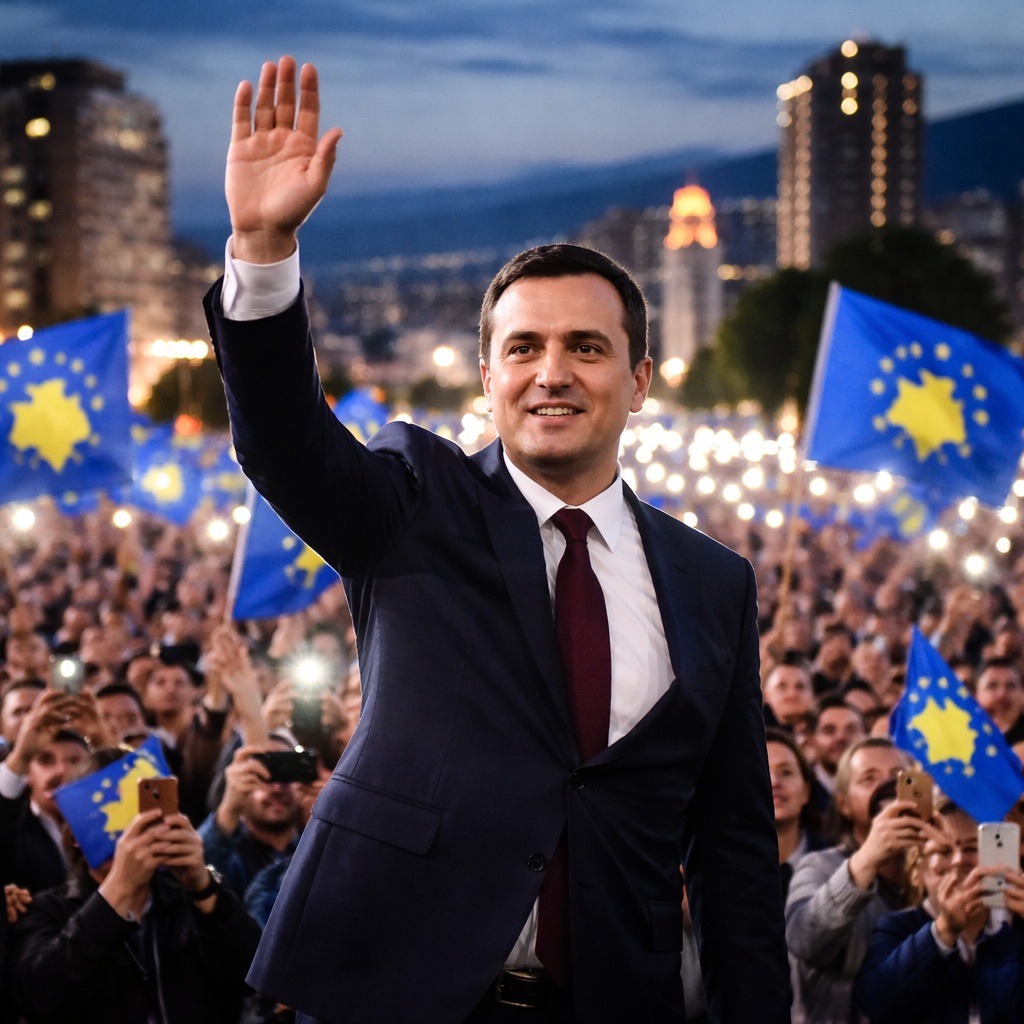
On election night, celebrations in Pristina were tempered by a sober awareness of what lies ahead. Supporters hailed the result as a rejection of corruption and foreign tutelage, while critics warned that an emboldened government could deepen polarization at home and tension abroad. Either way, Kurti now governs from a position of strength, with greater room to push through reforms and fewer excuses for delay.
At the heart of Kurti’s appeal is a brand of assertive nationalism paired with a reformist message. He has consistently framed his agenda around the idea of dignity: dignity for workers through higher wages and labor protections, dignity for institutions through the rule of law, and dignity for the state through uncompromising positions on sovereignty. This rhetoric has resonated strongly with younger voters and those disillusioned by decades of post-war politics.
Yet the same agenda raises concerns among Kosovo’s neighbors and international partners. Kurti’s firm stance toward Serbia, particularly over the status of ethnic Serb-majority areas, has already tested nerves in the region. His insistence that Kosovo’s authority must be exercised uniformly across its territory is popular domestically, but it risks inflaming long-standing disputes that have yet to find a durable settlement.
Relations with Brussels are also entering a delicate phase. The European Union remains Kosovo’s primary political and economic partner, and EU integration is a strategic goal shared across the political spectrum. However, Kurti’s government has at times clashed with European mediators, accusing them of favoring stability over justice and compromise over principle. With a stronger mandate, he may feel less compelled to soften his tone, even as Kosovo’s path toward Europe depends on dialogue and restraint.
Inside the country, expectations are high. Voters did not merely endorse a nationalist posture; they demanded tangible improvements in daily life. Inflation, employment, healthcare, and education are pressing concerns, and the patience of the electorate will be tested if reforms stall. Kurti’s challenge will be to translate political capital into effective governance without alienating minorities or undermining institutional checks and balances.
The opposition, meanwhile, faces an existential moment. Traditional parties that once dominated Kosovo’s political scene have been reduced to supporting roles, struggling to articulate a credible alternative. Whether they regroup around policy innovation or sink deeper into irrelevance will shape the quality of democratic debate in the years ahead.
For the wider region, Kosovo’s political shift is both a signal and a warning. It reflects a broader trend of voters rewarding leaders who promise clarity and conviction in uncertain times. But it also underscores how quickly domestic mandates can ripple outward in the Balkans, where unresolved histories and fragile compromises still define the landscape.
As the new year begins, Kosovo stands at a crossroads. Kurti’s resurgence offers a chance to consolidate statehood and reform institutions, but it also carries the risk of isolation if dialogue gives way to confrontation. The political earthquake has settled for now; what emerges from the aftershocks will determine whether this moment becomes a foundation for stability or another chapter in a region too familiar with upheaval.