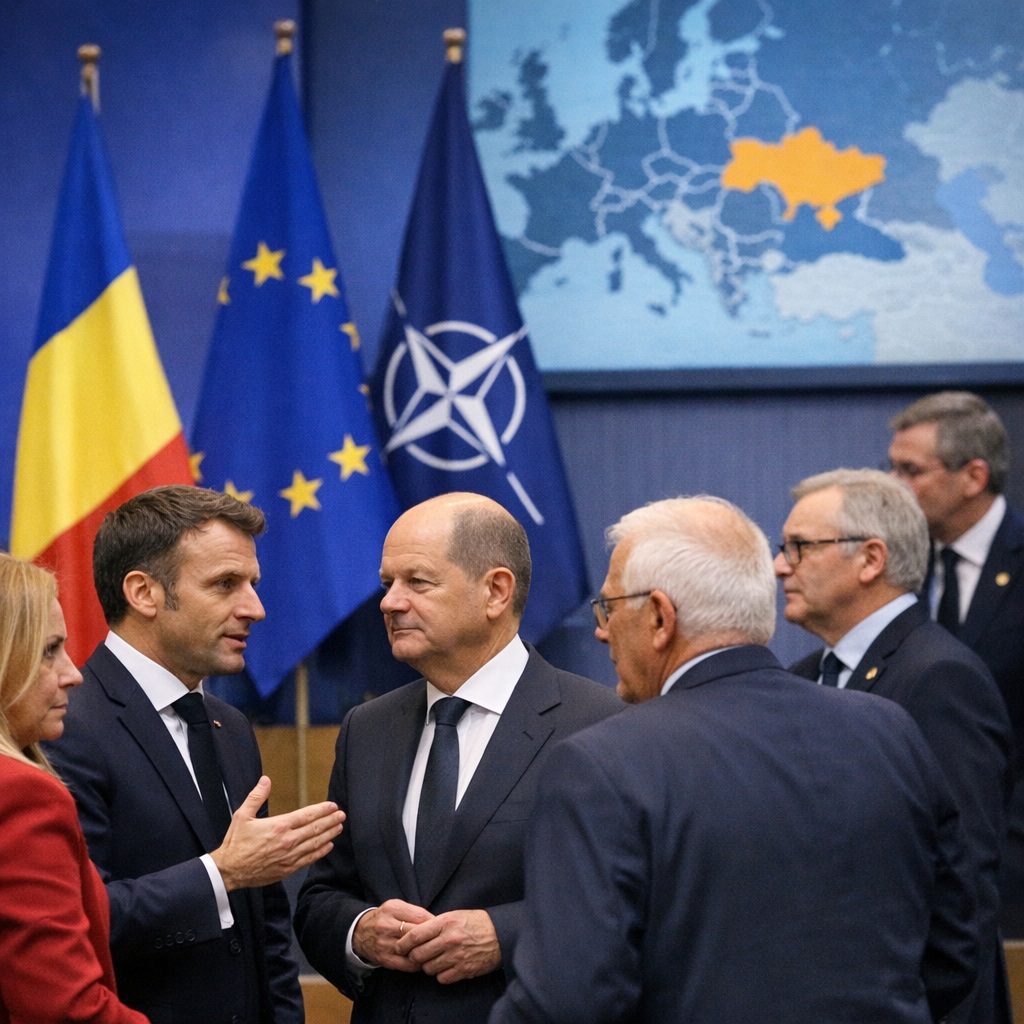
As the United States and Russia harden their war stances and negotiations over Ukraine remain fragile, Europe enters the new year trying to assert foreign‑policy autonomy while keeping support for Kyiv intact.
Europe begins the year under the long shadow of a war that has redefined its security landscape and strained its alliances. As Washington and Moscow outline increasingly rigid positions on the conflict in Ukraine and probe the limits of renewed negotiations, European capitals are reacting with a mix of caution, ambition, and internal disagreement. The continent’s leaders are attempting a delicate balancing act: maintaining close ties with the United States, avoiding open confrontation with Russia, and sustaining political, military, and financial backing for Ukraine well into the coming year.
Publicly, European officials emphasize unity. Privately, divisions are sharpening over how far Europe should go in asserting its own strategic voice. The U.S.–Russia dynamic, once filtered through transatlantic consensus, is now forcing Europe to confront uncomfortable questions about dependency, credibility, and long-term security responsibilities.
At the heart of the debate is Europe’s relationship with Washington. The United States remains Ukraine’s most powerful military backer and Europe’s indispensable security guarantor. Yet recent signals from Washington, combining pressure for burden-sharing with a more transactional tone toward allies, have unsettled European policymakers. While few doubt the necessity of the transatlantic bond, there is growing concern that Europe must be prepared for scenarios in which U.S. priorities shift or political support becomes less predictable.
This concern has reinvigorated calls for “strategic autonomy,” a concept that has circulated in Brussels for years but often lacked concrete follow-through. Now, it is being reframed less as a challenge to NATO and more as insurance. European leaders speak of autonomy not as separation from the United States, but as the capacity to act when U.S. engagement is limited or conditional. The war in Ukraine has turned that abstract idea into an urgent policy question.
Relations with Russia further complicate the picture. While most European governments remain firm in condemning Moscow’s actions and enforcing sanctions, there is quiet debate about how rigid Europe’s stance should remain if U.S.–Russia talks advance. Some leaders fear being sidelined in negotiations that directly affect European security. Others worry that any softening of Europe’s position could fracture unity or undermine Ukraine’s negotiating leverage.
Eastern member states, shaped by historical experience and geographic proximity, argue strongly for an uncompromising approach toward Moscow. For them, deterrence and military strength are not theoretical concepts but existential necessities. Several Western and Southern countries, while supportive of Ukraine, are more open to exploring diplomatic off-ramps, particularly as economic pressures and public fatigue grow at home.
These tensions are most visible in debates over defense spending. The war has already prompted unprecedented increases in military budgets across Europe, but consensus frays when the discussion turns to permanence. Some governments argue that higher spending levels must become the new normal, accompanied by deeper integration of defense industries and joint procurement. Others face domestic resistance, with voters questioning the trade-offs between guns and social programs amid persistent inflation and slow growth.
The European Union’s institutions are attempting to navigate these divisions by focusing on coordination rather than command. Proposals for common ammunition stockpiles, expanded military mobility, and long-term support mechanisms for Ukraine are framed as pragmatic steps rather than grand federalist leaps. The aim is to keep all member states on board while gradually strengthening Europe’s collective capacity.
Ukraine itself remains central to Europe’s calculations. European leaders insist that support for Kyiv will not waver, even as the conflict enters a more protracted and politically complex phase. Financial aid packages are being designed with longer horizons, and training missions continue to expand. At the same time, there is growing recognition that sustaining public support will require clearer communication about goals, costs, and realistic outcomes.
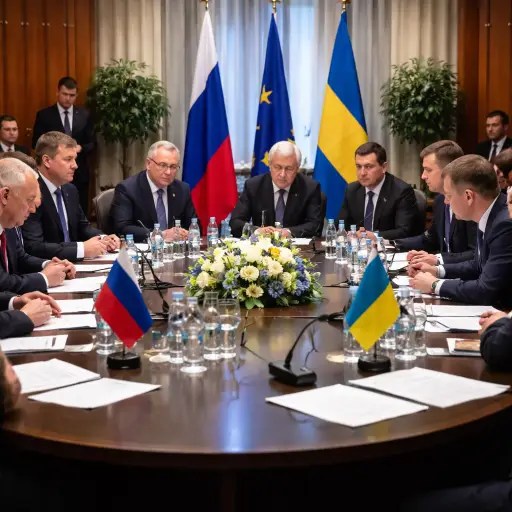
Negotiations over Ukraine’s future status, security guarantees, and reconstruction loom over every strategic discussion. Europe wants a seat at any negotiating table, not only as a donor but as a security stakeholder. The fear is not merely exclusion, but irrelevance: a scenario in which decisions are made elsewhere and presented to Europe as faits accomplis.
As the year opens, Europe’s response to the evolving U.S.–Russia war stance is less about dramatic announcements than about recalibration. The continent is adjusting its posture, testing its cohesion, and probing the limits of its influence. The process is uneven and often contentious, reflecting the diversity of national interests and political cultures within the Union.
What unites European leaders, however, is a sense that the old assumptions no longer hold. The war in Ukraine has exposed vulnerabilities but also accelerated changes that were long discussed and rarely implemented. Europe is not choosing between Washington and Moscow; it is struggling to define itself in a world where alignment alone no longer guarantees security.
Whether this moment results in lasting strategic maturity or renewed dependence will depend on decisions made quietly in the months ahead: budget lines approved, industries coordinated, diplomatic channels maintained or closed. For now, Europe moves forward cautiously, aware that its reactions today will shape its role in the conflict — and in the global order — for years to come.
 The Tower Post