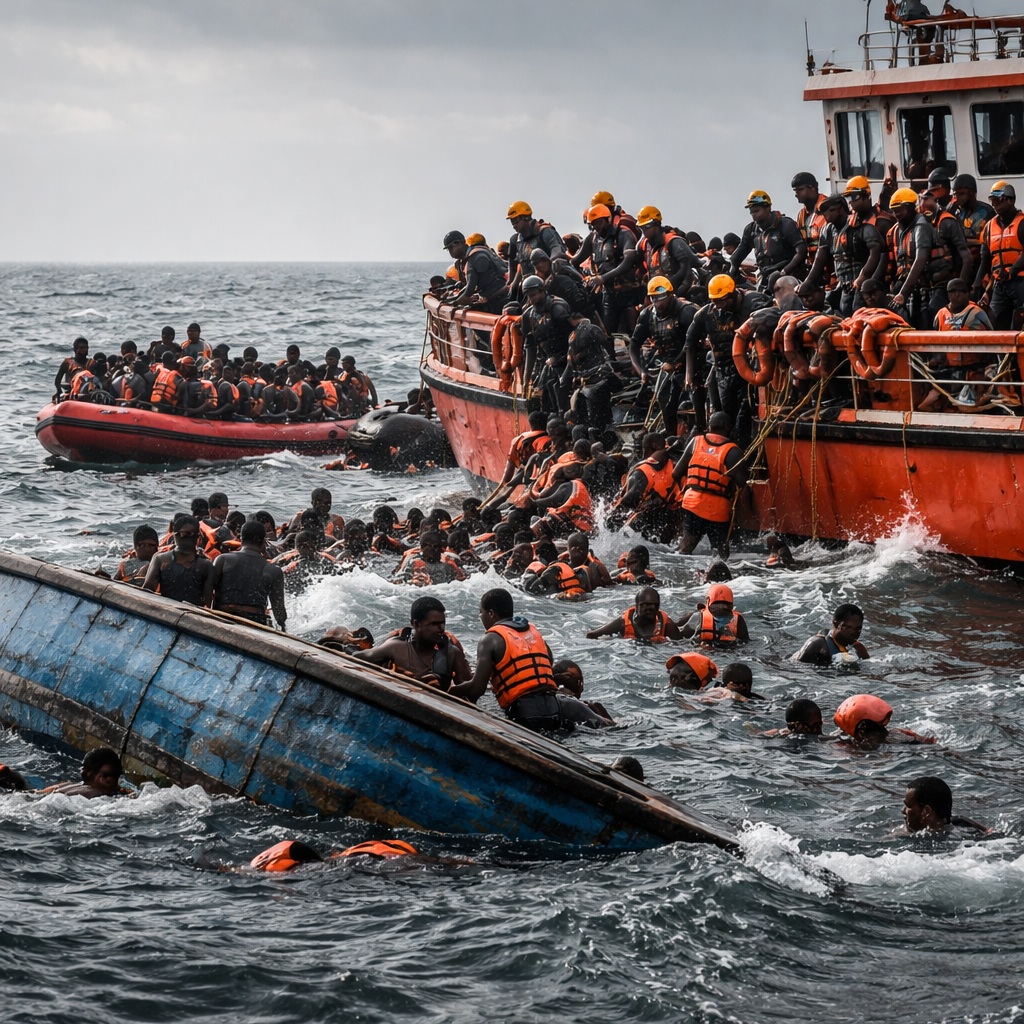
At least seven bodies have been recovered and dozens more are feared missing after an overcrowded migrant vessel capsized off the Gambian coast, underscoring the persistent dangers of irregular migration routes toward Europe.
The Atlantic waters off West Africa have once again become the scene of tragedy, after a migrant boat bound for Europe capsized near the Gambian coastline, leaving at least seven people dead and dozens unaccounted for. Rescue services and local authorities say more than a hundred survivors have been pulled from the sea, many suffering from exhaustion, dehydration, and shock.
According to officials involved in the rescue effort, the vessel was carrying migrants from several West African countries who had set out in the hope of reaching Europe via one of the region’s most perilous maritime routes. The boat is believed to have been overcrowded and structurally fragile, conditions that have become tragically common in crossings organized by smuggling networks operating along the Atlantic coast.
Survivors described a journey marked by fear from its earliest moments. Several reported that rough seas and strong winds overwhelmed the boat not far from shore. As water flooded the hull, panic spread among passengers, many of whom were unable to swim. Witnesses said people clung to one another and to fragments of the vessel as it broke apart, while others disappeared beneath the waves.
Rescue operations were launched after local fishermen and coastal patrols spotted debris and people in distress. Small boats, supported by emergency services, managed to bring more than one hundred individuals to safety. Hospitals in the region confirmed that many of the rescued migrants were treated for hypothermia and injuries sustained during the capsizing.
Despite these efforts, authorities fear that the death toll may rise. The exact number of people on board remains unclear, a recurring challenge in migrant shipwrecks where passenger lists do not exist and survivors often lack information about fellow travelers. Families across the region are now anxiously awaiting news, as search operations continue amid difficult sea conditions.
This latest disaster highlights the growing use of the Atlantic route from West Africa toward Europe, a path that has seen an increase in departures in recent years. As controls tighten in the Mediterranean, smugglers have increasingly turned to longer and more dangerous ocean crossings, promising migrants a chance at a better future while exposing them to extreme risks.
Humanitarian organizations have long warned that the combination of poverty, conflict, political instability, and climate pressures is pushing more people to attempt these journeys. In countries along the West African coast, declining fishing stocks, rising food prices, and limited employment opportunities have left many young people feeling they have little choice but to leave.
“The sea is being used as a last resort,” said a regional aid worker involved in assisting survivors. “People know the risks, but desperation outweighs fear. Every shipwreck is a reminder that without safer and legal migration pathways, these deaths will continue.”
European institutions have repeatedly pledged to address the root causes of migration while strengthening cooperation with countries of origin and transit. However, critics argue that current policies focus too heavily on border control and not enough on protection, development, and rescue capacity. They warn that deterrence alone does not stop migration, but rather pushes it into more dangerous channels.
The tragedy off the Gambian coast also places renewed pressure on local communities, who are often the first responders when boats run into trouble. Fishermen who took part in the rescue described scenes of chaos and despair. “We pulled people from the water who had lost everything,” one said. “Some were crying for friends and relatives who never came back up.”
For survivors, the ordeal does not end with rescue. Many now face uncertain futures, caught between trauma, legal limbo, and the possibility of being returned to the same conditions they tried to escape. Aid groups are calling for immediate psychological support and humane treatment, stressing that survivors should not be criminalized for attempting the journey.
As night fell over the Atlantic, search teams continued scanning the waters for signs of life, even as hopes of finding more survivors faded. The bodies recovered so far stand as stark symbols of a broader crisis that shows no sign of abating.
Each new shipwreck adds to a grim toll along Europe-bound migration routes, raising urgent questions about responsibility, solidarity, and the human cost of inaction. Until safer alternatives exist, the ocean between Africa and Europe is likely to remain both a passage of hope and a graveyard for the desperate.



 The Tower Post