UK prime minister underscores NATO unity and European defense readiness amid escalating tensions with Russia

Britain’s prime minister warned that Europe must be “ready to fight” to deter further aggression from Moscow, delivering one of his strongest security messages yet at a high-level gathering of global leaders and defense officials.
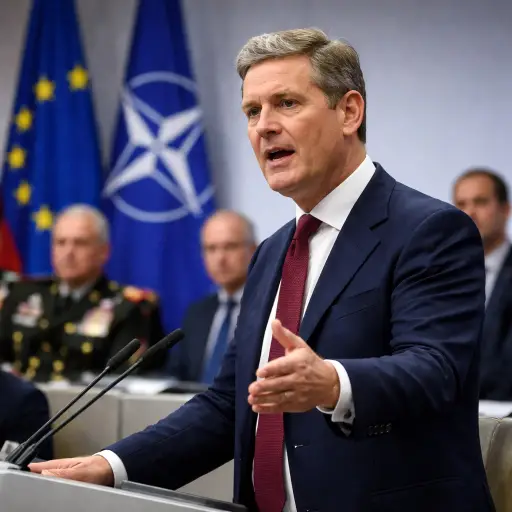
Addressing ministers, military chiefs and diplomats, Keir Starmer said the era of assuming that large-scale conflict on the continent was unthinkable has ended, arguing that credible deterrence now depends on sustained military investment, political resolve and closer coordination among allies.
His intervention came during intensive security talks focused on Russia’s posture, the durability of Western support for Ukraine and the broader stability of Europe’s eastern flank, with officials describing discussions marked by urgency and strategic reassessment.
Starmer emphasized that NATO remains the bedrock of the United Kingdom’s defense policy, but he added that European nations must be prepared to assume greater responsibility within the alliance as geopolitical pressures mount.
He argued that preparedness is not about provoking confrontation but about preventing it, insisting that deterrence only works when potential adversaries believe that allied forces are capable, equipped and willing to respond decisively.
Behind closed doors, diplomats said conversations centered on air defense systems, munitions supplies and the capacity of European industry to ramp up production after years of leaner defense spending and fragmented procurement practices.
The prime minister reaffirmed Britain’s commitment to meeting and sustaining NATO spending targets, stressing that headline figures must translate into deployable forces, operational readiness and resilient logistics networks.
He also called for deeper cooperation between governments and defense manufacturers, warning that slow decision-making and national competition for contracts could weaken collective security at a time when unity is essential.
European leaders attending the gathering broadly echoed the message that the continent faces a long-term strategic challenge rather than a temporary crisis, reflecting a shift in tone from earlier assumptions that economic ties might moderate Russian behavior.
For Ukraine, whose representatives sought continued assurances of military and financial backing, the emphasis on European readiness was interpreted as a signal that support remains firm despite growing domestic political pressures across several allied nations.
Security analysts noted that Starmer’s remarks were calibrated to reinforce transatlantic bonds while encouraging Europe to strengthen its own defensive capabilities, striking a balance between solidarity and strategic autonomy.
He concluded by urging allies to treat the current moment as a turning point, arguing that decisions taken now on defense spending, industrial capacity and military cooperation will shape Europe’s security landscape for decades to come.
As discussions closed, the message from London was unmistakable: maintaining peace on the continent requires preparedness, unity and a clear-eyed recognition that deterrence must be backed by credible force.