A multi-billion project aims to bring the journey of cocoa to life, blending alpine tradition with global storytelling

Switzerland Plans a Sweet Future with Ambitious Chocolate Theme Park
As spring settles over Switzerland’s valleys and snow retreats from its iconic peaks, a new vision is quietly taking shape—one that could redefine how the world experiences one of the country’s most beloved treasures: chocolate. Known globally for its precision, quality, and culinary heritage, Switzerland is now preparing to transform its chocolate legacy into an immersive, large-scale destination.
Plans are advancing for a groundbreaking chocolate-themed park designed to guide visitors through the full journey of chocolate production—from tropical cocoa plantations to the refined craft of Swiss chocolatiers. The project, estimated to cost the equivalent of more than 400 millions euro, represents one of the most ambitious tourism and educational ventures in the country’s recent history.
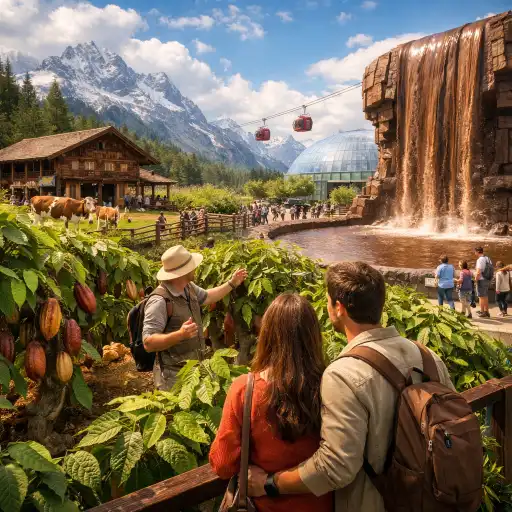
At its core, the park aims to bridge continents. While Switzerland itself does not grow cocoa, it has long been a central hub in transforming raw beans into some of the world’s most celebrated chocolate. The new development seeks to make that connection tangible. Visitors will walk through simulated cocoa groves, learning how cacao trees are cultivated in equatorial climates, how their pods are harvested, and how beans are fermented and dried before beginning their journey to Europe.
Designers behind the project emphasize authenticity. The cocoa cultivation zones will replicate real environmental conditions, offering a sensory experience that includes humidity, scent, and even the sounds of tropical ecosystems. The intention is not merely to entertain, but to educate—highlighting the often-overlooked agricultural and human dimensions behind chocolate production.
From there, the experience shifts closer to home. The park will also spotlight Switzerland’s dairy traditions, a key element in the country’s signature milk chocolate. Visitors will encounter interactive exhibits explaining how Alpine farming practices contribute to the quality of Swiss milk, and how this ingredient became a defining feature of the nation’s chocolate identity. Live demonstrations and tastings are expected to play a central role, allowing guests to compare different styles and techniques.
The project reflects a broader trend in experiential tourism, where storytelling and immersion take precedence over passive observation. Rather than a traditional museum or factory tour, the chocolate park is being conceived as a hybrid space—part educational center, part entertainment complex, and part cultural showcase. Architects and planners are reportedly integrating modern design elements with natural landscapes, ensuring that the development complements its surroundings rather than overshadowing them.
Economic expectations are significant. Tourism officials anticipate that the park could attract visitors from across Europe and beyond, reinforcing Switzerland’s reputation as a premium destination. At the same time, the initiative is expected to generate jobs and stimulate local economies, particularly in regions already known for hospitality and gastronomy.
Yet the project also raises questions about sustainability and global responsibility. Chocolate production is deeply intertwined with issues such as climate change, fair trade, and labor conditions in cocoa-growing regions. Organizers have indicated that these themes will not be ignored. Exhibits are expected to address the challenges facing the cocoa industry, encouraging visitors to think critically about consumption and sourcing.
For many observers, the timing feels symbolic. As the world emerges from years marked by disruption and uncertainty, there is a renewed appetite for experiences that are both meaningful and joyful. Chocolate, with its universal appeal and emotional resonance, offers a unique platform for storytelling.
If completed as envisioned, the Swiss chocolate park could become more than just a tourist attraction. It may stand as a living narrative—one that connects distant landscapes, celebrates craftsmanship, and invites visitors to rediscover a familiar indulgence through a deeper, more global lens.
In a country already synonymous with quality, the project suggests that Switzerland is not content to rest on tradition alone. Instead, it is preparing to reimagine its sweetest export for a new generation—one experience at a time.