Internationally mediated efforts to end the Russia-Ukraine war reveal persistent diplomatic obstacles despite renewed dialogue
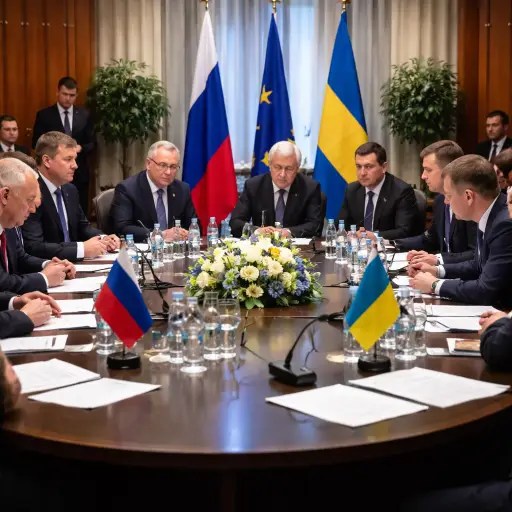
Peace talks aimed at ending Europe’s most devastating conflict in generations concluded in Geneva this week with only limited progress, as internationally mediated negotiations between Russia and Ukraine exposed the deep divides that continue to hinder a comprehensive settlement.
Delegations met behind closed doors in the Swiss city long synonymous with high-stakes diplomacy, where representatives from both sides engaged in prolonged and at times tense discussions under the guidance of international mediators that included officials from the European Union and the United Nations.
Despite public statements expressing commitment to dialogue, participants described the atmosphere as cautious and often confrontational, with both sides firmly reiterating positions that have defined the conflict since its escalation and leaving little room for dramatic compromise.
Ukrainian negotiators insisted that any durable agreement must rest on the restoration of internationally recognized borders and binding security guarantees designed to prevent renewed aggression, arguing that a ceasefire without structural assurances would merely postpone further instability.
Russian representatives, meanwhile, emphasized what they called new territorial realities and pressed for limitations on Ukraine’s future military alignment, framing their demands as essential components of a broader security architecture they contend must be recalibrated.
Diplomatic sources familiar with the discussions said that while negotiators failed to agree on a comprehensive ceasefire framework, technical working groups made incremental progress on humanitarian corridors, prisoner exchanges, and verification mechanisms that could support localized de-escalation.
One European diplomat characterized the outcome as movement without momentum, noting that although communication channels remain open, the gap between the parties on core political questions remains substantial and deeply entrenched.
Political pressures in both capitals continue to shape the negotiating space, with leaders in Kyiv facing a public wary of concessions perceived as legitimizing territorial losses, while officials in Moscow balance diplomatic engagement with domestic narratives centered on strategic endurance.
The broader geopolitical context loomed over the proceedings, as Western governments reaffirmed military and financial support for Ukraine while urging a just peace, and Russia sought to leverage relationships beyond Europe to offset diplomatic isolation and reinforce its bargaining position.
Humanitarian organizations welcomed even modest steps forward, stressing that expanded access to contested regions and more reliable ceasefire monitoring could alleviate civilian suffering amid ongoing infrastructure damage, displacement, and economic strain.
Analysts argue that the structure of the talks may require recalibration, with some advocating phased agreements built on confidence-building measures and localized truces, while others warn that incremental steps risk freezing the conflict rather than resolving its underlying causes.
Swiss officials hosting the negotiations described the dialogue as constructive in tone, emphasizing that sustained engagement itself constitutes a diplomatic achievement after years marked by escalation and hardened rhetoric, even in the absence of a joint communiqué.
As winter conditions continue to test military logistics and civilian resilience, mediators are quietly exploring the possibility of follow-up sessions, though no formal roadmap has been announced and expectations for a rapid breakthrough remain tempered.
For now, the Geneva round stands as an exercise in cautious continuity rather than decisive transformation, reflecting both the necessity of diplomacy and the formidable obstacles that stand in the way of a comprehensive peace settlement.
Whether limited progress can evolve into meaningful momentum will depend not only on negotiators in conference rooms but also on developments on the battlefield and shifting calculations among global powers whose interests intersect with the conflict.
 The Tower Post