Under mounting pressure, Europe’s largest economy embarks on sweeping reforms that could redefine its future

Germany is undergoing one of the most consequential economic shifts in its modern history. Long defined by industrial strength, fiscal discipline, and export-led growth, the country is now confronting a reality that has exposed the limits of its traditional model. Faced with slowing productivity, demographic strain, and geopolitical uncertainty, policymakers are no longer fine-tuning the system—they are attempting to rebuild it.
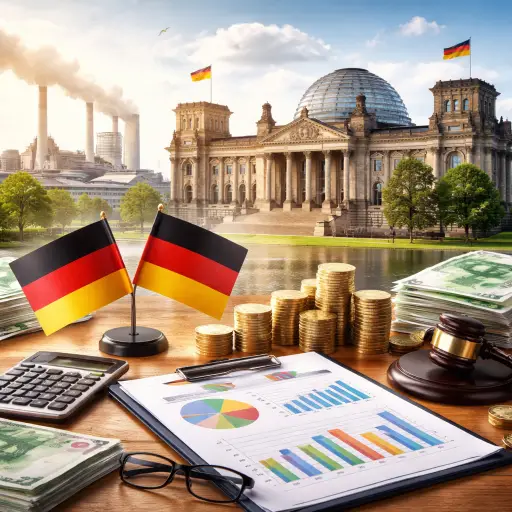
The reforms emerging from Berlin reflect both urgency and ambition. At their core is a recognition that the economic framework that once powered Germany’s rise is no longer sufficient in a world shaped by energy volatility, technological disruption, and shifting global trade patterns. The government’s response is sweeping: tax restructuring, pension redesign, labor market incentives, and even discussions around limiting excess profits in critical sectors such as energy.
For decades, Germany relied on a formula that seemed unshakable. High-quality manufacturing, stable energy inputs, and strong export demand—particularly from Asia—created a reliable engine of growth. But that formula has come under strain. Energy costs surged following geopolitical disruptions, supply chains proved fragile, and global demand patterns began to shift. At the same time, an aging population has tightened the labor market and placed growing pressure on public finances.
The new reform agenda aims to address these structural challenges head-on. One of the most politically sensitive elements is the overhaul of the pension system. With fewer workers supporting a growing number of retirees, the traditional model has become increasingly difficult to sustain. Proposals under discussion include incentivizing longer working lives, adjusting contribution structures, and expanding private retirement savings mechanisms. These changes signal a clear departure from Germany’s historically generous and stable pension framework.
Tax policy is also being reshaped to stimulate investment and improve competitiveness. Businesses have long complained about bureaucratic hurdles and relatively high tax burdens compared to international peers. The reforms seek to streamline corporate taxation, reduce administrative friction, and encourage innovation—particularly in digital and green technologies. The goal is not only to retain existing industries but to position Germany as a leader in emerging sectors.
At the same time, productivity has become a central focus. For years, Germany’s productivity growth has lagged behind expectations, raising concerns about long-term economic vitality. The government is now prioritizing digital infrastructure, workforce upskilling, and regulatory modernization. Investments in automation, artificial intelligence, and clean energy are being framed not just as environmental or technological initiatives, but as essential components of economic survival.
Perhaps the most controversial aspect of the reform agenda is the discussion around capping profits in the energy sector. While still under debate, the proposal reflects growing public and political frustration with rising costs and perceived windfall gains by energy companies. Supporters argue that such measures are necessary to protect consumers and ensure fairness during periods of economic stress. Critics, however, warn that intervention could deter investment and undermine market stability.
These tensions highlight the broader challenge facing Germany: balancing economic pragmatism with social cohesion. The country’s social market economy has long been built on a delicate equilibrium between free markets and state intervention. The current reforms test that balance, raising fundamental questions about how far the government should go in reshaping economic outcomes.
Beyond domestic considerations, Germany’s transformation carries significant implications for Europe as a whole. As the continent’s largest economy, its policy choices often set the tone for the broader European Union. A successful transition could provide a blueprint for other nations grappling with similar challenges. Conversely, missteps could ripple across the region, affecting growth, investment, and political stability.
The stakes are high, and the path forward is uncertain. What is clear, however, is that Germany is no longer content to rely on the strengths of its past. The reforms signal a willingness to confront uncomfortable realities and to experiment with new approaches in the face of mounting pressure.
In many ways, this moment represents a turning point. Germany is not simply adjusting its economic policies—it is redefining the principles that underpin its economy. Whether this ambitious overhaul will restore dynamism and resilience remains to be seen. But one thing is certain: the era of incremental change is over, and a new chapter is beginning.