Energy markets convulse as widening conflict triggers price surge, regional instability, and mounting economic pressure across Europe

A widening military confrontation involving Iran has sent shockwaves through global energy markets, driving oil prices sharply higher and intensifying fears of a broader regional war. As coordinated strikes by United States and Israeli forces target Iranian military and infrastructure assets, the conflict has rapidly evolved beyond a localized confrontation into a geopolitical crisis with far-reaching consequences.
The surge in hostilities has already produced one of the most severe oil price shocks in recent years. Energy traders reacted swiftly to the escalation, pushing crude prices up by nearly 60 percent within a short span, as concerns mounted over disruptions to supply routes and production capacity across the Middle East. The region remains the backbone of global oil output, and any sustained instability threatens to ripple across international markets.
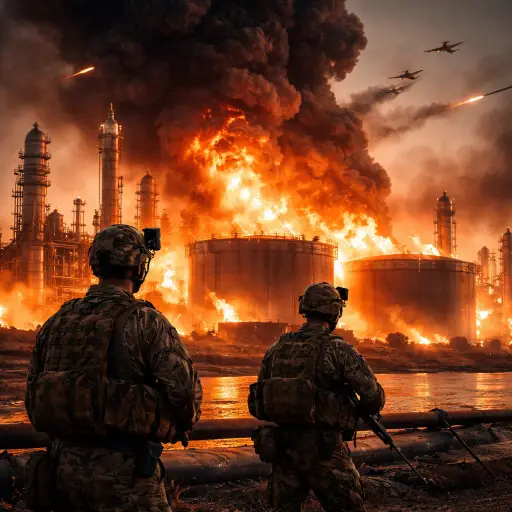
At the heart of the crisis lies a series of escalating strikes that have intensified tensions between Iran and its adversaries. Military analysts point to a pattern of retaliatory operations, with each round of action increasing both the scale and the stakes. Strategic targets, including energy facilities and logistical hubs, have become focal points, amplifying the risk of long-term damage to critical infrastructure.
Compounding the volatility is the involvement of non-state actors aligned with Iran, particularly the Houthi movement. Their renewed attacks on shipping lanes and energy-related targets have widened the theater of conflict beyond national borders. Maritime routes, especially those critical for oil transport, are now under heightened threat, raising alarm among global shipping companies and insurers. The disruption of these corridors has further tightened supply expectations, feeding into the surge in prices.
The geopolitical implications extend well beyond the Middle East. Europe, already grappling with fragile energy security, faces immediate economic repercussions. The sharp rise in oil prices is expected to translate into higher fuel costs, increased transportation expenses, and renewed inflationary pressure. Policymakers are confronting the prospect of another energy-driven economic strain at a time when recovery remains uneven.
Energy-dependent industries across Europe are among the first to feel the impact. Manufacturing sectors, logistics networks, and aviation are all experiencing rising operational costs, which could ultimately be passed on to consumers. Economists warn that the renewed inflationary wave could complicate monetary policy decisions, forcing central banks to reassess interest rate strategies amid growing uncertainty.
The crisis has also reignited debates about energy diversification and strategic reserves. Governments are evaluating contingency plans to stabilize supply, including tapping into emergency reserves and accelerating investments in alternative energy sources. However, such measures offer only partial relief in the face of a sudden and sustained supply shock.
Meanwhile, financial markets have reacted with heightened volatility. Investors are recalibrating risk assessments, shifting capital toward safe-haven assets while pulling back from sectors exposed to geopolitical instability. Energy companies, on the other hand, have seen significant gains, reflecting the surge in commodity prices.
Diplomatic efforts to contain the conflict remain fragile. Calls for de-escalation have emerged from multiple international actors, but the pace of military developments has outstripped diplomatic progress. The complexity of alliances and rivalries in the region complicates any immediate resolution, raising concerns that the conflict could persist or even expand.
Security analysts warn that the current trajectory risks drawing additional regional players into the confrontation. Such a scenario could further destabilize global energy supplies and deepen economic repercussions worldwide. The interconnected nature of modern energy markets means that even localized disruptions can have global consequences, a reality now unfolding with renewed intensity.
For Europe, the stakes are particularly high. The continent’s dependence on imported energy leaves it vulnerable to external shocks, and the current crisis underscores the urgency of strengthening resilience. Governments are under pressure to balance short-term responses with long-term strategies aimed at reducing reliance on volatile supply regions.
Beyond economics, the human and political dimensions of the conflict continue to evolve. Civilian populations in affected areas face increasing uncertainty, while political leaders navigate a rapidly shifting landscape marked by strategic calculations and domestic pressures. The potential for miscalculation remains a persistent risk, as multiple actors operate within a highly charged environment.
As the situation develops, the global community watches closely, aware that the consequences of this conflict extend far beyond the battlefield. The intersection of military escalation and energy disruption has created a complex crisis with no immediate resolution in sight.
In the coming weeks, the trajectory of the conflict will likely determine the stability of global energy markets and the broader economic outlook. For now, the combination of rising oil prices, expanding hostilities, and geopolitical uncertainty signals a period of heightened risk and volatility on a global scale.