Turkey Positions Itself as a Key Diplomatic Broker in Ukraine War

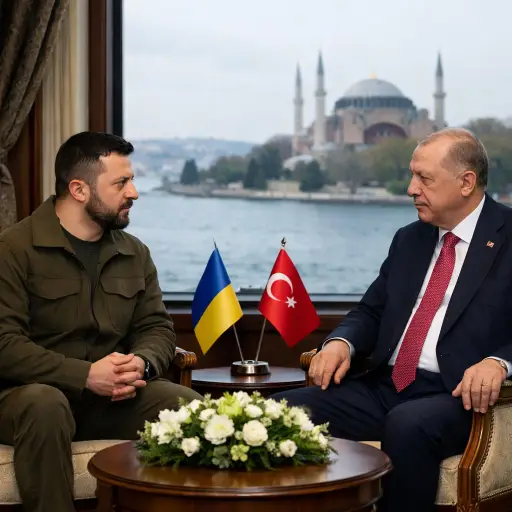
In a renewed push for diplomatic relevance on the global stage, Turkish President Recep Tayyip Erdoğan welcomed Ukrainian President Volodymyr Zelenskyy to Istanbul for a set of high-stakes talks that could shape the next phase of the war in Ukraine. The meeting, held against the symbolic backdrop of a city straddling Europe and Asia, underscored Turkey’s ambition to act as a central mediator in one of the most consequential conflicts of the modern era.
The discussions, described by officials as “substantive and forward-looking,” focused heavily on the prospect of a negotiated ceasefire and the broader architecture of security guarantees that could underpin any future settlement. While no immediate breakthrough was announced, both sides signaled cautious optimism that diplomatic channels remain open despite the entrenched positions on the battlefield.
Turkey’s role in the conflict has evolved significantly since the early stages of the war. A NATO member with complex ties to both Kyiv and Moscow, Ankara has maintained a delicate balancing act—supplying Ukraine with military support while preserving economic and political relations with Russia. This dual-track approach has allowed Erdoğan to position himself as one of the few leaders capable of engaging both sides credibly.
At the heart of the Istanbul talks were proposals aimed at constructing a framework for de-escalation. Ukrainian officials emphasized the necessity of firm international security guarantees, seeking assurances that any ceasefire would not simply freeze the conflict but provide a pathway toward long-term stability. Turkish mediators, according to diplomatic sources, explored mechanisms involving multilateral oversight and phased confidence-building measures.
Zelenskyy, who has consistently advocated for a peace formula centered on territorial integrity and sovereignty, reiterated Kyiv’s conditions during the meeting. His stance reflects broader concerns within Ukraine that premature concessions could embolden further aggression. At the same time, Ukrainian officials acknowledged the importance of maintaining diplomatic engagement, particularly through intermediaries like Turkey.
For Erdoğan, the talks represent more than an opportunity to mediate a single conflict. They are part of a broader strategic effort to elevate Turkey’s status as a regional and global power broker. In recent years, Ankara has expanded its diplomatic footprint across multiple theaters, from the Middle East to the South Caucasus, often positioning itself as an indispensable interlocutor in complex disputes.
The Istanbul meeting also comes amid shifting geopolitical dynamics in Europe. As the war in Ukraine continues to strain alliances and reshape security priorities, countries across the continent are reassessing their strategic alignments. Turkey’s active diplomacy highlights a growing trend in which middle powers seek to leverage their unique positions to influence outcomes in major conflicts.
Analysts note that Turkey’s geographic and political positioning gives it distinct advantages in this regard. Control over critical maritime routes, deep economic ties with both Western and non-Western partners, and a history of pragmatic foreign policy have all contributed to its ability to engage across divides. However, these same factors also complicate Ankara’s efforts, requiring careful calibration to avoid alienating key allies.
The talks in Istanbul are unlikely to yield immediate results, but they mark an important moment in the ongoing search for a diplomatic off-ramp to the conflict. Even incremental progress—such as agreements on humanitarian corridors or prisoner exchanges—could help build momentum toward more comprehensive negotiations.
Beyond the immediate context of Ukraine, the meeting signals a broader shift in how global diplomacy is conducted. As traditional power structures face increasing strain, alternative venues and mediators are emerging, often outside the established frameworks that have dominated international relations for decades. Turkey’s engagement in the Ukraine war exemplifies this evolving landscape.
For now, the outcome of the Istanbul talks remains uncertain. Yet the very fact that such discussions are taking place reflects a shared recognition among key actors that a purely military solution may be neither achievable nor sustainable. In that sense, the meeting represents both a continuation of existing efforts and a potential turning point in the search for peace.
As Erdoğan and Zelenskyy concluded their discussions, the message was clear: diplomacy, however challenging, remains an essential component of any path forward. Whether Turkey can translate its ambitions into tangible results will depend on the willingness of all parties to engage—and on the fragile hope that dialogue can still prevail in a time of war.