As energy vulnerabilities resurface, calls grow within Berlin to reconsider atomic power in a shifting European landscape

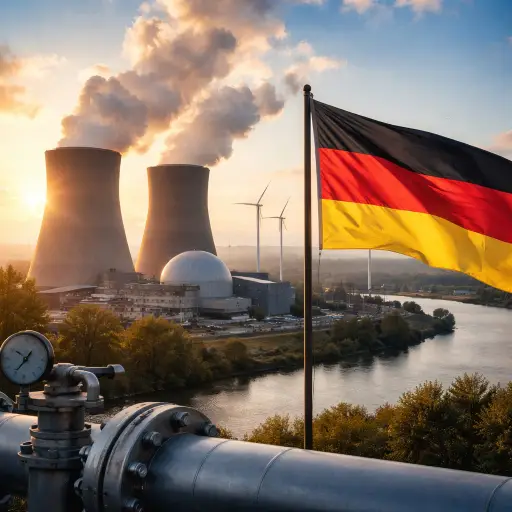
Germany’s deep reliance on natural gas has once again come under scrutiny, exposing structural vulnerabilities that policymakers are increasingly unwilling to ignore. The debate has been reignited by Katherina Reiche, who has urged the federal government to reassess its longstanding opposition to nuclear energy amid mounting concerns over supply security and economic resilience.
Speaking against the backdrop of a fragile European energy market, Reiche argued that decisions taken by previous administrations have left Germany with limited flexibility. The country’s accelerated exit from nuclear power, combined with its phased reduction of coal, has effectively positioned natural gas as the central pillar of its energy system. While this strategy was intended as a transitional pathway toward renewables, critics now say it has created a dangerous dependency.
Germany’s exposure to gas-related risks has become more apparent in recent years, particularly during periods of geopolitical tension and market volatility. Supply disruptions, price spikes, and infrastructure bottlenecks have underscored the extent to which the country remains susceptible to external shocks. For Europe’s largest economy, the implications extend beyond energy policy, affecting industrial competitiveness, household costs, and broader economic stability.
Reiche, a prominent figure within the Christian Democratic Union, emphasized that the current situation is not merely a temporary imbalance but a structural weakness. In her view, the absence of nuclear energy as a viable option has narrowed Germany’s strategic choices at a time when diversification is critical. She described gas as having “no real alternative” within the existing framework, a statement that has fueled both support and controversy.
The debate touches on one of the most contentious issues in modern German politics. The country’s decision to phase out nuclear power, rooted in environmental concerns and public opposition, has long been considered a cornerstone of its energy transition. Yet shifting realities — including the urgency of decarbonization, the intermittency of renewable sources, and the need for stable baseload power — are prompting some policymakers to revisit earlier assumptions.
Supporters of reconsidering nuclear energy argue that advanced reactor technologies and stricter safety standards could address many of the concerns that originally drove the phase-out. They point to other European countries that continue to rely on nuclear power as part of a balanced energy mix, suggesting that Germany may have moved too quickly in abandoning the option.
Opponents, however, remain firmly against any reversal. They argue that nuclear energy poses unresolved challenges related to waste disposal, high costs, and long construction timelines. For them, the focus should remain on accelerating renewable deployment, expanding storage capacity, and improving grid infrastructure rather than reopening a politically and socially divisive chapter.
At the heart of the discussion lies a broader question about Germany’s energy identity. The country has positioned itself as a global leader in the transition to clean energy, investing heavily in wind, solar, and hydrogen technologies. However, the path toward a fully renewable system is complex and uneven, often requiring interim solutions that can ensure reliability without compromising long-term climate goals.
Gas has filled that role, but its dominance comes at a price. Beyond economic and geopolitical risks, continued reliance on fossil fuels complicates Germany’s efforts to meet its emissions targets. This tension between short-term security and long-term sustainability is now driving a more nuanced conversation about the country’s energy future.
Across Europe, similar debates are unfolding as governments grapple with the dual challenges of decarbonization and energy security. Germany’s choices carry particular weight, given its economic scale and influence within the European Union. Any shift in its policy — especially regarding nuclear energy — could have ripple effects across the continent.
For now, the discussion remains open, with no immediate policy reversal on the horizon. Yet the tone has changed. What was once considered a settled question is now being reexamined through the lens of recent experience. As policymakers weigh their options, the balance between pragmatism and principle is likely to define the next phase of Germany’s energy transition.
Whether Berlin ultimately revisits nuclear energy or doubles down on its current course, one reality is clear: the era of unquestioned reliance on natural gas is over. The challenge ahead will be to build a system that is not only cleaner, but also more resilient in the face of an increasingly uncertain world.