Former RFE/RL correspondent accused of ties to Ukrainian security services as tensions deepen and scrutiny of independent journalism intensifies

Detention in Siberia Raises New Concerns Over Press Freedom in Russia
The reported detention of a former journalist linked to Radio Free Europe/Radio Liberty has once again drawn attention to the increasingly fraught environment for independent media in Russia, as authorities continue to pursue individuals accused of connections to foreign entities.
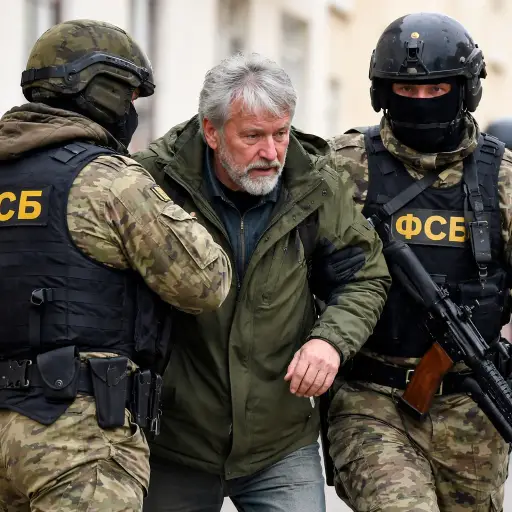
According to the Russian state news agency TASS, agents of the Federal Security Service (FSB) detained a former correspondent of RFE/RL in the eastern Siberian city of Chita, located in the Zabaykalsky region. The individual, identified by independent outlet Current Time as 65-year-old Alexander Andreyev, is alleged to have cooperated with Ukraine’s Security Service (SBU), a claim that has not been independently verified.
While official Russian sources provided limited details about the circumstances surrounding the arrest, reports indicate that the detention may have taken place earlier than publicly disclosed. This gap between the alleged timing of the arrest and its reporting underscores a broader pattern that observers say reflects limited transparency in politically sensitive cases.
Andreyev, who had previously worked as a regional correspondent, is now at the center of a case that reflects the broader geopolitical tensions stemming from the ongoing conflict between Russia and Ukraine. Russian authorities have increasingly framed internal security operations within the context of countering foreign influence, particularly from Ukrainian and Western institutions.
The FSB, successor to the Soviet-era KGB, has in recent years expanded its role in monitoring and prosecuting cases involving alleged espionage and cooperation with foreign organizations. Legal experts note that such cases often rely on broad interpretations of national security legislation, raising concerns among international watchdog groups about due process and the potential for politically motivated prosecutions.
Radio Free Europe/Radio Liberty, funded by the United States government, has long been viewed with suspicion by Russian authorities. The organization has been designated as a “foreign agent” in Russia, a label that imposes strict operational constraints and has contributed to the departure or prosecution of several of its contributors over the past decade.
The accusation that Andreyev may have collaborated with the SBU fits within a broader narrative promoted by Russian officials, who frequently assert that Ukraine and its allies are engaged in intelligence activities within Russian territory. However, independent verification of such claims remains difficult, particularly in regions far from Moscow where access for foreign journalists is limited.
Human rights organizations and media advocacy groups have expressed concern over the case, emphasizing the vulnerability of journalists operating in environments where legal protections are weak or inconsistently applied. They argue that the line between legitimate security concerns and the suppression of dissent has become increasingly blurred.
In Chita, a city with a history tied to Russia’s military and administrative structures in Siberia, the detention has reportedly drawn limited public attention, reflecting both geographic isolation and a broader climate of caution among local populations. Analysts suggest that cases like Andreyev’s are often intended not only to address specific allegations but also to send a wider message about the risks associated with perceived disloyalty.
The lack of detailed information about Andreyev’s current condition, legal representation, or access to communication has further fueled speculation and concern. In similar cases, detainees have faced prolonged pre-trial detention, with limited opportunity to challenge the charges against them in a transparent judicial setting.
The Kremlin has not issued a detailed public statement on the case, and it remains unclear whether formal charges have been filed. Nonetheless, the involvement of the FSB suggests that the case is being treated as a matter of national security, which typically entails restricted disclosure and heightened procedural controls.
As Russia continues to navigate its complex relationship with both domestic media and foreign actors, the detention of a former journalist underscores the evolving risks faced by those associated with independent reporting. For many observers, the case is emblematic of a broader shift toward tighter control over information and a narrowing space for journalistic activity within the country.
Whether Andreyev’s case will lead to a formal trial or remain largely opaque is yet to be seen. What is clear, however, is that it adds another chapter to the ongoing debate over press freedom, state security, and the role of journalism in times of geopolitical conflict.


