Mounting financial strain, faltering banks, and stalled production raise alarm beyond Tehran, with ripple effects increasingly felt across Europe

A senior member of Iran’s parliamentary budget committee has issued one of the starkest warnings yet about the country’s economic trajectory, describing a system under such strain that collapse is no longer unthinkable. The remarks, delivered at the end of the week, reflect a growing unease within Iran’s political establishment as multiple pressure points converge across the economy.
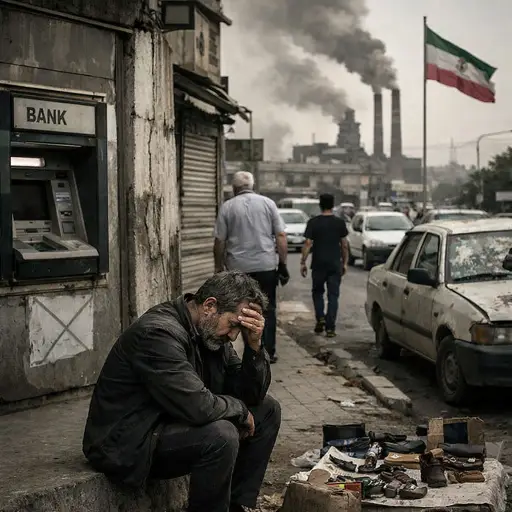
At the center of concern lies the fragile state of Iran’s banking sector. Years of sanctions, currency volatility, and structural inefficiencies have eroded the stability of financial institutions, leaving many burdened with non-performing loans and limited liquidity. According to the parliamentary official, the current economic climate could push banks beyond their limits, raising the specter of systemic failure.
The warning comes amid broader signs of economic paralysis. Industrial production, once a critical pillar of domestic resilience, has slowed dramatically. In some sectors, activity has all but ceased. Factories that once operated continuously now stand idle or run at minimal capacity, constrained by shortages of imported components, unreliable financing, and declining domestic demand.
Exports, another lifeline for the Iranian economy, have also suffered a significant disruption. Trade routes have become increasingly complicated, and restrictions linked to geopolitical tensions have narrowed the country’s access to international markets. The result is a sharp contraction in foreign currency inflows, further weakening the national currency and intensifying inflationary pressures at home.
For ordinary Iranians, the consequences are tangible and immediate. Rising prices, declining purchasing power, and uncertain employment prospects have combined to create a pervasive sense of economic insecurity. Small businesses, often dependent on stable supply chains and accessible credit, are among the hardest hit. Many have been forced to close or drastically scale back operations, contributing to a cycle of contraction that feeds back into the broader economy.
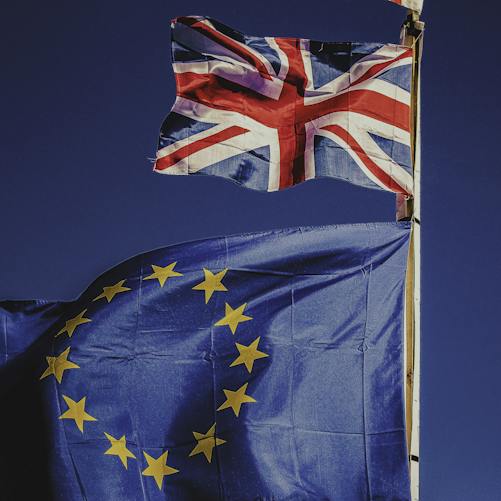
The situation is not unfolding in isolation. European policymakers and businesses are watching developments closely, aware that instability in Iran carries implications beyond its borders. Energy markets, in particular, remain sensitive to shifts in Iran’s output and export capacity. Although sanctions have long limited Iran’s role in global energy supply, any further disruption could tighten already volatile markets, with consequences for European prices and energy security.
Trade relations between Iran and parts of Europe, while reduced compared to previous decades, still hold strategic importance. European firms with exposure to the region face heightened uncertainty, navigating a complex landscape shaped by sanctions compliance, financial risk, and geopolitical considerations. As Iran’s banking system weakens, even limited trade channels become harder to sustain, complicating efforts to maintain economic engagement.
There is also a broader geopolitical dimension. Economic instability can amplify internal tensions, potentially influencing Iran’s domestic political dynamics and its posture on the international stage. European governments, already balancing diplomatic engagement with security concerns, may find their policy options increasingly constrained as the economic situation deteriorates.
Despite the severity of the warnings, Iranian authorities have yet to outline a comprehensive strategy capable of reversing the downturn. Efforts to stabilize the currency and support domestic industries have had limited success, often undermined by structural challenges and external constraints. Without meaningful reforms or a shift in external conditions, the risks outlined by the parliamentary official appear likely to persist.
For now, the trajectory points toward continued strain. The convergence of weakened banks, stalled production, and disrupted exports creates a feedback loop that is difficult to break. Each element reinforces the others, deepening the overall crisis and narrowing the margin for recovery.
As the situation evolves, the implications will extend beyond Iran’s borders. For Europe, the unfolding economic crisis is not merely a distant concern but a development with potential repercussions for energy, trade, and regional stability. The warning issued in Tehran serves as a reminder that economic fragility in one part of the world can quickly become a matter of broader international consequence.
Whether the current trajectory leads to outright collapse or a prolonged period of stagnation remains uncertain. What is clear, however, is that the pressures facing Iran’s economy have reached a critical point—one that demands attention not only from its own leadership but also from those watching closely across Europe and beyond.