Allegations of sexual violence by foreign police officers deepen crisis of trust as Nairobi rejects findings and calls for due process

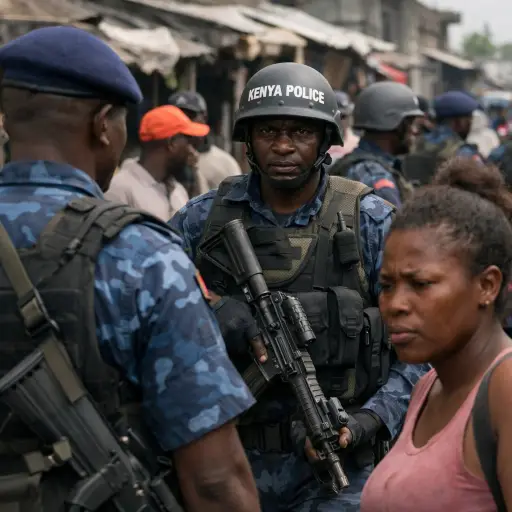
As Haiti continues to grapple with escalating gang violence and institutional collapse, a multinational security mission led by Kenya—once presented as a stabilizing force—now faces serious allegations that threaten to undermine its legitimacy and effectiveness. A recent report by the United Nations has raised concerns that members of the Kenyan contingent deployed to the Caribbean nation have been implicated in acts of sexual violence against local residents.
The mission, composed of approximately one thousand personnel, most of them police officers, was deployed with the objective of restoring order in a country where armed gangs have tightened their grip on large swathes of territory. The arrival of Kenyan forces was initially welcomed by some international observers as a pragmatic step toward addressing the deepening security vacuum. However, the UN findings now cast a long shadow over that effort.
According to the report, investigators documented multiple allegations involving members of the Kenyan unit. These accounts, gathered through interviews and field observations, point to a pattern of misconduct that includes coercion and exploitation of vulnerable individuals in communities already traumatized by violence and poverty. The report stops short of naming individuals but emphasizes the seriousness and credibility of the claims.
The Kenyan government has strongly rejected the conclusions, describing them as unverified and lacking sufficient evidence. Officials in Nairobi insist that their personnel operate under strict rules of engagement and professional standards, and they have called for any accusations to be handled through formal investigative channels. They argue that premature publication of such findings risks damaging the morale of officers and the broader mission.
On the ground in Haiti, the impact of the allegations is already being felt. Community leaders and civil society groups warn that trust—an essential component of any peacekeeping or stabilization effort—is fragile and can quickly erode. For many Haitians, the presence of foreign forces is a sensitive issue shaped by a long history of external interventions, some of which have left deep scars.
Human rights organizations have urged transparency and accountability, stressing that the credibility of the mission depends on how these allegations are addressed. They point to past international deployments where misconduct went insufficiently punished, leading to long-term reputational damage for both the forces involved and the institutions overseeing them.
The UN has called for a thorough and impartial investigation, recommending cooperation between Kenyan authorities, Haitian institutions, and international oversight bodies. Ensuring protection for victims and witnesses is also highlighted as a priority, given the risks of retaliation and the stigma often associated with reporting sexual violence.
Meanwhile, security conditions in Haiti remain dire. Armed groups continue to control key infrastructure and neighborhoods, disrupting daily life and limiting access to basic services. The Kenyan-led mission was intended to help reverse this trajectory, but its success now hinges not only on operational effectiveness but also on adherence to human rights standards.
Diplomatic efforts are ongoing to maintain cohesion among the countries supporting the mission. Some partners have expressed concern over the allegations but have stopped short of withdrawing support, emphasizing the urgent need for stability in Haiti. Others have signaled that continued backing may depend on demonstrable steps toward accountability.
For Haiti’s population, the situation presents a painful paradox. The forces meant to provide protection are now themselves under scrutiny, complicating an already precarious reality. As investigations proceed, the coming period will be critical in determining whether the mission can regain trust or whether the allegations will further weaken an effort already operating under immense pressure.
The outcome will likely have implications beyond Haiti, shaping future discussions about international policing missions, their oversight, and the standards to which they are held. At stake is not only the credibility of one deployment, but also the broader principle that those tasked with maintaining peace must themselves be beyond reproach.


