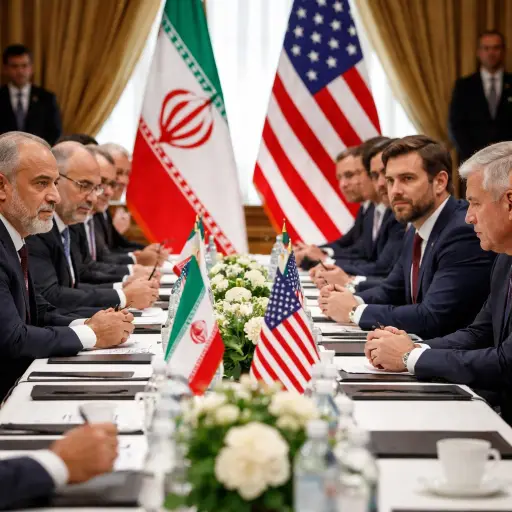
After an intense round of diplomacy yields no immediate breakthrough, cautious optimism emerges as both sides weigh the possibility of returning to the negotiating table

A tense but closely watched round of negotiations between the United States and Iran has concluded without a formal agreement, underscoring the enduring complexity of a conflict that continues to reverberate across the region. Despite the lack of an immediate breakthrough, a senior Iranian negotiator has indicated that the door to further peace talks remains open, offering a measured note of hope amid an otherwise uncertain diplomatic landscape.
Speaking after the marathon discussions, U.S. Vice President JD Vance acknowledged that the extended talks had not produced a definitive resolution to end the ongoing war. However, he emphasized that the engagement itself represented a meaningful step in what both sides recognize as a long and difficult process.
The negotiations, described by officials as exhaustive and, at times, contentious, brought together high-level delegations in a setting marked by cautious formality. Sources familiar with the discussions noted that while key points of disagreement persist—particularly around security guarantees, regional influence, and the sequencing of concessions—there were also moments of convergence that could serve as a foundation for future dialogue.
The Iranian negotiator, whose remarks have drawn significant international attention, suggested that while immediate consensus proved elusive, the tone of the talks had not foreclosed the possibility of renewed engagement. This sentiment reflects a broader recognition within diplomatic circles that, even in stalemate, sustained communication is preferable to escalation.
Analysts point out that both Washington and Tehran face mounting internal and external pressures that complicate the path to peace. For the United States, maintaining alliances and managing domestic political expectations remain key considerations. For Iran, economic challenges and regional dynamics continue to shape its negotiating posture.
The current impasse also highlights the broader geopolitical stakes involved. The conflict has implications that extend beyond bilateral relations, influencing energy markets, regional security arrangements, and the strategic calculations of neighboring states. As a result, international observers have been closely monitoring the negotiations, urging both parties to avoid actions that could further destabilize the situation.
Diplomatic insiders suggest that one of the most significant outcomes of the recent talks may be the establishment of clearer communication channels. Even in the absence of a formal agreement, these mechanisms can help reduce misunderstandings and create space for incremental progress.
Vice President Vance, in his remarks, struck a tone that balanced realism with cautious optimism. He reiterated that while the road ahead remains uncertain, the willingness of both sides to engage in sustained dialogue is, in itself, a positive development. He also indicated that the United States remains open to future negotiations, provided that they are grounded in a genuine commitment to de-escalation.
The Iranian side, for its part, appears to be signaling a similar openness, albeit with conditions that reflect its strategic priorities. This alignment, however tentative, may offer a narrow window for renewed diplomatic efforts in the near future.
As the international community awaits the next steps, the outcome of this latest round of talks serves as a reminder of the intricate balance between conflict and diplomacy. While peace remains elusive, the possibility of further negotiations suggests that the pursuit of a resolution is far from over.
In the coming days, attention will likely turn to whether both sides can translate this cautious openness into concrete action. For now, the message emerging from the переговорation table is one of guarded possibility—a recognition that even in moments of deadlock, the path to peace often begins with the willingness to keep talking.