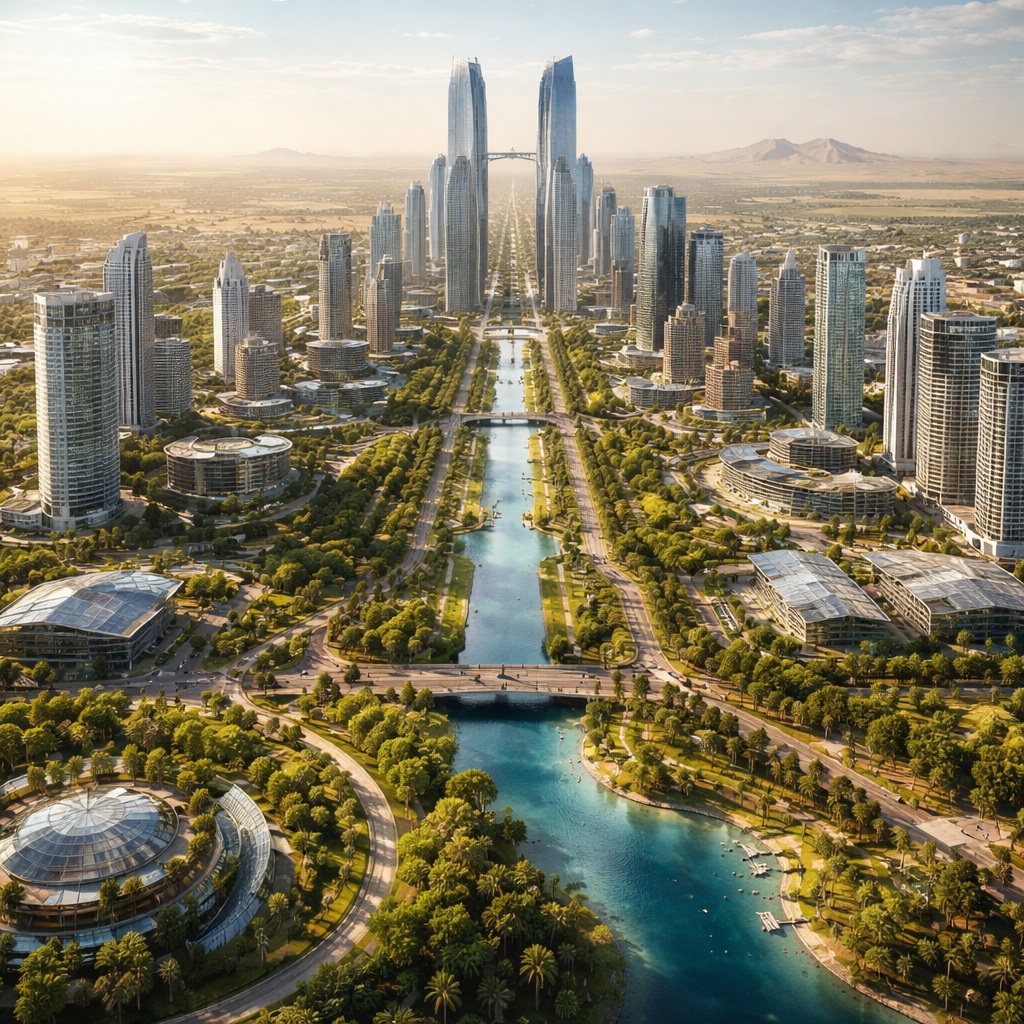
A trillion-pound project east of Cairo signals a bold urban vision with global ambitions and deepening links to Europe

As Egypt accelerates its push toward economic transformation, a bold new urban project is taking shape in the desert east of Cairo. Known as The Spine, the initiative represents one of the most ambitious infrastructure and development efforts in the country’s modern history. Backed by an investment of 1.4 trillion Egyptian pounds, the project is designed not only to relieve pressure on the overcrowded capital but also to redefine Egypt’s role as a regional and global economic hub with increasingly strong ties to Europe.
Stretching across a vast expanse of arid land, The Spine is envisioned as a linear city built around a central axis of green spaces, transport corridors, and high-density urban districts. The concept reflects a growing global trend toward sustainable, transit-oriented urban planning, aiming to reduce congestion, optimize land use, and integrate residential, commercial, and administrative functions into a cohesive whole.
Government officials describe the project as a cornerstone of Egypt’s long-term development strategy. By redistributing population growth and creating new economic zones, The Spine is expected to ease the chronic strain on Cairo’s infrastructure while opening fresh opportunities for investment, innovation, and employment. The scale alone signals intent: a city designed from the ground up to accommodate millions, equipped with advanced digital infrastructure and modern transport systems.
Central to the project’s appeal is its economic promise. Authorities anticipate that The Spine will act as a magnet for both domestic and foreign investment, particularly in sectors such as construction, technology, logistics, and renewable energy. The development is also expected to stimulate small and medium-sized enterprises, creating a ripple effect across the broader economy.
Yet beyond its national ambitions, The Spine carries significant international implications, especially in relation to Europe. Egypt’s geographic position has long made it a bridge between continents, and this new urban corridor aims to strengthen that role. By enhancing logistical networks and connectivity, the project could facilitate smoother trade flows between North Africa and European markets.
European investors and companies are already showing interest, drawn by the scale of the project and the potential returns. Infrastructure firms, urban planners, and sustainability experts from across the continent are seen as key partners in shaping the city’s design and implementation. For Europe, The Spine offers not only a commercial opportunity but also a strategic foothold in a rapidly evolving region.
Trade relations are likely to deepen as well. Improved transport links, including road and rail connections integrated into broader regional networks, could shorten supply chains and reduce costs for goods moving between Egypt and European destinations. This aligns with a wider European push to diversify trade routes and strengthen partnerships beyond traditional corridors.
Energy cooperation is another area where The Spine intersects with European interests. Egypt has been positioning itself as a hub for renewable energy, particularly solar and wind power. Incorporating these technologies into the new city could create opportunities for collaboration with European firms specializing in green energy solutions. In turn, this supports Europe’s broader transition toward sustainable energy sources while reinforcing Egypt’s role as a key partner.
Despite its promise, the project also faces considerable challenges. Financing on such a massive scale requires careful management, particularly in a global economic environment marked by uncertainty. Ensuring that development remains inclusive and accessible will be critical to avoiding the pitfalls seen in other large-scale urban projects around the world.
Environmental considerations are equally pressing. Building a city in the desert demands significant resources, particularly water and energy. Planners have emphasized sustainability, with proposals for green corridors, efficient water management systems, and renewable energy integration. Whether these measures can be fully realized at scale will be a key test of the project’s long-term viability.
Social dynamics will also play a defining role. Creating a city is not just about infrastructure; it is about building communities. The success of The Spine will depend on its ability to attract residents from diverse backgrounds and provide a high quality of life, including access to education, healthcare, and cultural amenities.
For Egypt, the stakes are high but so are the potential rewards. The Spine represents more than a construction project; it is a statement of ambition and a bid to reshape the country’s economic and urban landscape. If successful, it could serve as a model for future developments across the region.
For Europe, the project offers a chance to engage with a key partner at a moment of transformation. As economic, logistical, and energy ties deepen, The Spine could become a tangible symbol of growing interdependence between the two regions.
As work progresses, the world will be watching closely. The outcome will not only influence Egypt’s development trajectory but also help define new patterns of cooperation between Africa and Europe in the years ahead.