An investigation has reignited concerns about global gold trafficking after reports suggested that metal tied to Colombian criminal networks may have entered the supply chain behind investment coins marketed as purely American.
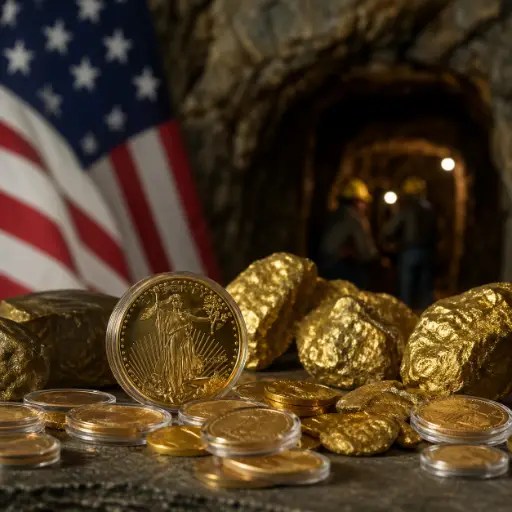
For decades, gold coins produced by the United States Mint have represented stability, patriotism and financial security for investors around the world. Marketed as products made exclusively from gold mined on American soil, the coins have become a symbol of trust during periods of inflation, geopolitical uncertainty and banking turbulence. Every year, the Mint sells investment-grade bullion worth close to one billion dollars, with demand surging whenever markets become volatile.
But a recent investigation has cast a shadow over that carefully protected image.
According to reporting that sparked intense debate in financial and political circles, some of the gold described as American may in fact have originated in Colombia, allegedly passing through networks connected to drug trafficking organizations before entering international refining channels. The revelations have raised difficult questions about how effectively the global gold trade can be monitored in an era where precious metals cross borders through a maze of intermediaries, exporters and refineries.
Under American law, the gold used for official bullion coins must come from domestic mines. The requirement was designed to support the national mining industry and guarantee the integrity of one of the world’s most recognized investment products. Yet investigators and analysts say the global nature of the gold market makes verification increasingly complicated.
Unlike diamonds, which are often tracked through certification systems, gold can be melted, recast and mixed repeatedly, making its origins harder to trace once it enters the international supply chain. Criminal organizations have long exploited this weakness. Across parts of Latin America, illegal mining has become one of the most lucrative activities linked to organized crime, generating enormous profits while devastating local communities and ecosystems.
In Colombia, authorities have spent years battling criminal groups accused of using illegal gold extraction to launder money generated through narcotics trafficking. Environmental destruction has followed in many mining regions, where forests have been cleared and rivers contaminated with mercury and toxic chemicals. Human rights organizations have also documented violence, forced labor and intimidation tied to illicit mining operations.
Financial investigators say gold has become especially attractive to criminal networks because it can move through legitimate markets with relative ease once it is refined. After raw gold is smelted and processed, identifying its original source becomes extremely difficult without rigorous documentation and oversight at every stage of the chain.
The latest allegations suggest that this opacity may have allowed suspect material to enter supply routes connected to American refining operations. While there is no public evidence that the United States Mint knowingly purchased illicit gold, the controversy has intensified scrutiny of suppliers, refiners and compliance procedures within the broader precious metals industry.
Experts say the issue extends far beyond one institution or one country. The international gold trade has faced repeated accusations involving smuggling, sanctions evasion and organized crime. In recent years, regulators in North America and Europe have attempted to tighten sourcing rules, pushing refiners and traders to improve transparency standards. Yet enforcement remains uneven, particularly when gold passes through multiple jurisdictions before reaching final buyers.
The timing of the revelations is particularly sensitive. Gold prices have remained historically strong as investors seek protection from inflationary pressures, geopolitical tensions and uncertainty surrounding global interest rates. Demand for physical bullion has increased sharply among retail investors looking for assets perceived as safe and tangible.
That demand has also intensified pressure on supply chains.
Industry observers warn that as prices climb, incentives for illegal mining and trafficking increase as well. Criminal organizations operating in South America, Africa and parts of Asia have expanded their involvement in the gold trade, often exploiting weak governance, corruption and limited oversight in remote mining regions.
The controversy is now drawing political attention in Washington, where lawmakers from both parties are expected to push for closer examination of precious metal sourcing practices. Some analysts believe the debate could lead to stricter verification requirements for refiners supplying government-linked products, including enhanced audits and more advanced tracing technologies.
Others argue that the case highlights a broader vulnerability within the global commodities system, where products marketed as ethical or nationally sourced can still be exposed to hidden international networks.
For investors, the revelations are unlikely to diminish gold’s appeal as a financial safe haven. But they may change perceptions about the simplicity and transparency of the bullion market itself. What appears in a polished coin case as a symbol of security can carry a far more complicated journey beneath the surface — one that stretches from remote jungle mines to international refineries and ultimately into the vaults of ordinary investors.
As scrutiny intensifies, the gold industry now faces mounting pressure to prove that the metal behind its most trusted products is exactly what it claims to be.