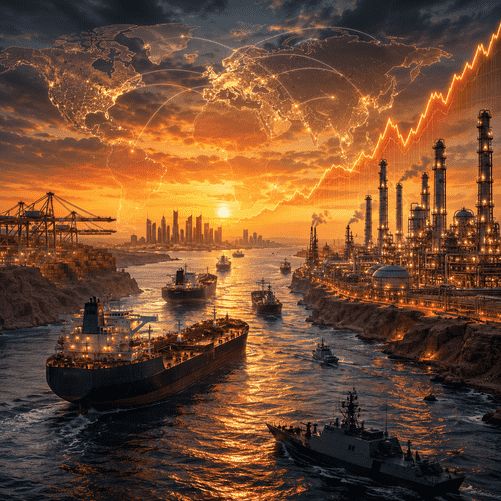
Saudi Aramco’s warning over prolonged export disruption has intensified fears that the energy shock could keep inflation elevated and slow the global economy.

The global economy is facing a renewed energy-market threat after Saudi Aramco warned that disruption to oil exports through the Strait of Hormuz could delay a return to normal market conditions until 2027.
Aramco chief executive Amin Nasser said on Monday that the longer the disruption continues, the harder it will be for the oil market to rebalance. His comments came as the Gulf remains under severe pressure from regional tensions, maritime insecurity and stalled diplomacy around the Iran crisis.
The warning is significant because the Strait of Hormuz is one of the world’s most important energy corridors. Any prolonged restriction affects crude oil, refined fuels, liquefied natural gas and shipping insurance costs, with consequences that quickly spread from the Middle East to Asia, Europe and North America.
Oil prices have already been volatile. Reuters reported that energy prices jumped again after diplomatic talks between Washington and Tehran failed to produce an agreement, while financial markets continued to price in the risk of prolonged disruption.
The economic danger is not only higher fuel prices. Expensive energy can feed into transport, manufacturing, food production and consumer goods, creating a second wave of inflation at a time when many central banks are still trying to decide when to cut interest rates. The Bank for International Settlements has warned that broad government spending could worsen inflation risks and force central banks to keep policy tighter for longer.
China is already showing signs of imported inflation pressure. Its producer price index rose 2.8% year-on-year in April, the fastest increase in 45 months, driven by higher energy, metals, oil, gas and technology-equipment costs. That matters globally because China’s factory prices can pass through supply chains and raise costs for importers around the world.
For businesses, the risk is a renewed squeeze between higher input costs and fragile demand. Airlines, shipping companies, manufacturers and food producers are especially exposed. For consumers, the effects could appear through more expensive fuel, travel, electricity and imported goods.
The timing is difficult for policymakers. If central banks cut rates too soon, they risk allowing inflation to accelerate again. If they keep rates high, they may weaken investment, housing markets and consumer spending. That dilemma is already visible in Asia, where a departing Bank of Korea board member said inflation control should remain the priority as energy costs rise.
The crisis also shows how closely geopolitics and the economy are now linked. A shipping disruption in one narrow waterway can alter inflation forecasts, corporate costs, interest-rate expectations and household budgets across continents.
For now, markets are watching two signals: whether Gulf shipping routes begin to normalize, and whether diplomacy can reduce the risk premium in oil prices. Until then, the global economy faces a familiar but dangerous problem — an energy shock arriving before inflation has fully been defeated.